Bouza Bodega Boutique Winery

When my parents were in town they decided that they wanted to get out of the city a bit and sample some of Uruguay’s fine wines. Luckily there is a small, yet popular, winery and vineyards about 20 minutes from downtown Montevideo called Bouza Bodega Boutique. They specialize in low quantity, high quality wines.
Bouza Bodega Boutique

They made a reservation for the three of us to get a tour of the winery and vineyards and then do a tasting. We headed out there in a taxi, only having to pay about $15 US. The sky was blue and the grass was bright green. It was a perfect day.

View of the old church turned fermentation room and cellar at Bouza.

The property was built in 1942 as a small farmstead and church. It was refurbished in 2002 to it’s present state consisting of a restaurant and fermentation rooms. They have also expanded their operation to have a small farm where they produce milk and raise chickens and cattle (all in small quantities). The vineyards produce grapes of 5 different varieties including two whites and three reds: albariño, chardonnay, merlot, tempranillo, and tannat. Tannat is a varietal famous in Uruguay.

The tour started off with their classic car collection. The Bouza family has a collection of more than 30 vehicles representative of those driven since the 1920’s in Uruguay and  includes Fords, Fiats, Vespas, and Volkswagons. They even have an old railcar from 1929 on display in the gardens.
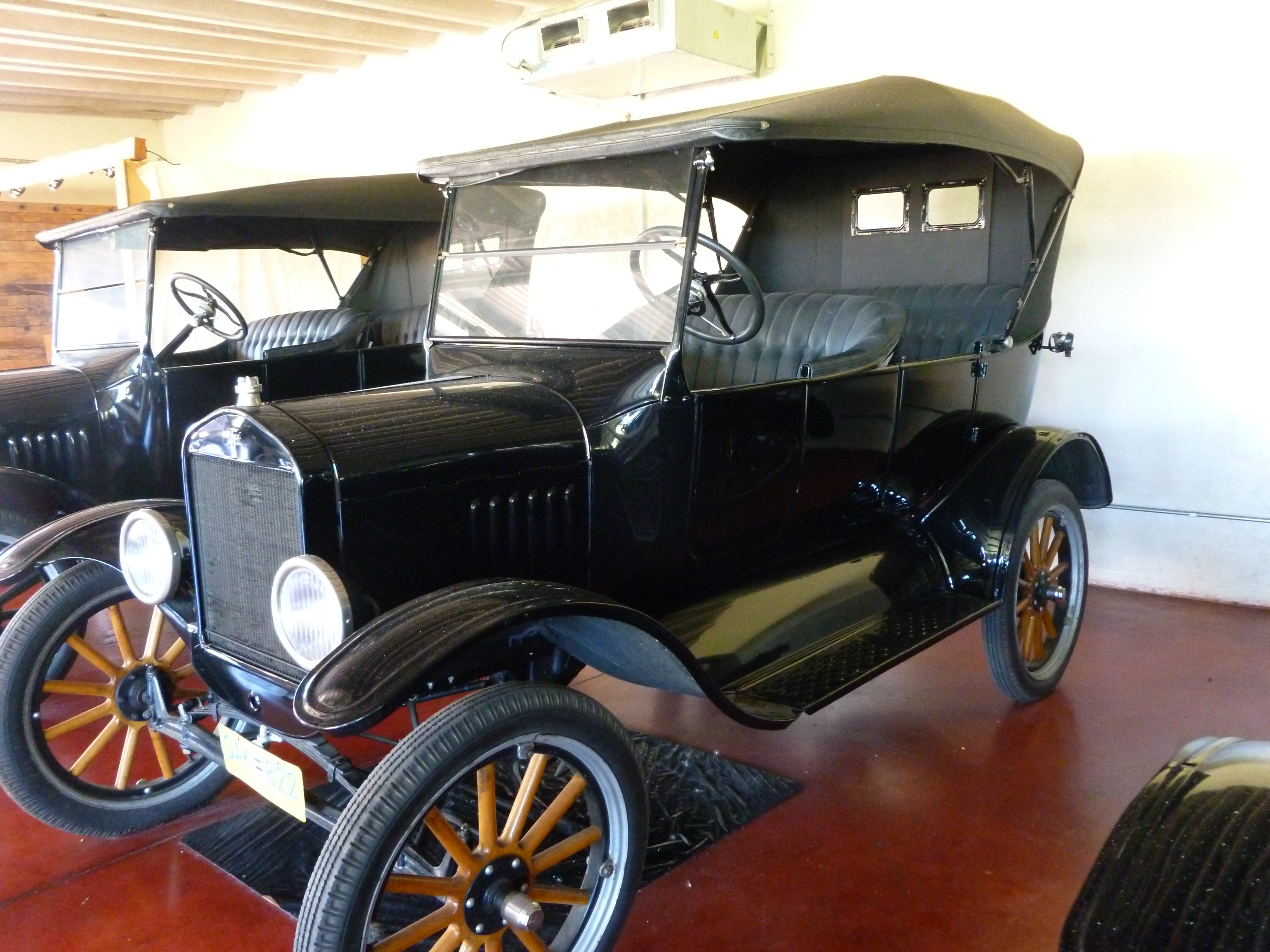
Just one of the cars in the classic car collection.

From there the tour went into the vineyard where the tour guide discussed the different varieties of grapes that were grown and how and when they are harvested.
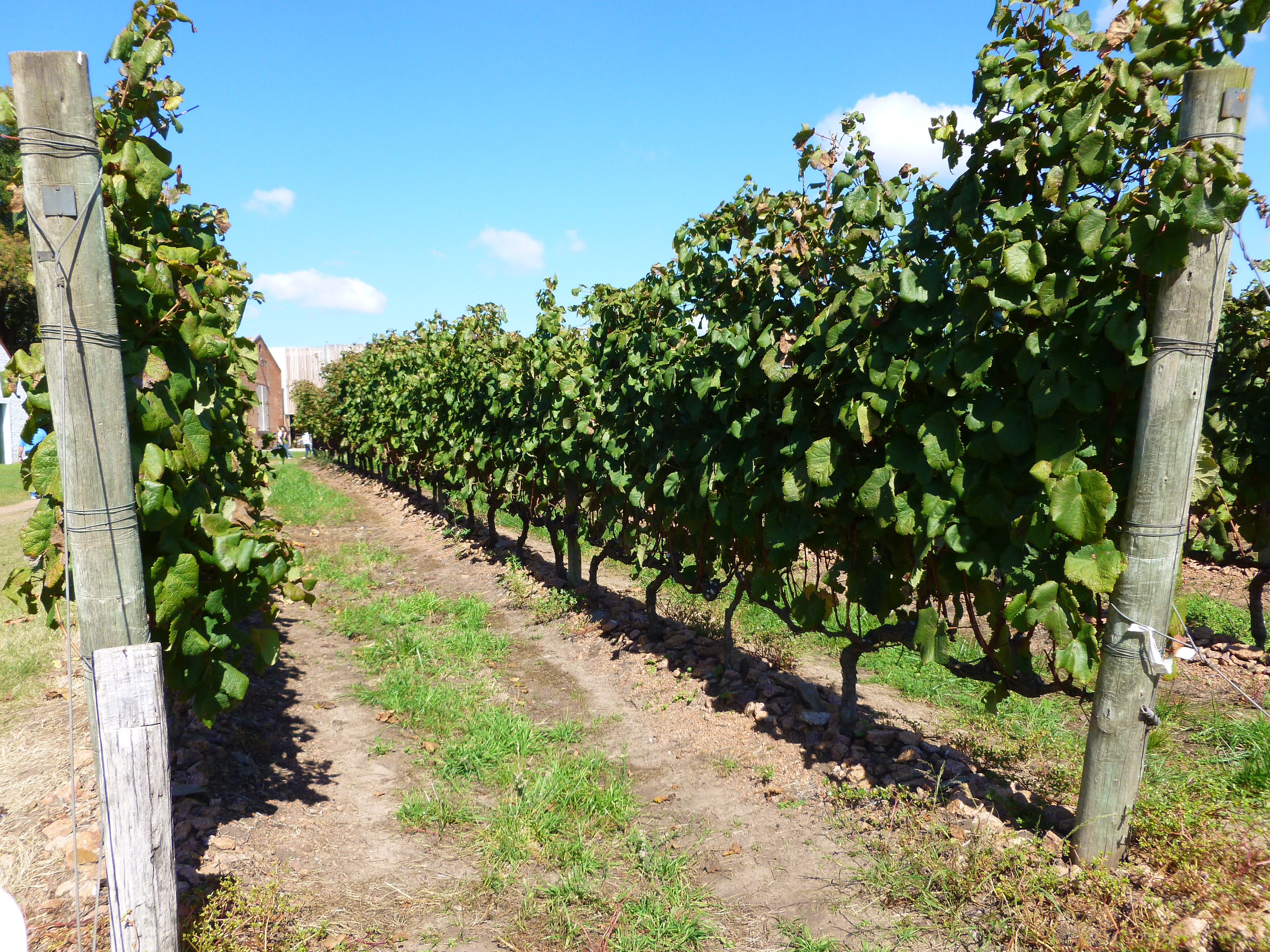
View of Tannat grapes. They are harvested in February/March each year and in August the vines are cut and treated with an anti-fungal because of the humid weather.

Oh, I forgot to mention that the tour was all in spanish. The tour guide knew english very well and told us that if we didn’t understand (we told her we spoke a little spanish) to ask her and she would explain in english. I must say that I understood the majority of what she was saying and relayed to my parents when needed. Progress is being made on my spanish skills.

The next stop on the tour was the primary fermentation room where they have wines fermenting for up to 8 months in steel, cement, or oak barrels. The differences between the containers being the amount of oxygen and flavor (in the case of the oak) imparted to the wine.

These are the stainless steel barrels for primary fermentation.

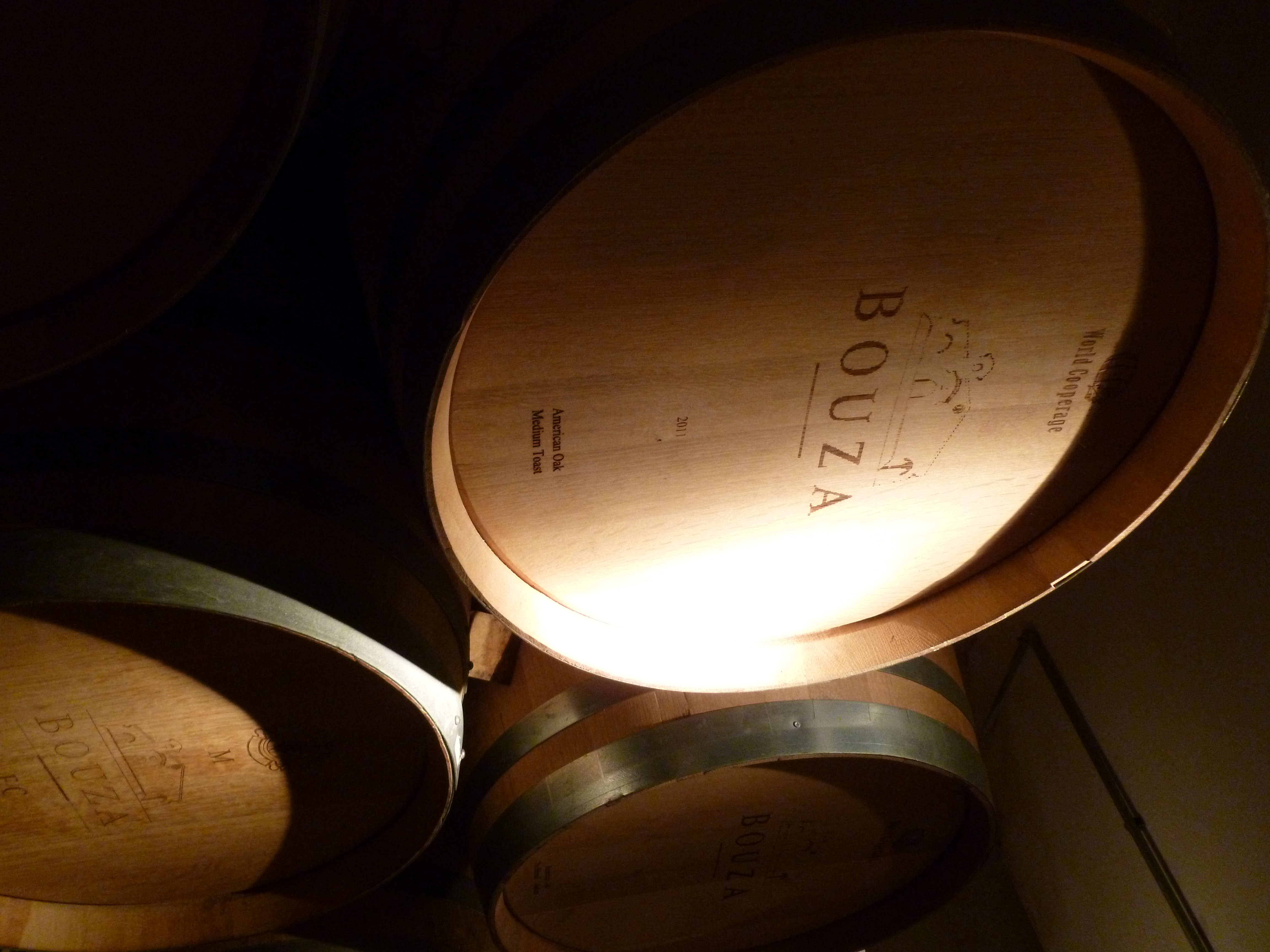
Following that, we headed to the cellar where the wines undergo a secondary fermentation in american and french oak barrels for up to 3 months. This is also where they store bottled wine for at least 6 months before it is sold in stores. There is also a special section of the cellar under the floor where the winery maintains about 40 bottles of it’s wine from each harvest year for posterity. For being a small operation, there were quite a few barrels in the cellar.

Barrels of wine in the cellar undergoing a secondary fermentation.

That ended the tour and we were led back to the restaurant and seated at a table dressed with one large glass and four smaller glasses at each place-setting. Pretty soon a setting of bread with various cheeses and meats was brought to the table along with four bottles of wine. The man leading us through the tasting spoke very good english and did a great job explaining each of the wines to us. He went through each wine individually, explaining and pouring, until he had gone through all four wines and then left us alone to taste them. It was much nicer tasting at a table with snacks than the usual tasting standing up at a bar.

These are the four wines we tasted. From left to right: tannat, merlot-tannat mix, merlot, vino blanco (which I already drank most of before I remembered to take a picture!).

The wines… The first was their “Vino Blanco” which was a special mix of albariño and chardonnay grapes that they make only for their tasting room and for sale at the vineyard (i.e. it cannot be bought in stores). The second was a merlot. The third was a merlot-tannat mix and the fourth was their special 2011 tannat. This wine was special because it was purportedly the best grape harvest in the last 40 years for taste, and because of this they did not apply a secondary fermentation to it. The result is a very strong-flavored, crisp, 15.5% alcohol content wine.

We enjoyed all the wines, but my favorite was the tannat, my mom’s was the merlot-tannat mix, and my dad seemed to enjoy all of them (especially toward the end, wink wink!). Of course we couldn’t leave without purchasing a few bottles, especially because they were cheaper than expected (in the $12-15 US range).

We had them call us a cab and we made our way back to the city, tired and a bit tipsy, but very happy!
An Asado and Fireworks on a Birthday Cake

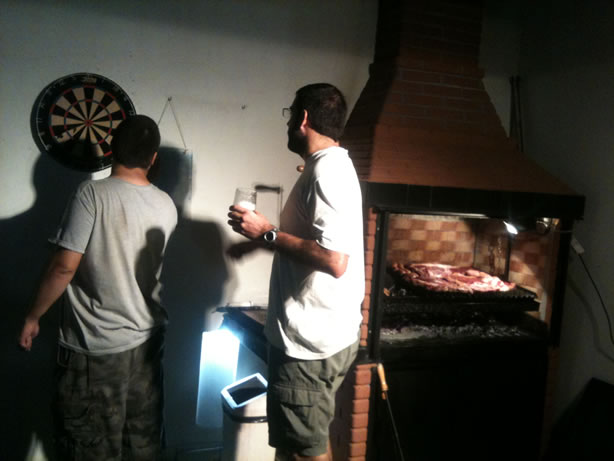
The easiest way to sum up the night of the Asado: rain, alcohol, darts, slippery floor, firework candle, grilled meat, fun time!

When we meet people and they find out we are vacationing in Uruguay, there is always a list of items they ask if we have done yet. Depending on the person, it might be culture related, nature related, clubbing related, or something based on there interested. In general though, there are 2-3 things that always come up no matter what the person likes to do.

The three main things that people ask us if we’ve done yet are:

  1. Tried maté
  2. Eaten a chivito
  3. Had an asado
We have tried maté. We even bought everything to enjoy maté. We also bought ceramic maté’s to drink tea out of.

We LOVE Chivitos!

When we ask people about asados, they say it’s a very fun thing to do and it’s important we go to one. That sounds great to me!

Then, I ask what it is. I always get a similar response about cooking meat on a grill, having a get-together, and drinking beer.

My response is: “So, it sounds like grilling out at a barbecue? I like those. Count me in.” …But, it’s not like what I’m used to. When I describe an afternoon barbecue, they all say it’s way more important and extensive. It’s a special way of cooking, a celebration of something, and a get-together.

So an asado isn’t like grilling steaks on a grill at the house… After attending an Asado, here are the main differences I noticed:

  1. The meat is cooked over the coals of wood and not directly over the fire. Nicer Parrillas (grills) have a separate section to burn the wood
  2. You can raise and lower the meat as needed (raise to add and move coals around and lower to cook directly above the coals)
  3. It’s meant for get-togethers of people and not just grilling out with a friend.
  4. There is a large variety of meat. Different cuts of meat from sausage, steak, ribs, and other cuts that I didn’t know what they were, but tasted great.

I was invited to an Asado when I was in Buenos Aires, Argentina with the Ultimate Frisbee team that I was going to play with on Sunday.

The asado was a blast and more like a party. We had beer, wine, snacks, music playing, people sitting around talking, and darts. We played five person darts where everyone throws with their off-hand to get their number, then needs to hit their number three times to get three points before they can be a killer. If you’re a killer, every number you hit takes a point off of their score. If you hit your own number, you remove a point from your score. When you reach a negative number, you’re out of the game. When you are under 3 points, every number you hit adds a point to the score. The goal is to eliminate the other players.

Buenos Aires Asado with Darts

It was fun since it was raining so when it wasn’t my turn, I would be hiding under cover, but when it was my turn, I’d run outside, throw the darts and try not to slip and fall with the darts in my hand, and then throw the darts. A couple of times, people almost fell, which added a couple seconds of excitement to the situation.

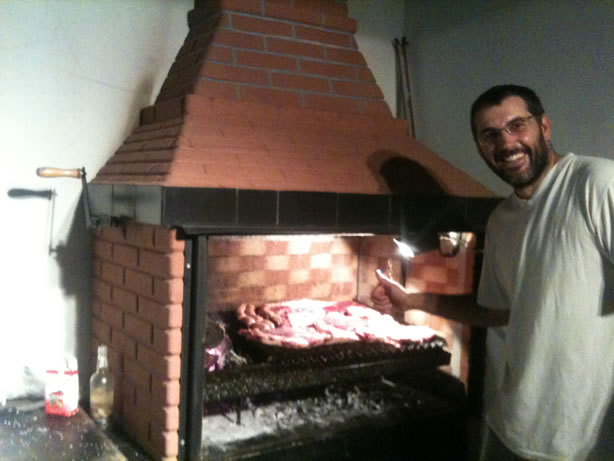
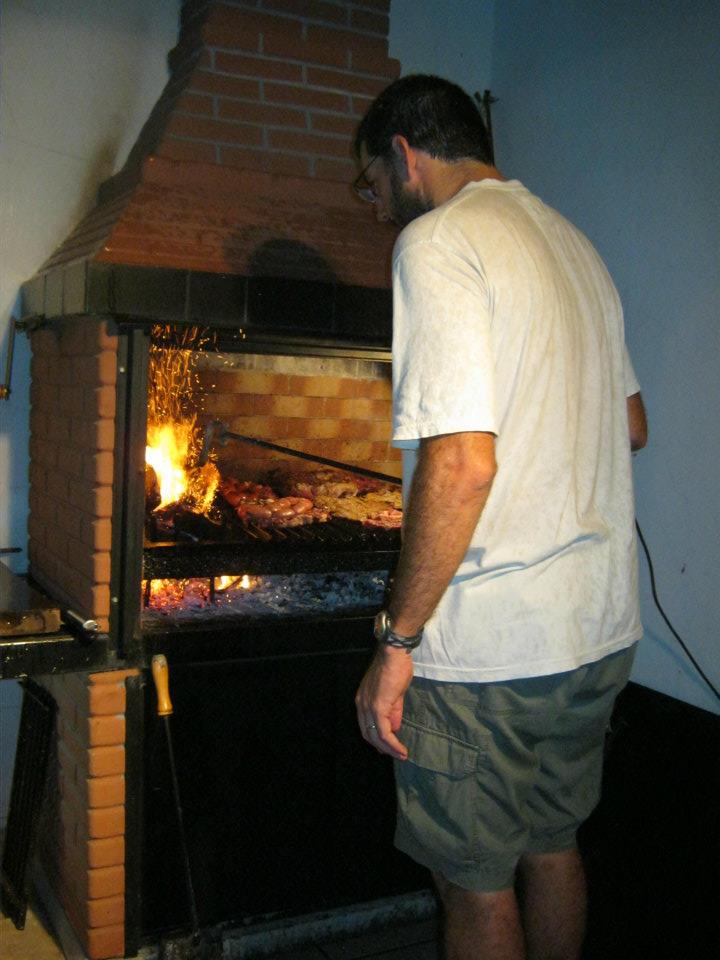
The Asado grill (Parrilla) and meat

There is a special part of the grill that is only used to burn the wood. The coals fall down and you carefully spread them under the meat.

Here’s a picture of Maxi working with the wood on the left, while the meat cooks over the coals on the right.

Maxi creating some coals to cook on

The cooking lasted for about 2-3 hours while wood was continuously burning to create coals and meat was slowly cooking. Maxi would lower the meat as much as possible on the coals, then raise it when more coal was ready to put under the meat.

Maxi and the Asado Parilla

Iron Chef Maxi says, "Let's eat!"

Once there were enough coals and the first batch of meat was ready, everyone stopped playing darts and sat down around tables while Maxi brought food out in batches, letting some of the meat cook a little longer.

Maxi would grab a bite to eat, run out to move stuff around, and bring in the meat if it was ready.  Each piece of meat tasted really good. The ribs, chorizo sausage, steak, and some other cut of meat for asados were all good.

We all had a great time talking about different subjects, happenings, etc. Sometimes it’s hard for me to understand when everyone is talking very quickly, but in general, I could pick up conversation and occasionally contribute.

I was able to chat a good amount about American Football and the Falcons so that was fun.

Fernando’s Birthday!
Fernando’s birthday was also on the same day as the asado. It was perfect timing!
After we were finishing eating and almost too stuffed to eat more, Fernando brought out two desserts for his birthday. One with dulce de leche layer in a thin cake and cheese cake with strawberries.

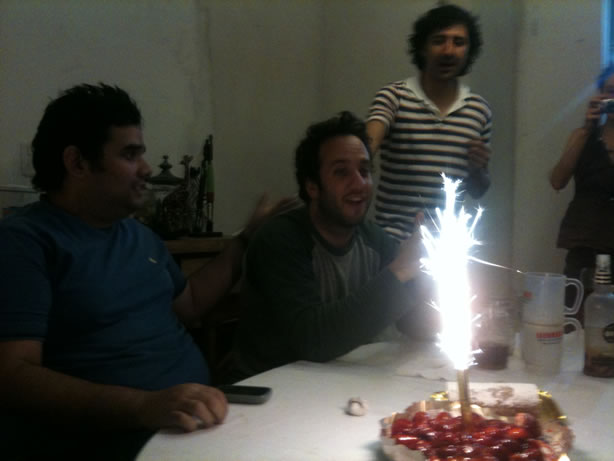
A large candle was used in the center of the cheese cake with strawberries. I thought it was an abnormally large candle.  It wasn’t just a candle, in fact, once lit, it shot a stream of sparks straight up about a foot higher than the cake. What a surprise! I didn’t expect it at all.

Fernando's Birthday in Buenos Aires

Pre birthday candle ignition

Sparkler on cake in Buenos Aires

Birthday Candle on Steroids

The funniest part of the night happened right after the firework display started. I’m sitting to the right of the camera in the picture with the sparks shooting up. Fernando is sitting in the gray shirt with green sleeves.

He goes to blow the large candle out, as anyone would do with their cake, and the sparks started to come my way. Instead of everyone around me jumping back, 3-4 people jumped in front of me, like they were the secret service diving to take a bullet for the President,  to shield me from the sparks. It was extremely funny and made for some hilarious conversation for the next 30 minutes.

I hope there is a picture or video of it!

The asado was a really fun event despite the rain. I really appreciate being invited and having a great time with the group from Disco Sur. I also really enjoyed playing Ultimate Frisbee with them on Sunday in their league games in Argentina.

To Disco Sur, thanks for letting me play with you guys Sunday. It was a lot of fun.

To Maxi, thanks for my first asado and everything else!

To Fernando, thanks for not killing me on your birthday with fireworks and thanks for the great hospitality!

Walkabout: Buenos Aires Edition

Sorry for the delay in blog entries. We’ve been traveling! Yay!

When Asa and I arrived in Buenos Aires it was a beautiful sunny day. The boat ride was really pleasant despite all the children running around. When we disembarked, our first order of business was to get “the picture” of the boat. We thankfully bypassed the lines of people waiting for bags and headed straight out the door. We wandered around the corner and instead of seeing the perfect shot of the boat, we came face to face with a three-masted tall ship docked in the harbor, the frigate Libertidad. It was open for tours, but we had all our stuff with us so decided not to partake. We got the best picture of our Buquebus boat that we could and headed toward the hotel.

As luck would have it, the street that the Buquebus terminal is on was one of the cross streets for our hotel. All we had to do was walk about 8 blocks and we were there, the Dazzler Tower Maipu. We walked in and told them we had a reservation. We managed to conduct the entire check-in process in Spanish and understood just about everything we were told. Success!

The room was just like any other room in any other decent hotel and had all the amenities. We were on the fifth floor, which was a little unfortunate because we already know the floor numbers up to five. We were hoping that the elevator could teach us the words “sixth”, “seventh”, “eighth”, etc… Oh well! Can’t say that the view was spectacular, but what can one expect in a city full of tall buildings stained by years of pollution.

Anyway, we dropped our stuff and headed out to explore the city. Out first stop was the obelisk. It looked like a mini Washington monument surrounded by a sea of cars. It is positioned in the middle of one of the largest roads in the world, Avenida 9 de Julio which has 24 lanes. All this we determined in subsequent days, because at our first look on Saturday afternoon the road was completely closed and barriers were set up everywhere. There was a rally car race through downtown Buenos Aires TC2000, with the Obelisk as one turnaround point. People were everywhere trying to get a good look at the cars as they came wizzing past.

We followed the race through the streets trying to get our own good look. We ended up with a fairly good view and quickly realized that there were more interesting things to be seen. We found ourselves in a large square opposite the Casa Rosada, the government building where Evita made her famous speech rallying the people of Argentina. They light the building with an insane number of bright pink lights, hence the Casa Rosada or pink house. As it was just starting the get dark we were able to revel in all it’s glory.

As we were taking the requisite photos and remarking about the extreme pinkness, we heard a trumpet. Of course we were just in time for the ceremonial lowering of the flag in the square. Seven uniformed guards performed the ceremony and then marched into the Casa Rosada.

After this we meandered our way to Puerto Madero, or the port in Buenos Aires. There are several pricy restaurants overlooking the port, another three-masted tall ship, and some ice cream stores. The port itself is divided into 4 or 5 sections via bridges. The outer-most bridge, closest to the Buquebus dock, opens every hour by rotating the entire section of the road that runs across the water into a parallel configuration which allows boats to pass through. Even the Puente de la Mujer, a fashionable bridge in the middle of the port, seemed to be capable of rotating to allow boats to pass. The yacht club was located in the outer-most section of the port and looked fairly upscale.

At this point, we were hungry and went to find a place to eat some dinner. We finally settled on a touristy spot on one of the main streets. We easily ordered Milanesa de ternera napolitana with french fries for two. Milanesa is a common breading for meats and can be found covering chicken or beef. It can then be fried or baked. Napolitana is a topping that includes a cut of ham, cheese, tomatoes, and some tomato sauce.

Empanadas

“An empanada is a stuffed bread or pastry baked or fried in many countries in Latin America,Southern Europe, and parts of Southeast Asia.” – Wikipedia

Here in Montevideo all the empanadas we have run across have been baked instead of fried. Across the river in Buenos Aires they have baked empanadas that they call “salteñas”. Empanadas are available at a variety of venues in Montevideo. At the supermarket they can be found near the bakery items. Empanadas can commonly be found at rotiserías that also sell fresh pasta and torts, and occupy little hole-in-the-wall stores that are hardly big enough to display their food. Empanadas can also be found at empanada specific restaurants or delivery centers.

At supermarkets and the small rotiserias the fillings are fairly limited and usually include carne (beef), pollo (chicken), acetuna (olives), jamón y queso (ham and cheese), and espinaca (spinach). At empanada restaurants and delivery centers there is much more variety, including dessert empanadas. El Taberna del Diablo (a restaurant and delivery center near our house) has 46 different kinds of empanadas.

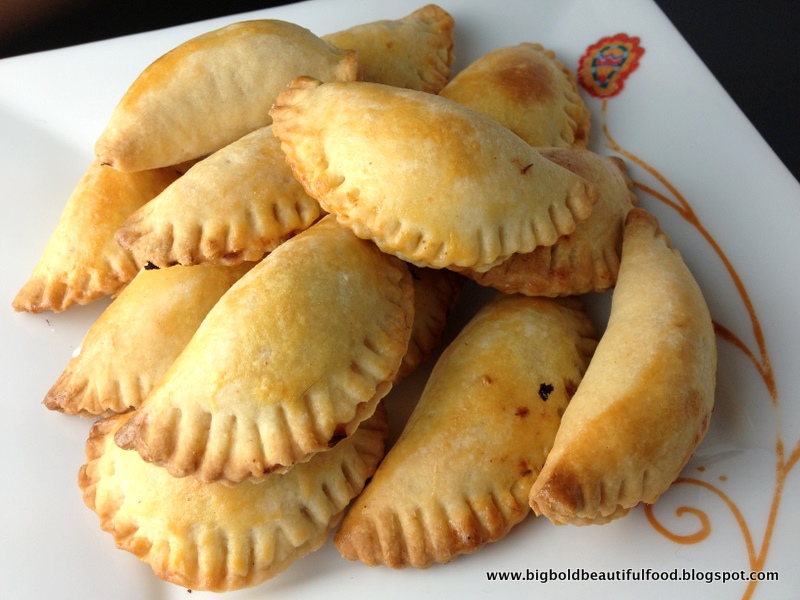
One of the confusing things about buying empanadas, especially if you get different varieties, is coming home to a collection of stuffed pastries that all look alike. On closer inspection, each type of filling is shown on the outside using a unique marking. Small rotiserías will sometimes use pieces of dough to make shapes on the tops that correspond to their filling. Large delivery centers will use a combination of small holes punched in the edges and folded corners to distinguish the fillings. Though, without a guide map to the markings, the only thing to do is take a bite. Things could be worse!

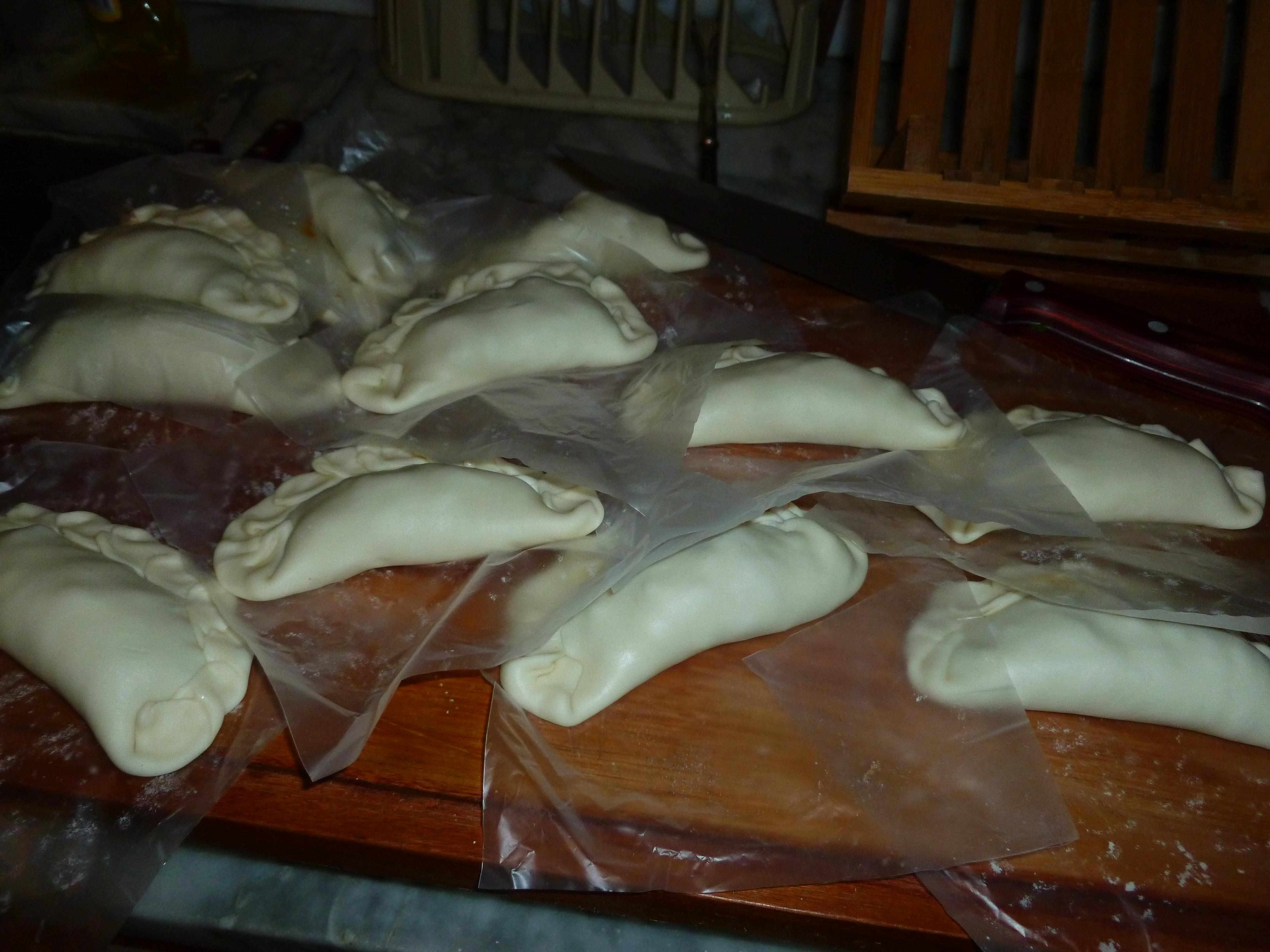
Empanadas are so prevalent in the culinary sphere of Montevideo that most supermarkets carry pre-made empanada dough disks. All one needs to do is buy them, stuff them, and bake them to have a delicious snack or entire meal.

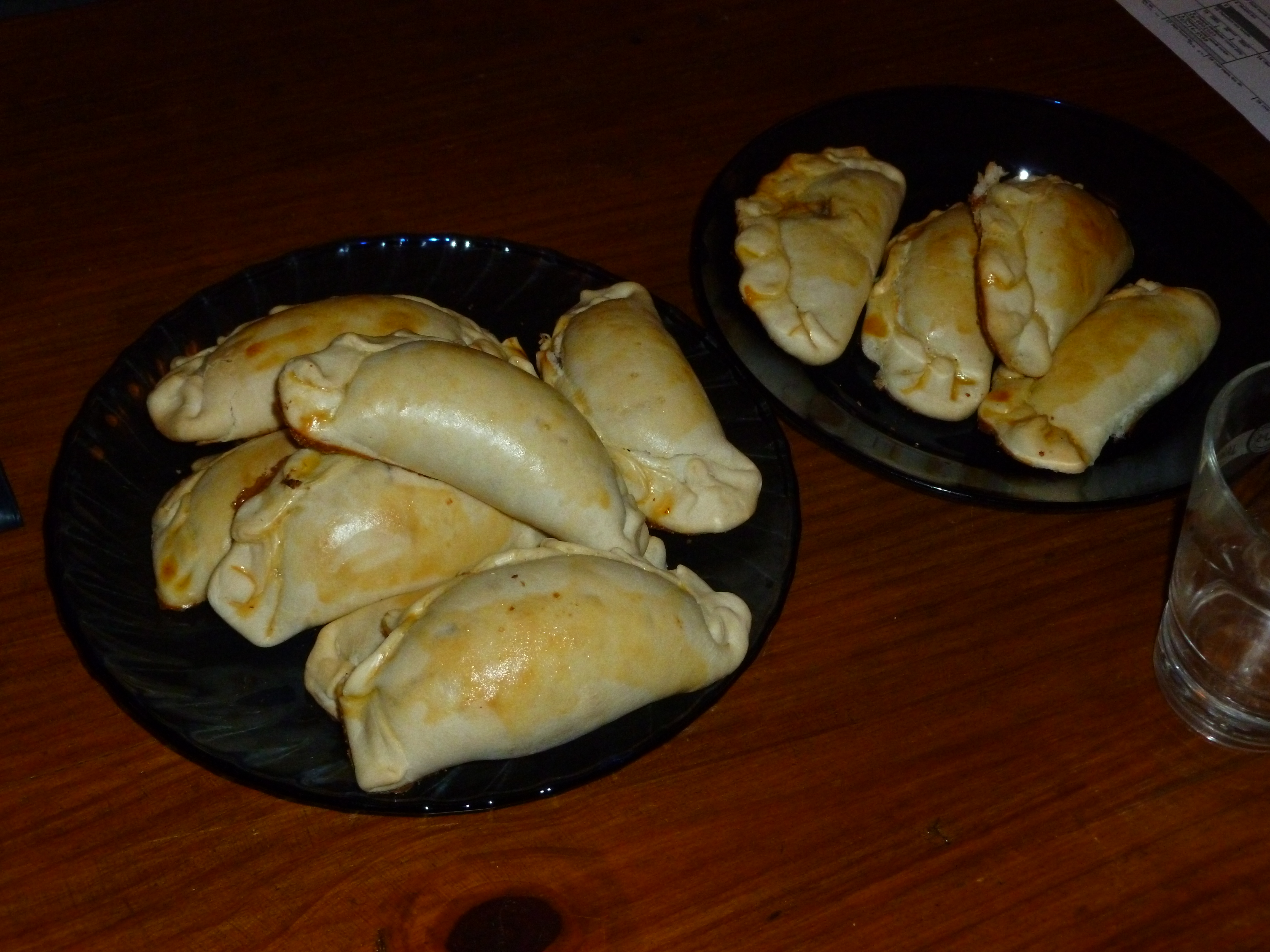
So, that’s exactly what we did! I made two types of empanadas, beef and apple. Below are the recipes that I created:

Beef Empanadas (recipe makes about 30 empanadas)

Ingredients:

3 tbsp olive oil

1 med onion chopped fine

1 large green bell pepper chopped fine

1 tbsp garlic chopped fine

2 peppers chopped (don’t know what kind, they call them “picante” here but jalapeños would work great)

1 tomato chopped

1.5 lbs ground beef

1 tbsp oregano

1 tbsp red pepper flakes

1 tsp cayenne pepper

1 tsp black ground pepper

0.5 tsp salt

Directions:

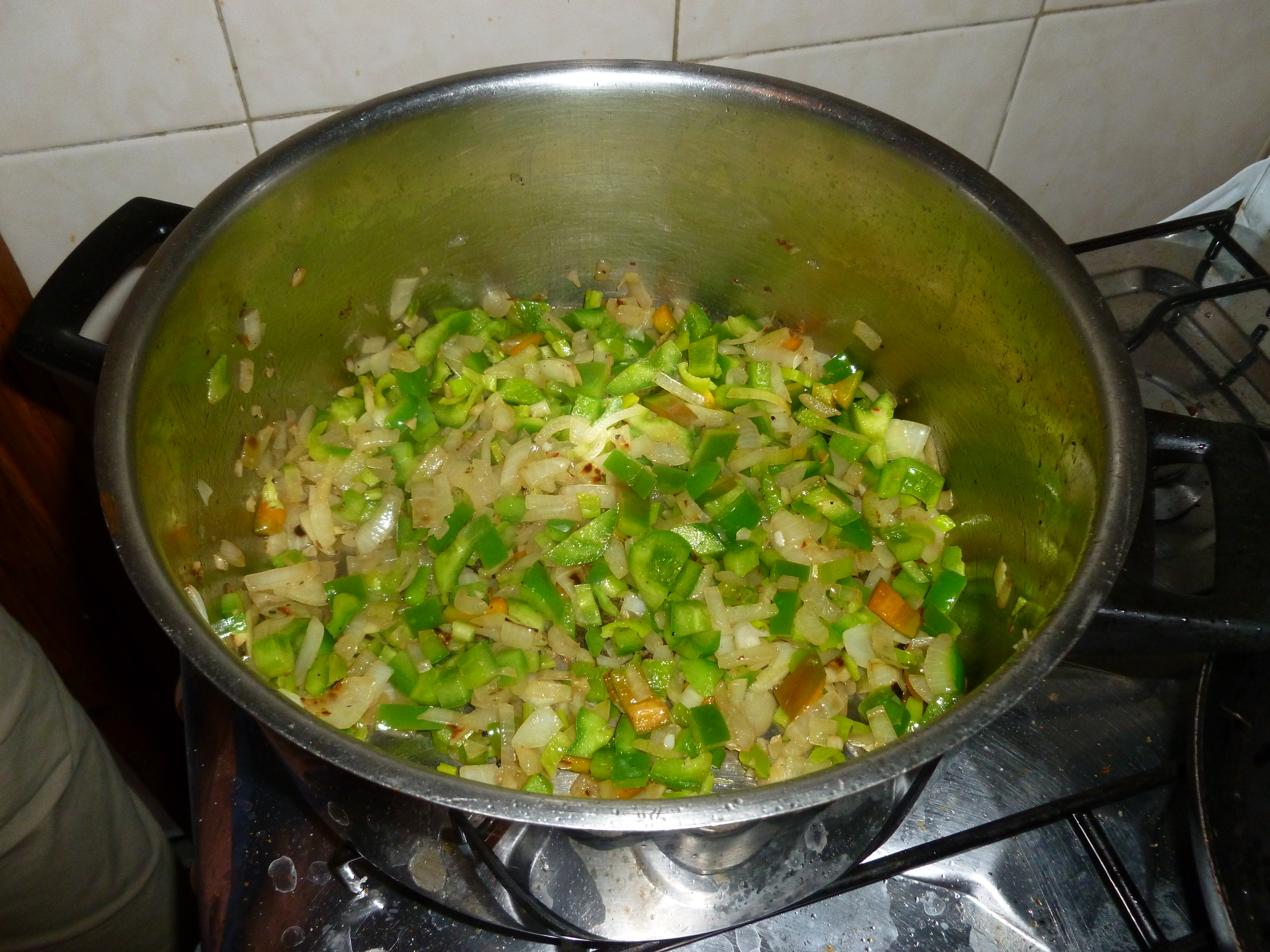
1. Saute onions, garlic, bell pepper and hot pepper in olive oil until just browned and soft.

2. Add meat, tomatoes and seasonings. Cook until meat is browned and broken into very small pieces.

3. Cool mixture in the fridge for 1 hour, then add one spoonful to the center of a dough disk. Wet the edges of the disk with your finger and then fold over and seal. There are lots of different ways to seal empanadas including with a fork or with a braid. This video shows how to do it using the different techniques.

4. Brush the tops with egg yolk to help brown them in the oven. Since the oven here is a bit funky… I’ll just suggest that at home you bake the empanadas at 350 F for about 15 min.


Apple Empanadas (recipe makes about 15 empanadas):

3 large granny smith apples chopped

2 tbsp margarine

0.5 cups sugar

0.25 cups dulce de leche (like caramel)

1 tbsp flour

Directions:

1. Place the apples, margarine, and sugar in a pan and sauté over low heat. When the apples are soft, add the flour to thicken the mixture. Off heat add the dulce de leche and mix.

2. Place in the fridge for an hour and then fill the empanada disks with goodness! Use the same cooking instructions as above. Enjoy!


The Mall at Punta Carretas

We have now been to this mall twice. Once to try and find phones and this time to try and find fresh herbs. It is approximately a two mile walk from our house. The supermarket near our house has some fresh herbs, but doesn’t have cilantro, parsley or dill. We wanted to get some cilantro to include in our next project, making empanadas!

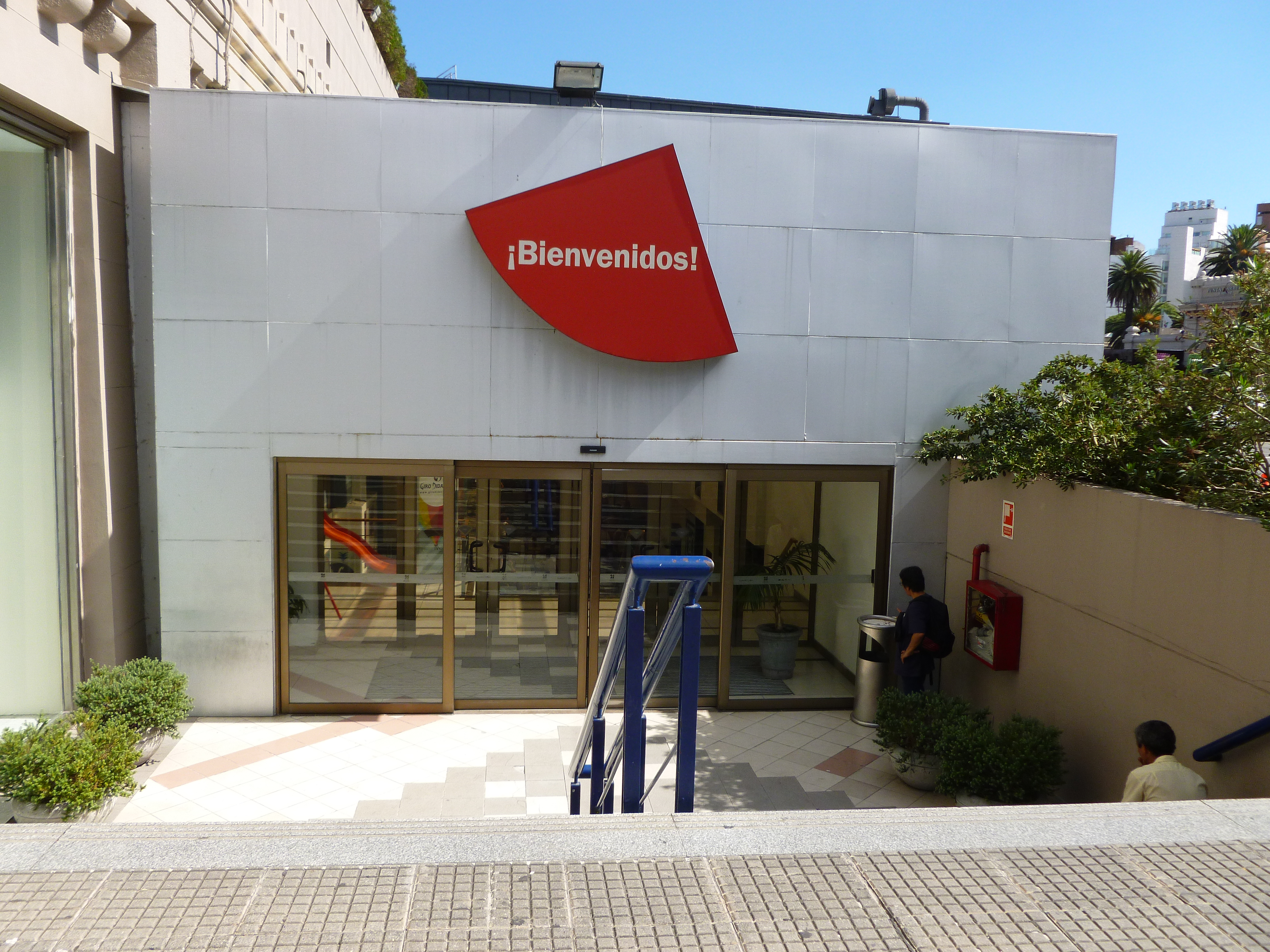
Entrance to the Punta Carettas mall.

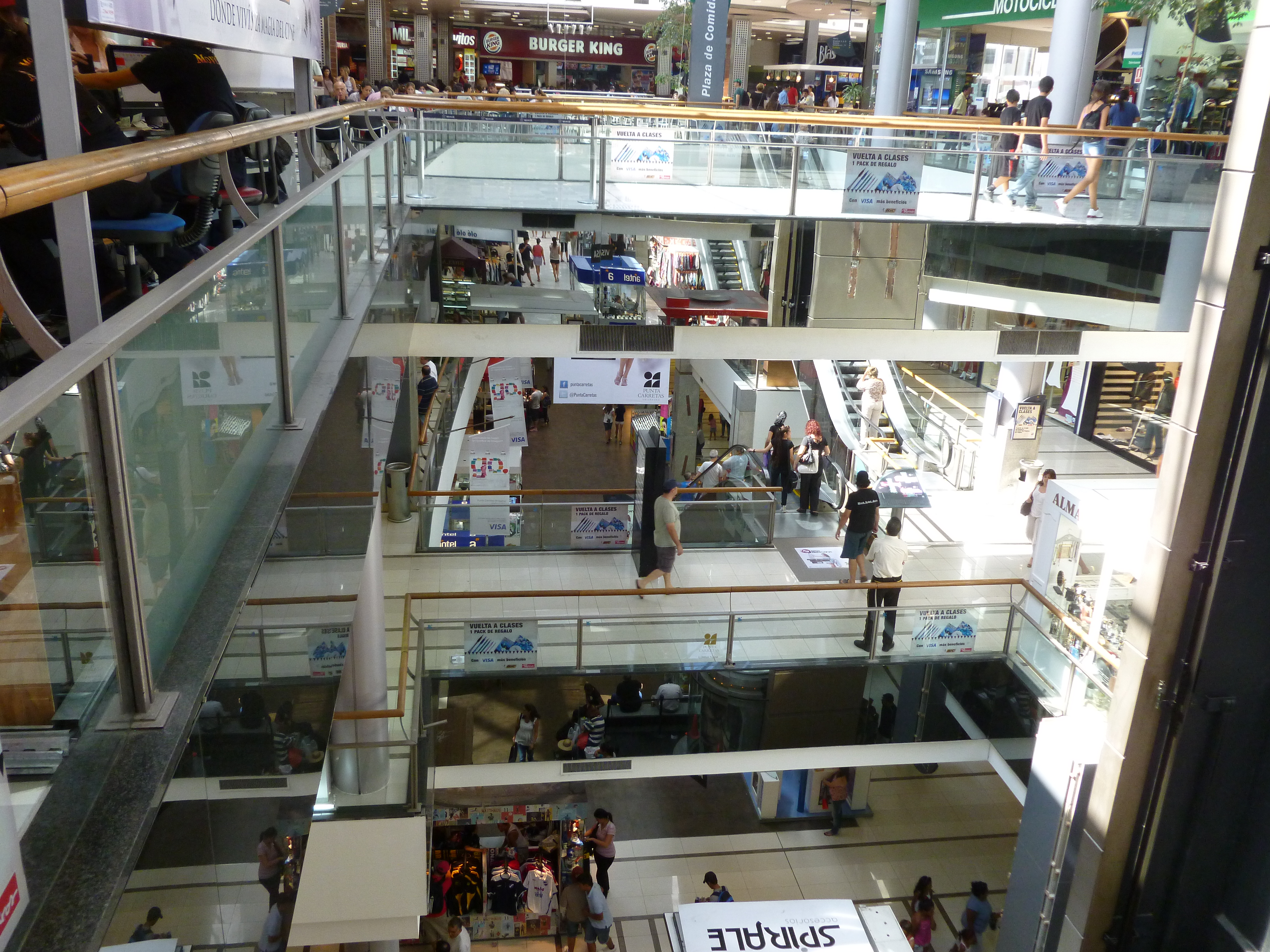
The mall is very similar to malls in the U.S. There are lots of stores, lots of little places to eat. They have a food court that includes the token chinese food, mexican food, McDonalds and Burger King. We couldn’t really understand why the lines were so long at the McDonalds and Burger King when people could get fresh made chivitos, pasta, or pizza for the same price or cheaper. I bet it has something to do with the super-size coke. Most other places include drinks that are small (i.e. less than a can of soda), whereas McDonalds has the same 20 oz beverage as their small size. We enjoyed the chivitos and fresh pasta!

The mall is huge. It has three separate floors and skylights in the ceiling. There seem to be a lot of people wandering the mall on the weekends, possibly taking advantage of the air conditioning. In the summer this can be a big deal, as most people and other small stores don’t have air conditioning.

Inside the Punta Carettas mall looking down from the third floor.

The mall has a movie theater. Matinee price is about $6US and regular price is about $8. It looked like all the movies were in spanish so that might be a good adventure for the future.

There are many lots of little stands selling a variety of goods including: phones, hair bands, scarves, mate paraphernalia, jewelry, and trinkets. Most of the stores are fairly small and packed with merchandise. Many things are expensive. For example, a large paperback book can cost more than $20US. Again, the more expensive things are those that are imported.

There is a very large supermarket in the mall which has a wonderful produce section where we found our cilantro and dill. In most independent stores, including the supermarket at the mall, people are required to deposit their bags into a locker before going into the store. Stores have lockers with keys set up at the entrances just for this purpose. People are allowed to take purses with them into the store, but not backpacks or shopping bags. A security guard usually observes. I guess this is one of the measures put into place to deter petty theft.

When in Uruguay, Drink Maté

When in Rome, do as the Romans do.

When in Uruguay, do as the Uruguayans do… drink maté.

Maté is everywhere. It is similar to green tea. The taste is different, and takes a little getting used to, but it’s the same concept. Hot water with some amount of leaves or ground up foliage and a way to drink it without eating the foliage.

I’m a huge fan of green tea and maté is a readily available drink close to green tea in Uruguay.

I didn’t want to drink maté out of a regular glass or cup. I wanted to drink it like Uruguayans do. To do that, it requires the correct items and not one of the collectors glasses that we have from a whisky box set.

The different parts of a complete maté setup are:

Yerba maté, the tea

Maté gourd with yerba maté in it

Maté gourd (called maté)

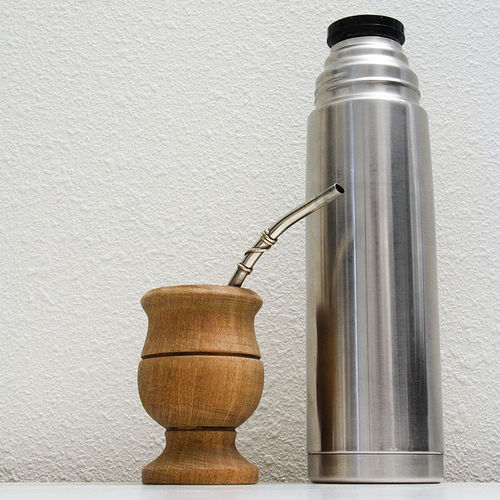
Maté gourd and bombilla

Bombilla, the metal straw that looks like a spoon on one end with holes in it to act as a filter of the maté.

My shiny new bombilla

Thermos, to carry the hot water around since immediate access to hot water is very important.

Maté thermos

A maté gourd and thermos for all day yerba maté satisfaction

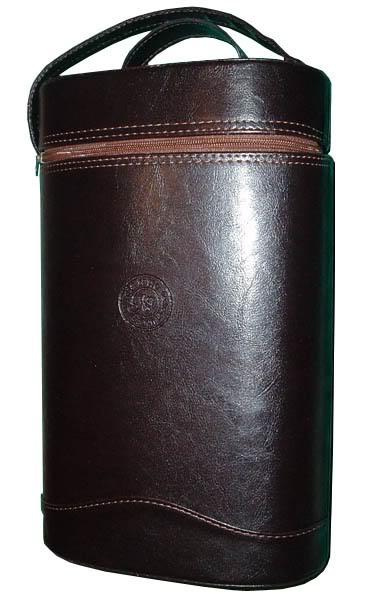
Matera, a leather satchel to carry everything around in.

Matera is used to carry a thermos, maté gourd, and yerba mate

Some people carry a matera around with them, but most people tuck their thermos under an arm and carry their gourd in the same hand of the arm with a thermos, leaving one hand free to do tasks.

Whenever we are outside, at least 1/4th of the people we see have a thermos tucked under one arm, while using the hand of that same arm to hold their maté gourd, full of yerba maté, hot water, and a bombilla.


And now, some maté information!

Appropriate times to drink maté: all day. Seriously, there is never a bad time to drink maté. You’re not cool if you’re not carrying around a thermos and maté.

Appropriate places to drink maté at: Everywhere!

I saw a guy struggling with 5 full grocery bags on one arm leaving a store, thermos and maté occupying the other while trying to take a sip without spilling or dropping anything.There is no way this guy would ever commit a party foul and spill a beer in hand, even if he fell down a flight of stairs. Hopefully he doesn’t fall down a flight of stairs though.

The most common places I see people with maté are:

  • The beach, even if it’s 100 degrees out, people are enjoying their super hot maté.
  • The bus, if you sit next to someone with maté on the bus and strike up a conversation, you might just get some maté.
  • La Rambla, the numbers increase of people drinkin maté at the La Rambla (street and large sidewalk next to the ocean/river). Seriously, it often gets close to 1 out of every 2 people have maté in hand around 7-8pm. The ones without maté are running or young children.
  • Walking on the streets, it seems important to never lose an opportunity to drink maté.

In case you are out and run out of hot water, you can refill your thermos with the correct temperature water at many gas stations, restaurants, bars, and more.

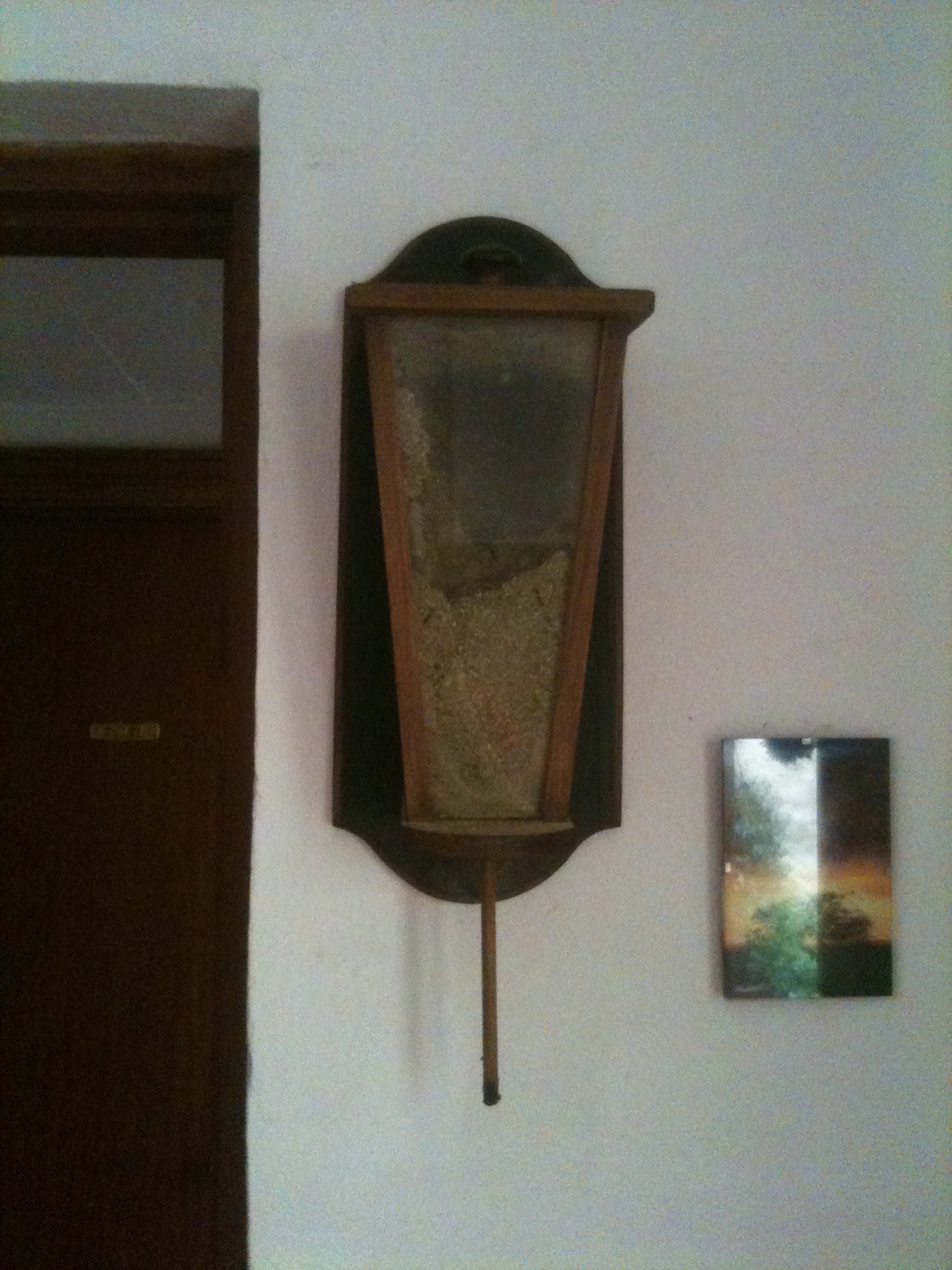
We have a maté dispenser on the kitchen wall in our house.

Push the gourd into the pole at the bottom and maté falls into the cup.

With all this maté going around, I’ve wanted to buy a maté gourd, bombilla, and thermos since I’ve been down here.

When in Uruguay, do as the Uruguayans do and drink maté!

This past Sunday, we went to the local market at Parque Rodo and I saw some maté gourds that I liked. After walking around to see what the market was about, I stopped and started talking to a very nice lady that was selling maté gourds and bombillas. She didn’t speak english except for a few words such as horse, english, and United States, and I felt pretty comfortable understanding and talking with her about the maté gourds.

Matt buying Maté

Buying a maté gourd and bombilla at the Parque Rodó market

About 10 minutes later, I walked away with my very own maté gourd and bombilla at a good price.

There were different sizes, different designs, and even gourds that were ceramic on the inside, but I chose to buy the traditional maté gourd with a logo of Uruguay on it. I’m sure only tourists have Uruguay on their maté gourd, but I liked it and figured people can pick out that I’m a tourist pretty quickly.

Preparing the Gourd

I was told that I needed to put cold water and maté in the gourd for 2 days to let it soak in and then lightly scrape the inside to remove the loose part of the gourd. This is supposed to take the bitterness out of the gourd. Everywhere online said to use hot water so I followed her directions and then the hot water directions.

So, here is my maté gourd and bombilla. I’ll buy a thermos and take my maté on adventures when I am more conversational in spanish. For now, I’m content with just drinking maté in our house.

Matt's maté gourd and bombilla


Featured image credits here.

Flea Market in the Park

Every Sunday there is a huge flea market in Parque Rodo from 10 am to 3 pm. There are more than a hundred stalls where vendors sell everything. I do mean everything. There were the standard knick-knacks, but there were also clothes, underwear, shoes, art, frames, incense, spices, plants, video games, lamp shades, jewelry, and flowers for sale. All the vendors set up right next to each other and formed aisles the width of about three people. It seemed that vendors got together to drape tarps over their stands and the aisles, maybe in case it rained. Matt bought a maté gourd and bombilla (look for details in a future post)!

We finally met Maria’s daughter (Maria is our neighbor). She was selling stuff at the market and called out to us to say hello, asking if we lived on Gaboto street. It was nice to finally meet her.

There wasn’t any food at this market except for the “carritos”, or food trucks which had lines upwards of 20 people deep. They sell hamburgers, sausages, and hot dogs along with drinks (More about carritos in another post). Men walk around with carts yelling “helados”, obviously to great effect because every time I hear them I really want some ice cream!

There were lots of people walking around the park and sitting in the grass enjoying their maté.

There were paddle boats for rent at the little lake in the center of the park and a sign saying “Biblioteca” (translated as library) pointed toward a building that looked like a long-defunct castle.

There is also a nice little fountain with benches in the middle of the park that is well worth some future lounging.

The Oven: It Works!

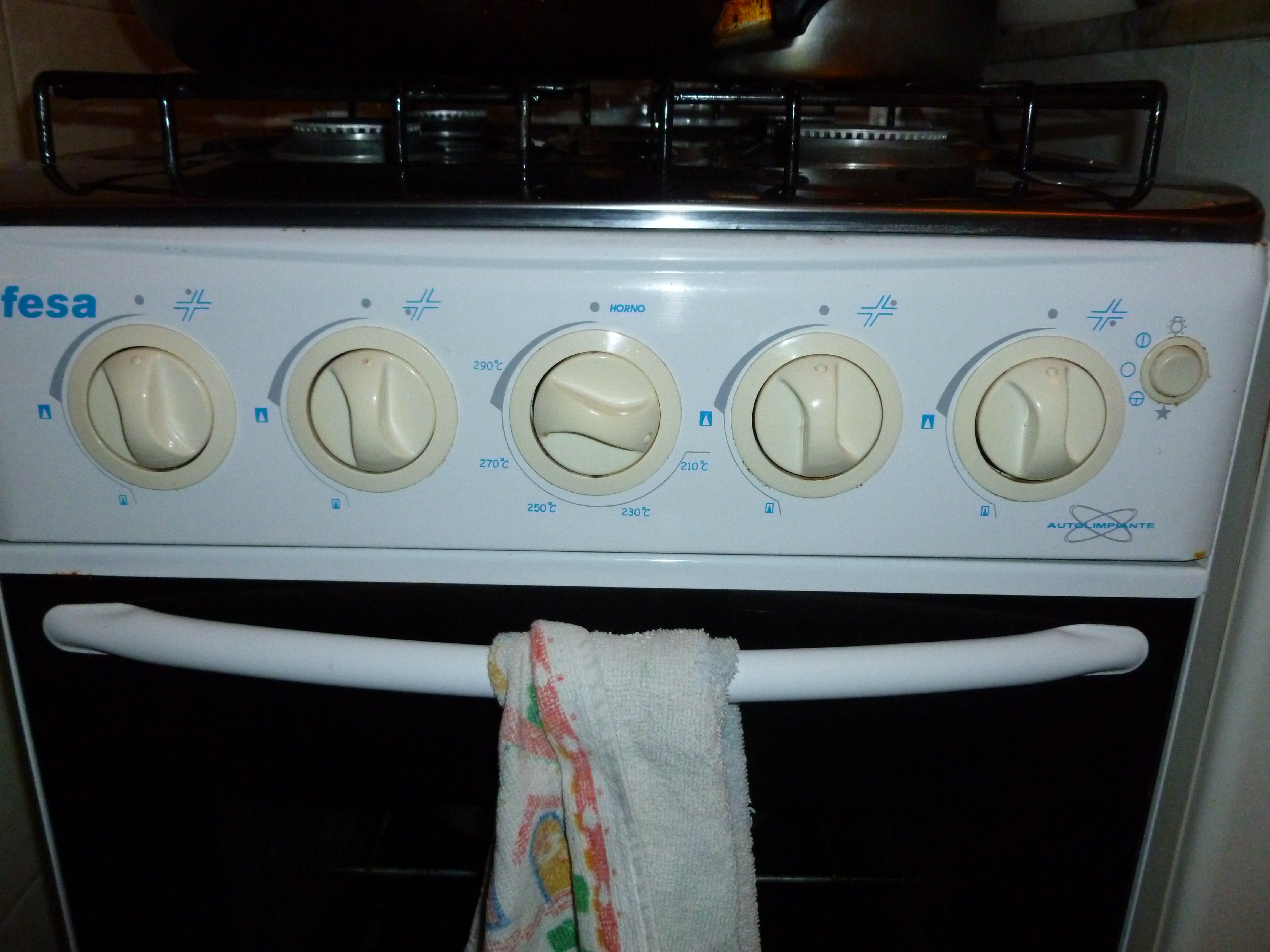
Saying that I have been a little scared of using the oven here might be an understatement. It’s a gas oven, the likes of which I haven’t dealt with in the last 8 years. It’s also about half the size of any oven I’ve ever dealt with. The biggest “scary factor” about this oven is that the posted temperatures are all in degrees Celsius with the lowest temperature equating to about 400 degrees Fahrenheit. This was all very confusing to me, but this weekend I overcame my fears in the name of cookies!

Some things about cookie making in Montevideo…

1. There is no brown sugar. It just doesn’t exist.

2. There are no chocolate chips. They just don’t exist.

3. Baking powder comes in a baggie… luckily with big red lettering or someone would think we had a lot of drugs in the house. In fact all spices come in little baggies unless you want to pay twice as much and buy McCormick’s.

Some things about cookie making in The Little House…

1. We don’t have a mixing bowl. I used a pot.

2. We don’t have a cookie sheet. I think I used something made for pizza dough.

3. We don’t have measuring cups or spoons. I used a drinking cup and a regular spoon.

4. The posted oven temperatures don’t seem to match their actual temperatures.

So, how did I accomplish this obviously arduous task? Well, I collected all the ingredients from the store including a very large Hershey’s dark chocolate bar. It was just as good as chocolate chips once I broke it all up into little pieces.

Everything got mixed and put onto our pizza tray and into the oven it went. I set the oven to the lowest temperature setting hoping that I wouldn’t burn the crap out of my cookies.

The first batch took forever to cook. The second batch I got tired and lazy so I didn’t even try to make individual cookies. I just spread the dough out in the pan and made one huge cookie. I also turned the oven up thinking that somewhere in the middle was probably a good cooking temperature. It makes me wonder if my temp conversions were wrong (I did check twice), the gas just doesn’t heat up all the way, or if someone had a good laugh putting the wrong temps on the knob.

The cookies turned out great!

I also repeated the baking experiment a couple days later by making an apple crisp which turned out delicious.

This is not the cream you’re looking for…

Randi and I voted that it was Matt’s turn to cook, and being the great guy that he is, he obliged. He set to work making salads, raviolis and a cream sauce. Now, cream sauces make Matt very nervous. He has vivid memories of his sister fretting over white sauces at home because of their tendency to break. So, he looked up a recipe online assembled the necessary ingredients and set to work, carefully following every instruction.

I was blissfully listening to the sounds of dinner preparation from my lethargic position on the couch, when Matt came a little sullenly  into the room to ask how to fix a broken sauce. I had made several white sauces since we got down here so I was a little surprised, but I had only made them with milk and Matt had decided to use cream, which could account for different behavior. We determined that the best course of action was to add more cream and stir, after which, I followed Matt back into kitchen.

The cream he was using came in a box roughly the size and shape of the juice boxes one would relish as a child during recess. The milk and yogurt drinks here come in bags so why wouldn’t the cream come in a box. As Matt began to add more cream to the sauce, I noticed, with some amount of trepidation, that it was coming out in clumps as he was really working to squeeze it out. He assured me that this was how it all came out. Now, many things are different here, but chunky cream drew some suspicion. I sampled this with my finger and found that the cream he was using was actually whipped cream.

Upon closer inspection of the box, one side said cream while the other had the clarifying subtitle of whipped, all in Spanish of course. Now to be fair the box did have a picture of whipped cream with strawberries and mint leaves but we’ll chalk that up to assuming that it was a picture of something one might make with the contents of the box. After all, cereal boxes often show a bowl with milk, and even on occasion orange juice, on it but most of that doesn’t come in the box.

I suggested that we just add some milk (from a bag) and I stirred continuously for about 5 minutes to fix the broken sauce, while Matt finished prepping the rest of dinner. Everything came together quite nicely and the sauce, whipped cream and all, was delicious.

Matt whipped up a great dinner.

Street Market

The street markets are definitely where it’s at! They have fresh and yummy tasting produce out the wazoo, and it’s cheaper than the supermarket. There are no barriers closing the street from traffic, but there isn’t really room for cars to pass. Every once in a while a motorcycle rides through slowly and people just get out of the way.

At one end of the market there are people who display wares for sale. For example, today I saw that someone had a pair of jeans to sell, while someone else had some trinkets. I didn’t see anyone actually buying anything and it seems like the people might be set up there on the off chance that someone saw something they just “had to have”. It reminded me of a garage sale, but on a much smaller scale.

The produce stalls make up the majority of the market. All of the stalls seem to have very fresh produce and a much wider variety than in the supermercado. At the majority of produce stalls the sellers will hand you a plastic bag or you grab one yourself and place what you want in it; each type of item in a separate bag. They then weigh the bags; writing each total on a slip of paper to be added at the end. There was one produce stall that stumped us; the biggest one. I guess we just weren’t paying enough attention, but we walked behind the stall to the second row of veggies and grabbed what we wanted. Little did we know, but at this stall everyone is suppose to take a number and then when your number is called you tell the sellers what you want and they put them in plastic bags and weigh them. The seller didn’t seem angry when I handed him the bag with our two bell peppers and said “es todo”. I was prepared to tell him that we didn’t understand and I was sorry, but he didn’t seem to care.

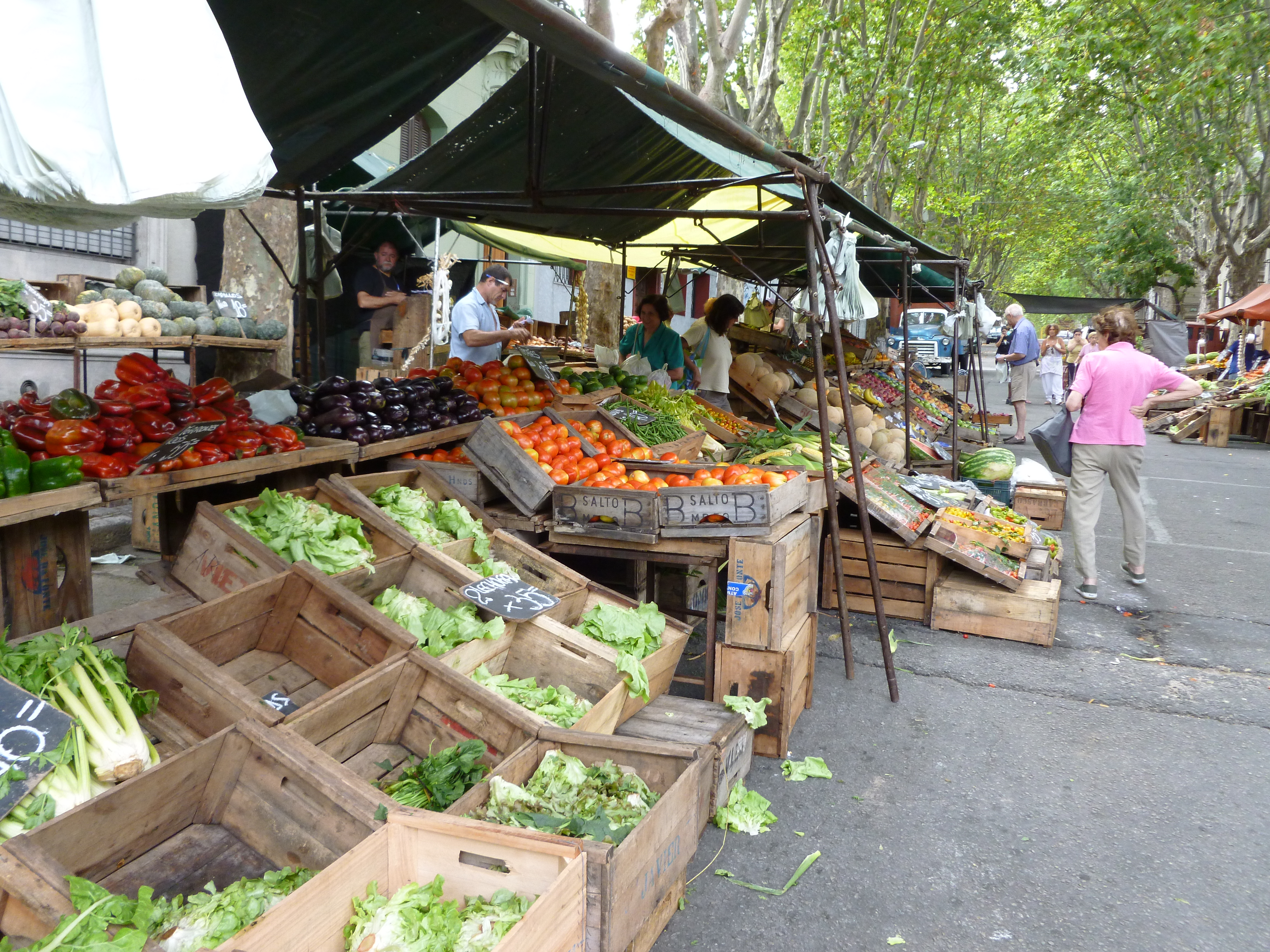
Just one of the many produce stalls!

There were two trucks that opened up to sell goods out of their sides. One was a cheese truck and the other was the local fish truck. We have been told that the fish is very good, but we were a bit too timid to try it today.

The fish man. Maybe next time we'll have the courage to try some of the fish.

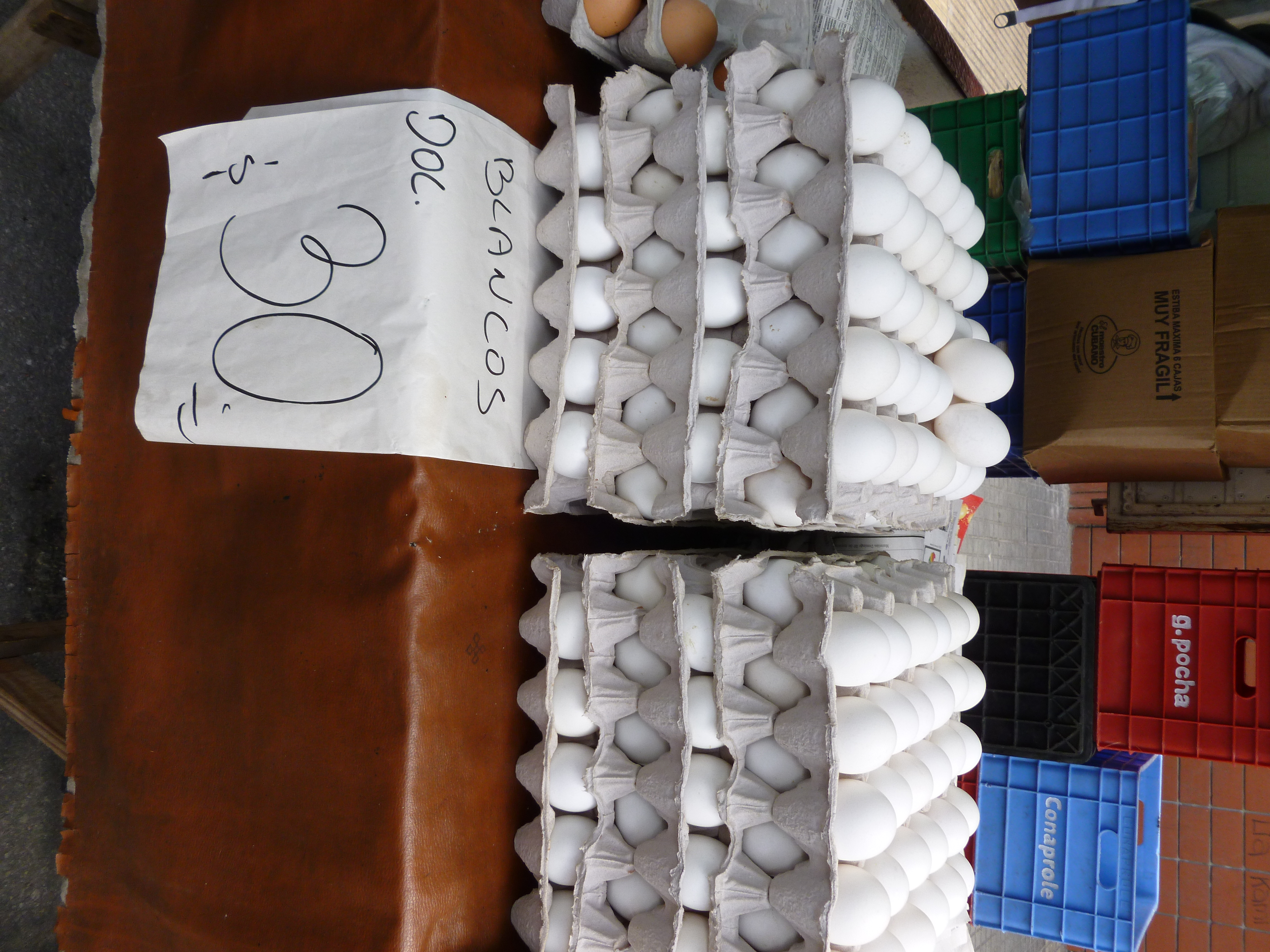
The cheese truck also has an add-on of an egg-man. He sells individual eggs if you want them or in a dozen (“una docena”) and wraps them in newspaper for you to take home.

Eggs for sale! He had both brown and white eggs. We got the brown ones. The brown ones were a bit more expensive, but we figured that must mean that they're better!

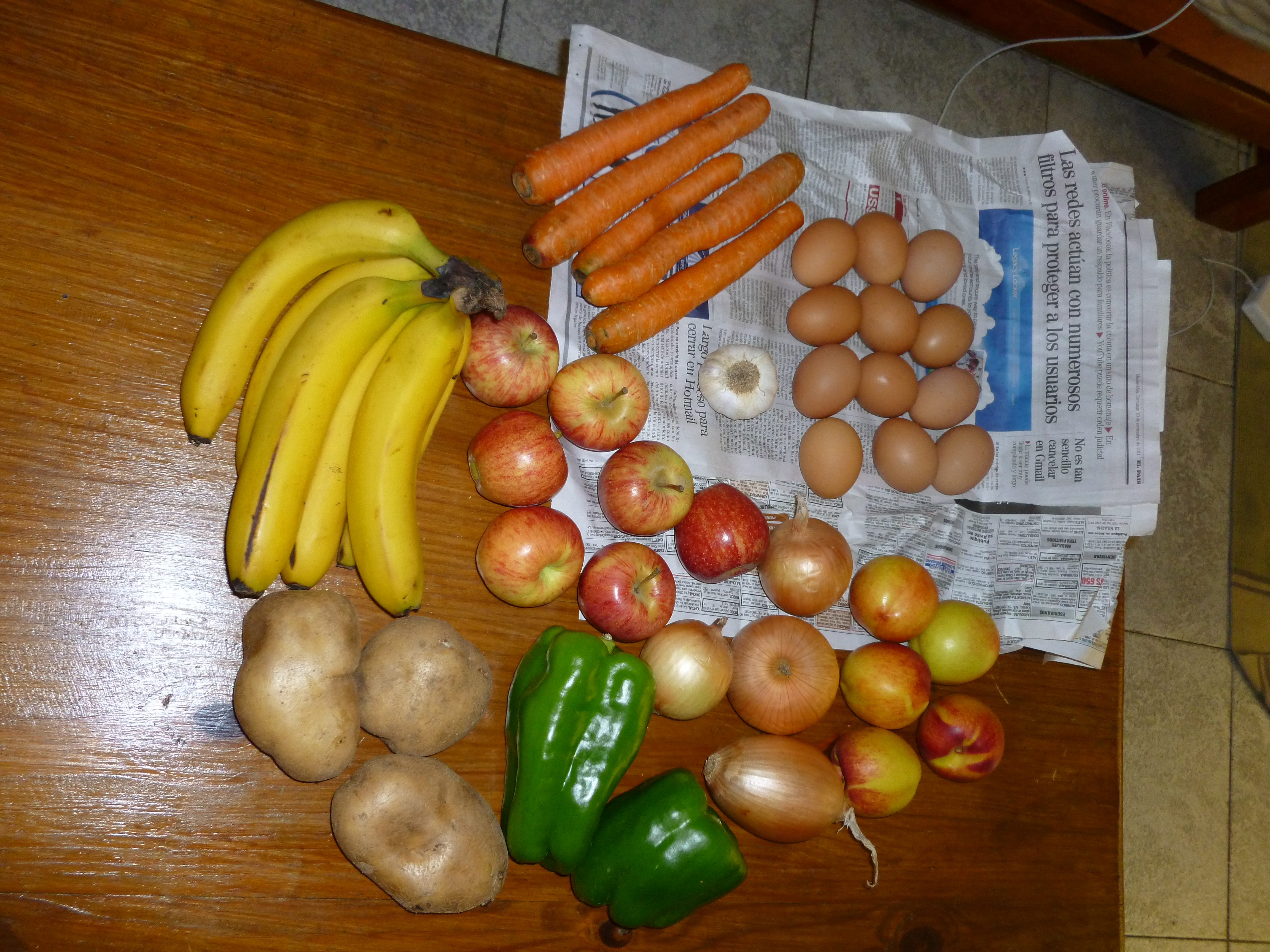
All the produce is for sale in kilograms and is remarkably cheap. We got potatoes, garlic, apples, bananas, nectarines, carrots, bell peppers, onions, and eggs for $174 pesos which is about $8US.

Our Spoils!