Flea Market in the Park

Every Sunday there is a huge flea market in Parque Rodo from 10 am to 3 pm. There are more than a hundred stalls where vendors sell everything. I do mean everything. There were the standard knick-knacks, but there were also clothes, underwear, shoes, art, frames, incense, spices, plants, video games, lamp shades, jewelry, and flowers for sale. All the vendors set up right next to each other and formed aisles the width of about three people. It seemed that vendors got together to drape tarps over their stands and the aisles, maybe in case it rained. Matt bought a maté gourd and bombilla (look for details in a future post)!

We finally met Maria’s daughter (Maria is our neighbor). She was selling stuff at the market and called out to us to say hello, asking if we lived on Gaboto street. It was nice to finally meet her.

There wasn’t any food at this market except for the “carritos”, or food trucks which had lines upwards of 20 people deep. They sell hamburgers, sausages, and hot dogs along with drinks (More about carritos in another post). Men walk around with carts yelling “helados”, obviously to great effect because every time I hear them I really want some ice cream!

There were lots of people walking around the park and sitting in the grass enjoying their maté.

There were paddle boats for rent at the little lake in the center of the park and a sign saying “Biblioteca” (translated as library) pointed toward a building that looked like a long-defunct castle.

There is also a nice little fountain with benches in the middle of the park that is well worth some future lounging.

The Oven: It Works!

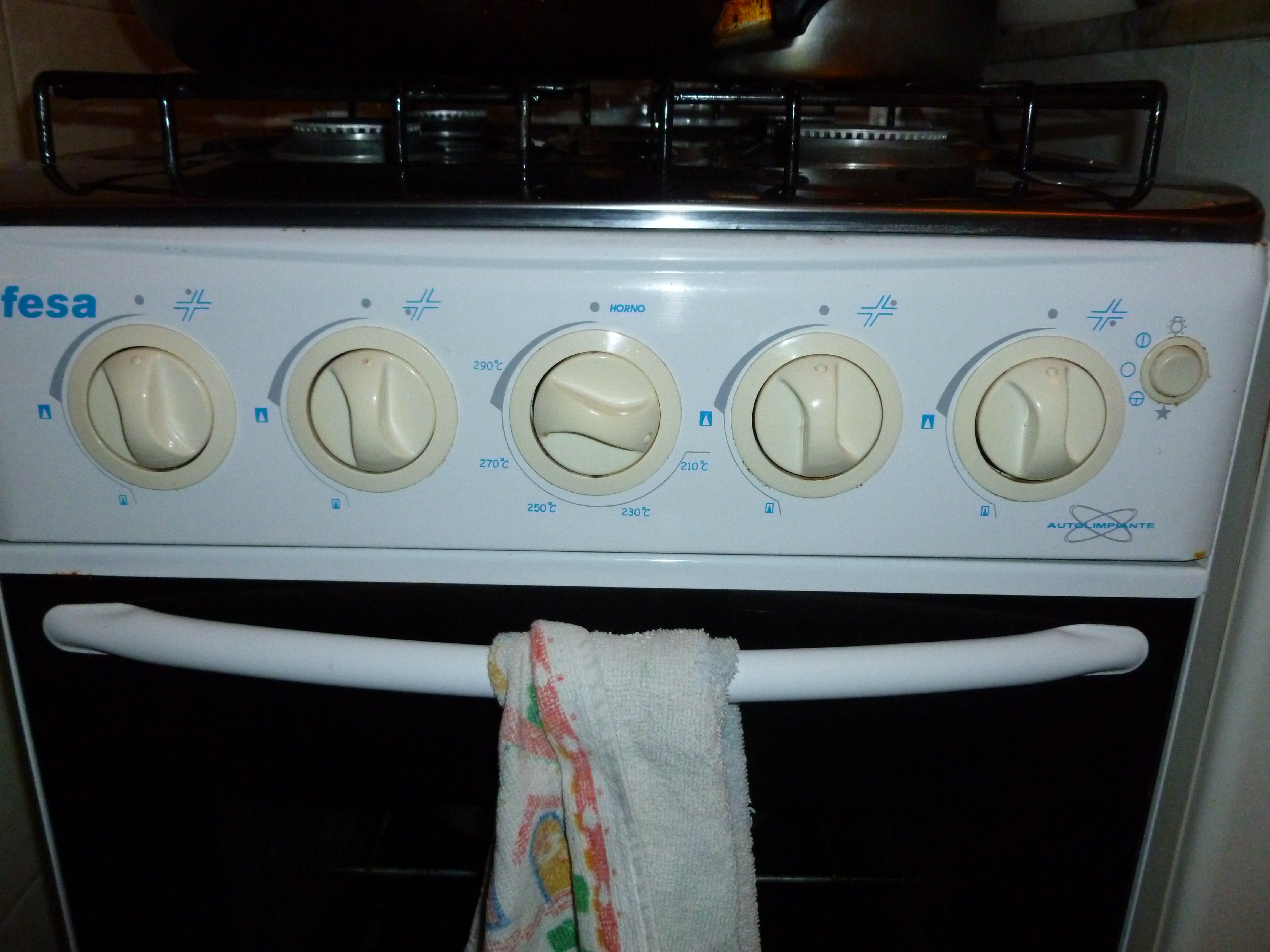
Saying that I have been a little scared of using the oven here might be an understatement. It’s a gas oven, the likes of which I haven’t dealt with in the last 8 years. It’s also about half the size of any oven I’ve ever dealt with. The biggest “scary factor” about this oven is that the posted temperatures are all in degrees Celsius with the lowest temperature equating to about 400 degrees Fahrenheit. This was all very confusing to me, but this weekend I overcame my fears in the name of cookies!

Some things about cookie making in Montevideo…

1. There is no brown sugar. It just doesn’t exist.

2. There are no chocolate chips. They just don’t exist.

3. Baking powder comes in a baggie… luckily with big red lettering or someone would think we had a lot of drugs in the house. In fact all spices come in little baggies unless you want to pay twice as much and buy McCormick’s.

Some things about cookie making in The Little House…

1. We don’t have a mixing bowl. I used a pot.

2. We don’t have a cookie sheet. I think I used something made for pizza dough.

3. We don’t have measuring cups or spoons. I used a drinking cup and a regular spoon.

4. The posted oven temperatures don’t seem to match their actual temperatures.

So, how did I accomplish this obviously arduous task? Well, I collected all the ingredients from the store including a very large Hershey’s dark chocolate bar. It was just as good as chocolate chips once I broke it all up into little pieces.

Everything got mixed and put onto our pizza tray and into the oven it went. I set the oven to the lowest temperature setting hoping that I wouldn’t burn the crap out of my cookies.

The first batch took forever to cook. The second batch I got tired and lazy so I didn’t even try to make individual cookies. I just spread the dough out in the pan and made one huge cookie. I also turned the oven up thinking that somewhere in the middle was probably a good cooking temperature. It makes me wonder if my temp conversions were wrong (I did check twice), the gas just doesn’t heat up all the way, or if someone had a good laugh putting the wrong temps on the knob.

The cookies turned out great!

I also repeated the baking experiment a couple days later by making an apple crisp which turned out delicious.

Birthday Party!!

Carlos turned 22 and had a big celebration yesterday! Happy Birthday Buddy!

It is fairly common here to be able to rent out a space with some kind of kitchen facilities for parties or meetings. This is what the board gaming group does and what I assume Carlos’ family did last night.

We had our directions; the corner of Blvd. something Artigas and Colorado… Go past the fields and ask for Glorieta. So we walked down the street to catch the bus. We managed to get off a couple stops too early, but I guess that’s better than too late. We walked, we saw the fields, we saw a gate, we saw the guy in camo gear guarding the gate, and we kept walking. We got to the corner of Blvd. something Artigas and Colorado and knew we missed something. We called Carlos. He sent his brother Juanma and friend Ale to come and collect us.

Apparently we were suppose to stop at the gate and ask the camo guy about Glorieta. Turns out Glorieta is NOT a person. It’s the name of the little building where the party was. Go figure!

The party was great. I imagine there were about 40 people including friends and family. There were lots of snacks, along with beer and coke (both staples in Uruguayan dining). Some of the snacks we hadn’t seen before… Faína, which is a garbanzo flatbread that is sometimes placed atop pizza (called pizza al caballo). Maní, which are peanuts, but these had some kind of hard salty outer coating on them which reminded me of a corn nut.

When the majority of people arrived (probably around 10:30 pm) Carlos started the karaoke singing. It was very apparent that this might just be his favorite thing to do other than play ultimate, but unfortunately I haven’t gotten any good pictures of him doing either. I must say that karaoke in spanish was much more enjoyable in english, but that could have been the beer talking!

Matt and Juanma singing "We are the Champions" by Queen... Reminiscing about their recent win at a beach tournament in Monte Hermoso.

Juanma and some of the other frisbee boys enjoying themselves.

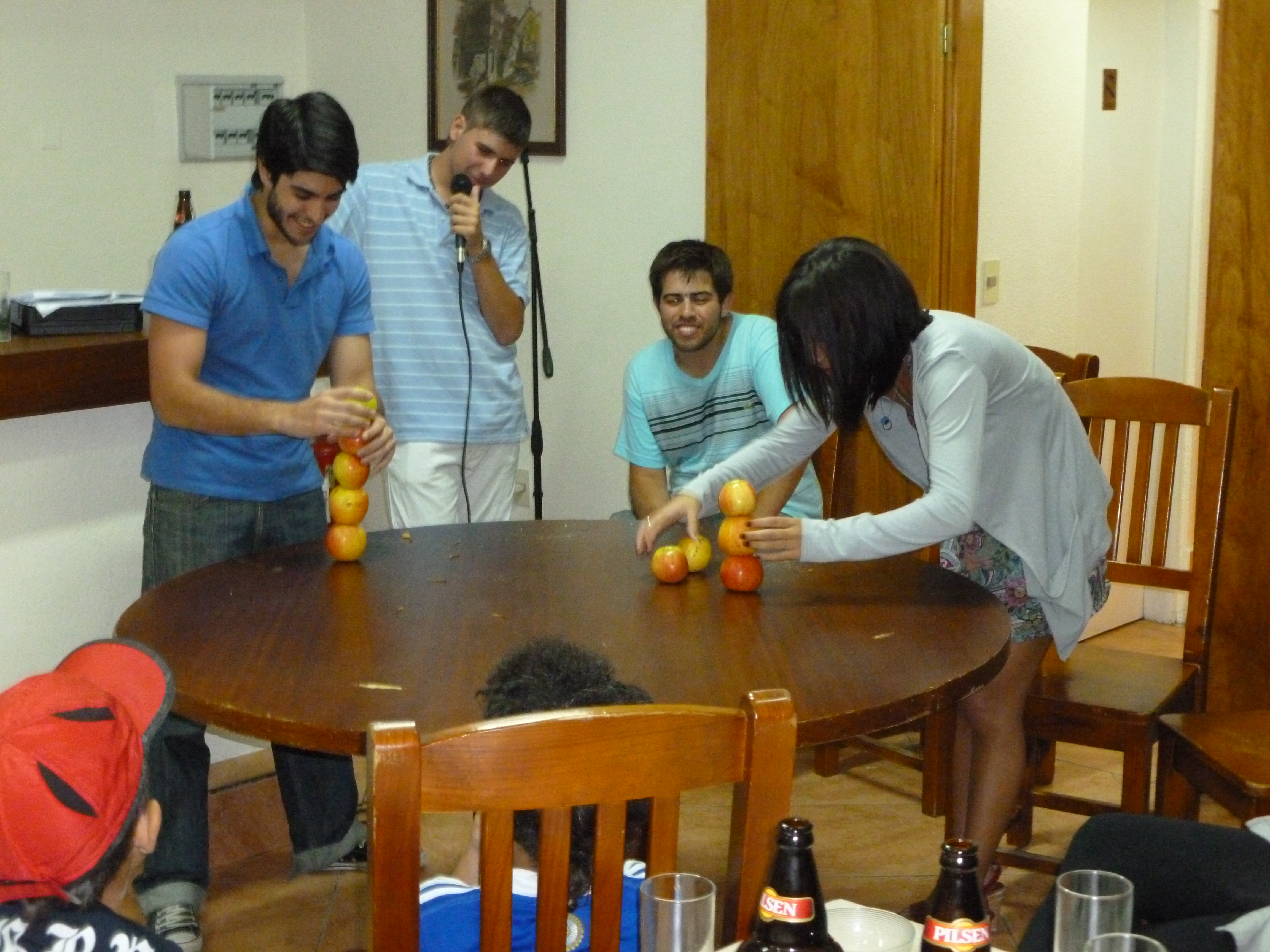
In the middle of karaoke there were hamburgers served. Then there were games. I guess the TV show “Minute to Win it” has gained some popularity here, so we played a variety of minute to win it games. These included: stacking bolts into a tower using a skewer, balancing a tower of 5 apples, bouncing a spoon into a cup, and moving  a cookie from your eye to your mouth without any hands. Asa and Matt both succeeded in making bolt towers and I dropped my cookie on the floor.

Asa and Carlos playing a "Minute to Win it" game.

Maru trying to out-balance her opponent in another "Minute to Win it" game.

We were taught (sort of) how to play Truco, an uruguayan card game. It uses a special deck of cards numbered 1-12 and may be one of the few fun purchases we make while we’re here. That is if we can actually figure out how to play.

We were just getting ready to leave when Carlos informed us that there was dessert. We sung happy birthday and ate delicious moosey cake with dulce de leche (sort of like caramel). Special thanks to Carlos and his family for organizing everything and creating a lovely evening for everyone.

Board Game Night

There is a board game group in Montevideo that meets once a month for an all-night game extravaganza (8 PM – 8 AM). People bring games, food, drinks, and fun.

We attended said extravaganza this weekend and had a blast. We were among some of the first people there (chalk that one up to not embracing the late night culture), despite the fact that we were fashionably late and walked around the neighborhood trying to find the address. Turns out the place was just above a group of men grilling over a fire in the street. The board game group rents out a space that looks like its made just for their purposes. There are numerous chairs and tables to set up board games on, a microwave to heat up food, and a fridge. The A/C doesn’t work so well, but at least there are bathrooms.

The first game we played was a card game with creeper zombies and random keeper objects like donuts. It’s one of those games that you only want to play every once in a while and by the end you remember why you haven’t played it lately. It took forever for someone to win.

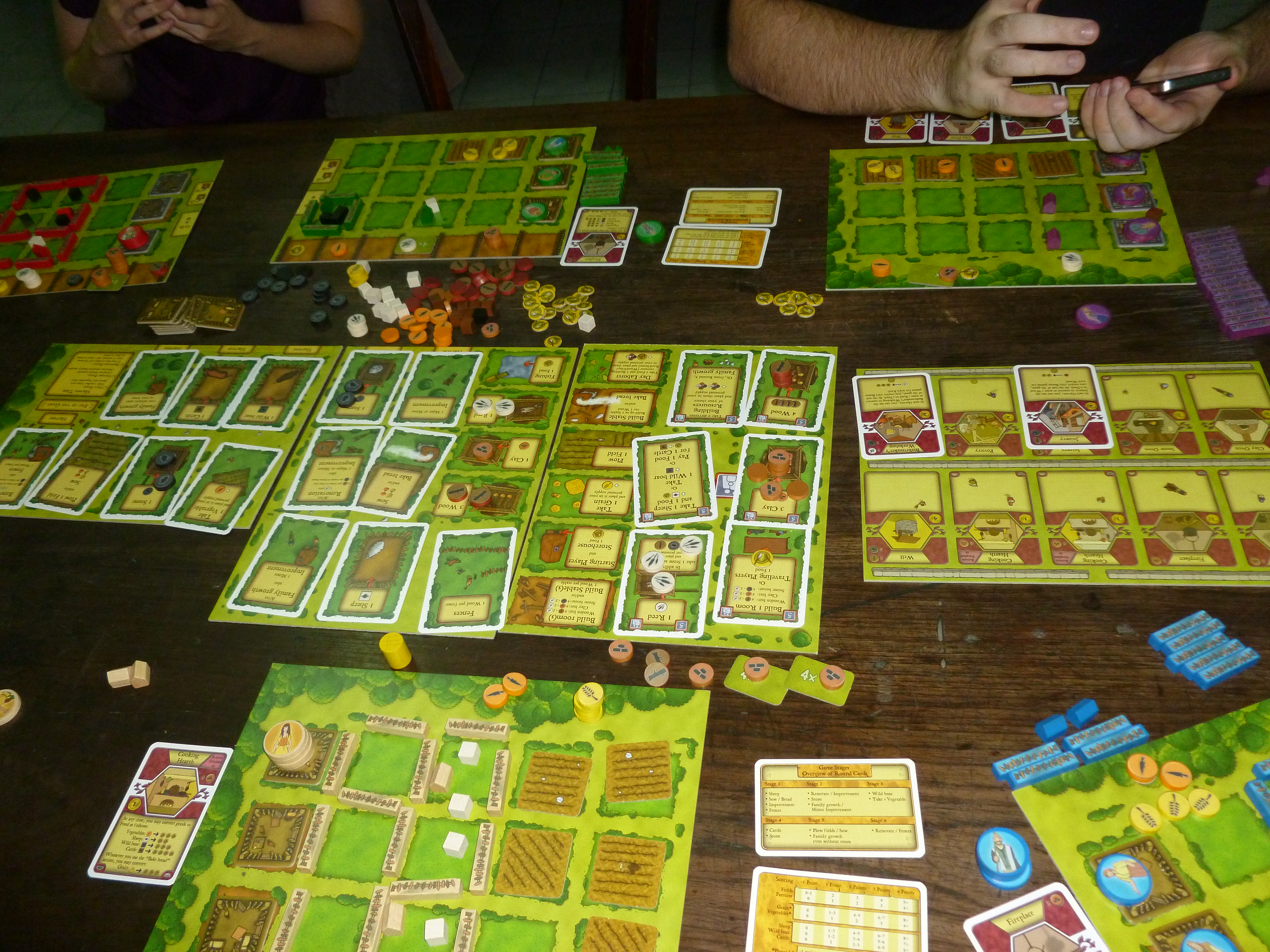
While we battled it out with our zombies, there was a near-steady stream of people arriving (maybe a group every 20 min or so). By the time we finished with our zombie game the new arrivals had already started other games, so we started another game (Agricola) with the same group of people.

I had never played before and our Uruguayan friend explained all the rules of the game to me in english. So much for learning board game vocabulary. It seems like many of the games that people brought were the english versions, but that may have been because when our friend visited us in the states he bought an extra suitcase to fill with board games to take back to his friends.

A large group of people arrived around 12:30 with cupcakes decorated like the board game, Settlers of Catan. I ate some wheat.

We left shortly after their arrival, although it was clear that the party was really just getting started. Next month we’ll be prepared by bringing our own munchies, caffeinated beverages, and our own board games to share!


The “Ultimate” Opportunity!

Part of every great adventure is meeting awesome new people and this adventure is no exception. As most of you probably already know, the three of us are very involved in the ultimate frisbee community in the United States. We have all played on top tier teams and participate in local leagues and activities. When we decided we were coming to Uruguay, one of the first questions we had was “Do they have an ultimate team?” None of us could imagine 6 months without the sport and community that we love. Luckily, Matt did some research and found the Uruguay national team (the one and only team) and found Carlos.

Carlos heard of ultimate frisbee 3 years ago and has built a team of about 30 people that compete in 1 or 2 tournaments each year and even put on their own hats tournament last year. Carlos has negotiated field space for the Ultimate team to practice on three times a week and organizes community events to teach children how to play ultimate. He even has a small supply of fliers (with him at all times) describing the 10 steps to playing ultimate that he can give to people that are interested. Everyone that we have met on the team has been so welcoming and helpful.

Carlos has picked us up at our house and taken us to practice, which is good because we probably would never have figured out how to take the bus on our own. Carlos and his brother also helped Matt organize his weekend trip to a beach ultimate tournament in Argentina. Everyone has been awesome in suggesting things to do in the city and describing things about the city that would never have occurred to us. Just like any other ultimate community that we have been a part of, I have no doubt that the team will quickly become a home away from home and we’d like to help them in any way that we can!

We are starting to help them achieve their goal of becoming a competitive team (they’ve never won a game as a team) by teaching them as much as we can and helping lead practices. We have already seen improvement in the couple weeks we’ve been here.

Unfortunately they don’t have all the opportunities that a team from the U.S. might have. There are no local (i.e. anywhere in the country) ultimate frisbee companies that can provide discs or jerseys for this team. Uruguay, as a country, does a great job promoting local goods by requiring an enormous import tax on anything being shipped into the country. These import taxes can be up to 60% of the value of the goods. Because of this, getting ultimate related equipment or apparel is prohibitively expensive for the team.

We have arranged a generous donation of discs from the ADFC, Atlanta Flying Disc Club, to be shipped to the team. These will no doubt help the team in their practicing and community activities, as the discs that most of the players currently have are so scratched up they shouldn’t be played with.

Despite the donation of discs, the team still does not have jerseys. As with any sport, looking and feeling like a team is vital to the teams’ success. We would like to help the Uruguayan team look, feel, and play like a team by helping them get some jerseys. We’re doing our best from here, but we need your help. Please visit our Uruguyan Ultimate Jersey Fundraising page. Click the link or find it at the top right of our blog.

Let’s help support our ultimate communities across the world!

The Cellular Adventure

We all have working cell phones!

None of us were sure that we wanted cell phones while we were here. We spent many a night back in Atlanta joking about buying “burner cell phones” that we could burn when we were done with them, just like some kind of James Bond movie. We talked to a bunch of people. Okay, mostly frisbee people, that told us about all the options for cell phones here in Montevideo. In the end, and for the price, we decided it would be silly not to have them.

Some info about cell phones here…

Everyone has one. And most people have the expensive fancy ones. There aren’t a whole lot of IPhones wandering around because of the import taxes but there sure are some close copies. Most of the small cell phone stands and electronics stores only advertise their most expensive wares (some things don’t change regardless of where you are in the world).

A lot of people have pre-paid plans. These aren’t as common in the U.S. but it seems like it’s the way to go here. Each month you pay between 10 and 500 pesos which gets you minutes. Depending on your plan, each minute you talk can cost from 4-10 pesos. In addition to the minutes you pay for up front, you also get 1000 minutes to call three free lines. You can call 1 other cell phone for free, you can text 1 other cell phone for free, and you can call 1 land line for free. When it comes time to re-charge your phone you can just walk down the street to the Abitab (they are everywhere and can do lots more than just re-charge phones) and give them your number.

So we went out in search of cell phones last weekend, only to realize that stores are only open from 10 am to 1 pm on saturdays and it was almost 5 pm. We tried again on tuesday. We got to the store and of course it was closed for lunch, but just our luck Matt had wandered a bit in that area trying to get to a bus stop and saw another cell store.

The security guard opened the door (it seems that most stores have security guards at the doors) and we went straight to the counter and told the lady that we wanted the cheapest cell phone they had and a pre-paid plan, and oh by the way, that we didn’t speak spanish very well. That sealed the deal. She was very nice, spoke no english, and kept asking us if we understood what she was saying. We had all prepared a bit for this adventure (Asa more than Matt or I) by translating the majority of the cell companies’ website and knew most of the key words we would need for the interaction. We understood her pretty well, or at least didn’t have any major miscommunications.

So Asa and I both got the same, cheap $30US phone which we are still figuring out how to distinguish from each other. We got SIM cards to put in them which came with a 300 peso pre-paid plan. Matt had his iPhone which he jail broke and just got a new SIM card to put in it with a pre-paid plan.

So Asa and I can call each other for free, we can both text Matt for free, Matt can text me for free and call Asa for free, and we can all call the phone at The Little House for free. We’ve got a nice little free cell triangle going on!

Cleaning House

In Uruguay it is common practice to hire a maid to come clean the house once a week. A good maid, one that cleans well and also won’t steal anything, costs around 500 pesos or about $25US. They will come to your house at the appointed time, maybe even early, and clean for a couple hours. Some maids will only come once a week and will not come if you ask them to come every other week; their reasoning being that it will take too long for them to clean up the mess you’ve made in two weeks as opposed to one.

Raul is a bit protective of his house and requested that we get a maid to come and clean. He prefers she come once a week, but she could come every other week if we really wanted, and she agreed. So we decided we would appease the house owner, which is never a bad thing, and arranged for Moni (the maid) to come and clean. Raul told us she was “100% trust”.

Moni showed up 10 minutes early. This normally wouldn’t be a problem, but we happened to be out buying cell phones and were on plan to arrive just in time to meet her. We didn’t even think she would be early, as lots of things here seem to run on Montevideo time. Luckily Maria, our lovely neighbor in the house, knew her and kept her company until we arrived.

Moni promptly set to work with the kitchen, but not before asking which of us was going to pay her. The maids here will apparently wash dishes and take out the trash. We had been amassing a hefty little collection of empty 6L water bottles that she readily disposed of. Luckily she didn’t toss the two that Matt decided to fill up with water and use as weights. She then came to us with an almost empty bottle of some unlabeled cleaning liquid and said one of two things; that she needed more and she would bring it next time OR that she needed more and we should buy more for her for next time. I guess we’ll find out next time she comes and we’ll just be ready to dash to the store for her.

Other things that Moni did included; mopping all the floors, vacuuming the carpet, sweeping the upstairs, cleaning both of the bathrooms, and sweeping the stairs. I think the vacuum itself was a bit too big to vacuum the stairs so she sprayed the stairs with a water bottle and then swept each stair with a broom. I’m kind of unclear on the role of the water bottle, but she obviously has done it before and it works so I wasn’t about to ask. As she did all this work we tried to stay out of her way. She would come and tell us that she was about to do the upstairs and we would all come downstairs and vice versa.

Moni also asked if we wanted her to take the sheets off our bed to clean and change them. Since we don’t have another set, we said no. Apparently in Montevideo, if you are renting long-term you are expected to bring your own sheets and towels. Luckily Raul left us a set of sheets for each of the beds and said we should get our own at some point. I think we may just make sure that they are clean before we leave.

Maids here may also take things to be washed and brought back the following week. We are missing some of the kitchen rags we were using to dry dishes etc. so we hope they ended up with her!

I must say, she did a great job with the house, although I really didn’t think it was that dirty to begin with. Regardless, Moni will be back next week for more cleaning.


Desfile de Las Llamadas

Translated as the Parade of Calls. This is one of the main events of the carnival season in Montevideo and happens every February. It consists of two nights (last thurs and fri) in which candombe drum groups parade down one of the main streets in Palermo (our neighborhood) from 9 pm until about 3 am. People from all over the city converge on a 10 block area, carrying with them bottles of beer and boxes of wine. The candombe drum tradition originates from an african migrant call to gather, and sometimes uses a complex call and response pattern of drumming.

The Little House is located about 2 blocks from the end of the parade route which means that we were really close when we wanted to go check stuff out, but we were also really close when we just wanted things to be quiet. In the weeks leading up to the parade, various candombe groups would practice their routines by marching through the neighborhood in the evening (usually starting around 10 pm… still haven’t figured out when Uruguyans sleep).

We decided to party it up and went out for chivitos (yummy sandwich of sorts… more on those later) before heading up to see the parade. We got there a little early (i.e. the parade had already started, but the crowds hadn’t arrived) and found a spot right up against the guard rail dividing the street from the sidewalk, and the performers from the spectators. We were at the very end of the parade route which facilitated our arrival and departure.

Some general information about the parade… We were told there were approximately 30 groups walking each night, for a total of about 60-70 groups. The groups with better costumes, prettier girls, and better drumming walk on the second night. Each group is some sort of club, with the better ones having sponsors.

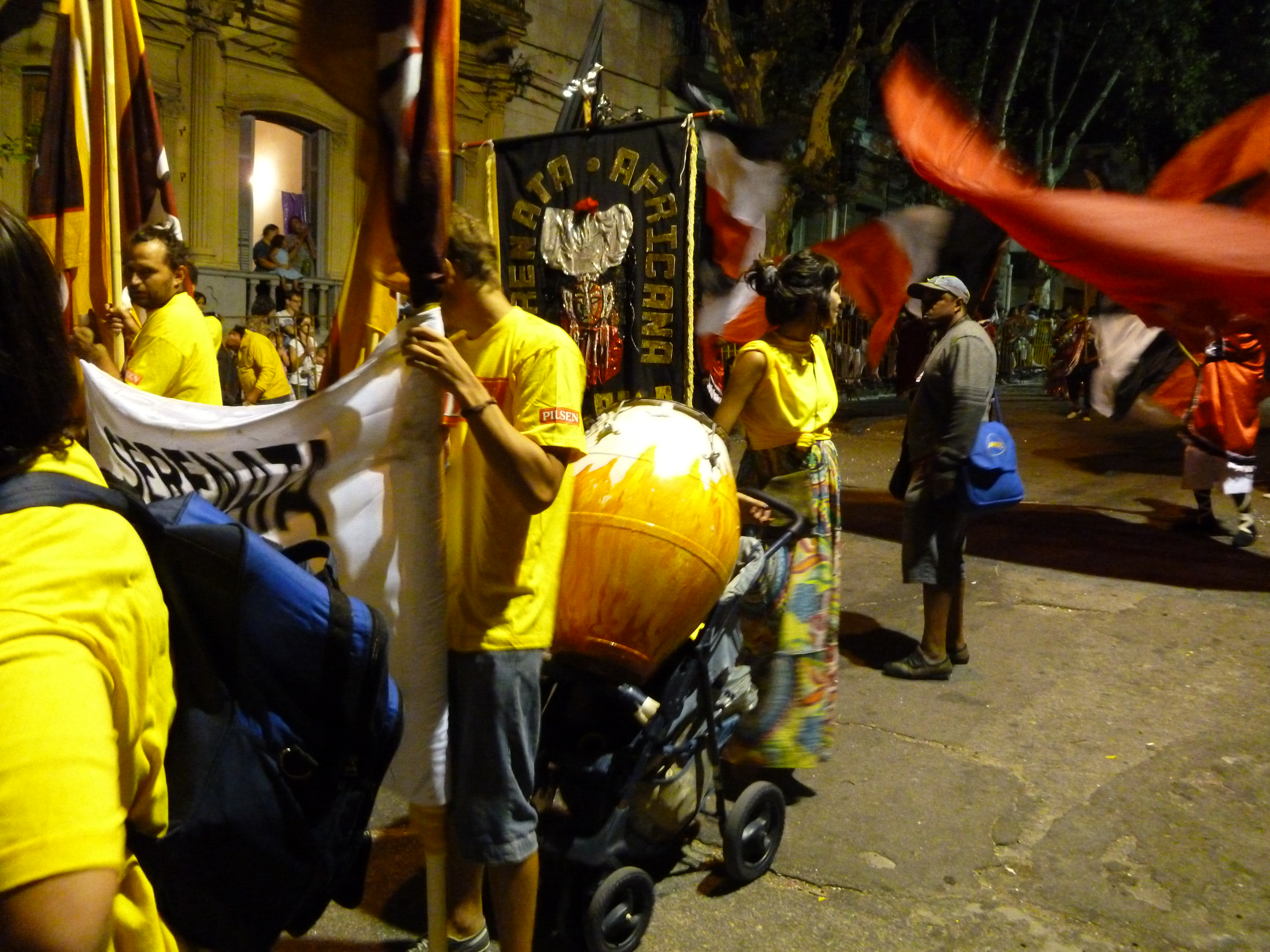
Each group is lead down the street by their banner and a carried coat of arms of sorts. This is followed by various people in costume waving large flags. It seems the thing to do is to fly the flag over the spectators’ heads, allowing them to touch the silky fabric. The children, who inevitably end up in the street with the performers particularly like to play with the flags.

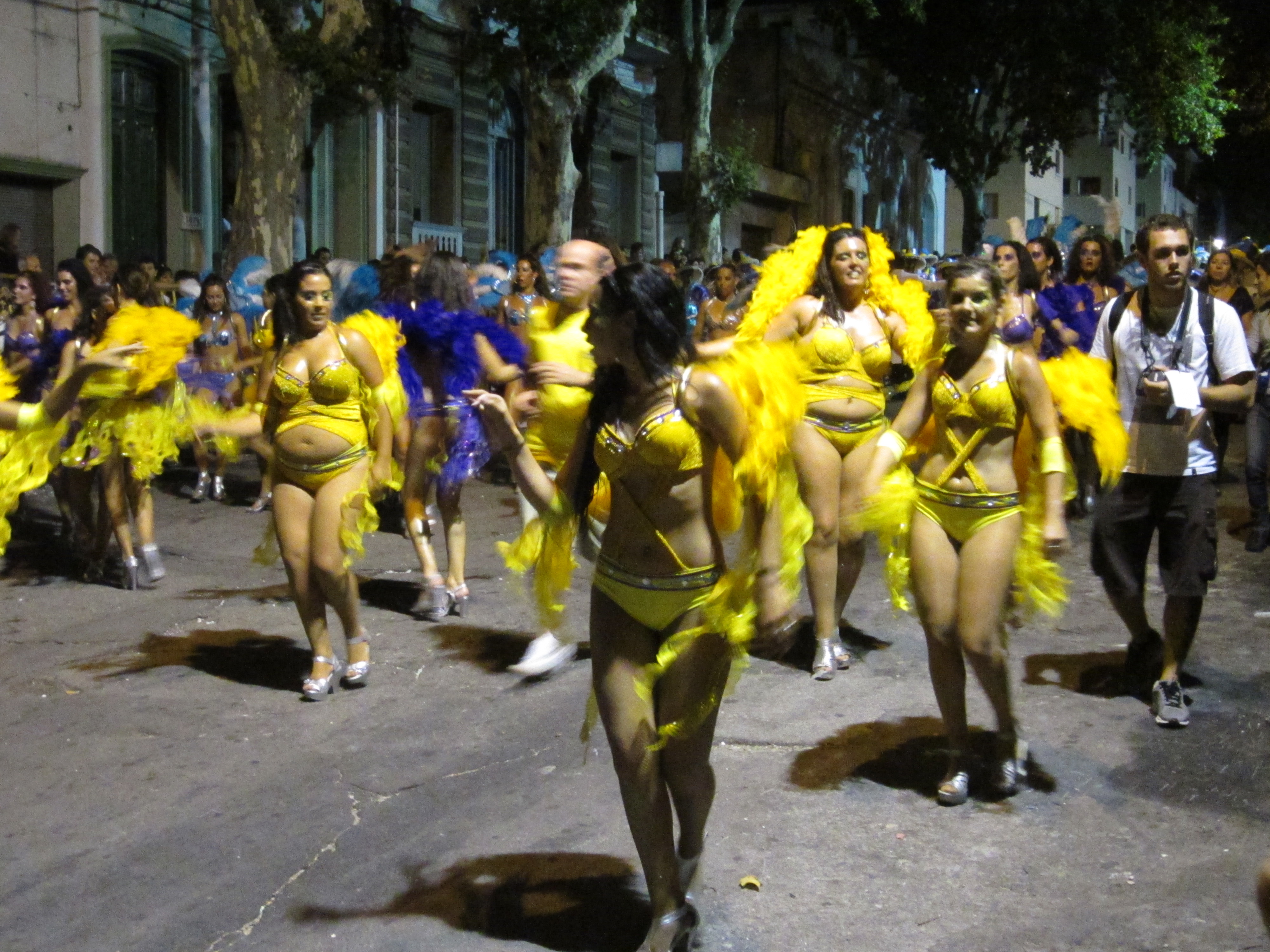
The flags are followed quickly by one or a couple sets of scantily-clad dancers exhibiting various levels of happiness. Having just danced their way down 10 blocks in heels, I understood some of the unhappy faces I saw. If I had to pick two words to describe the dancers I would choose “flashy” and “feathers”. They had feathers in their hair, feathers attached to their shoulders, and sequins everywhere.

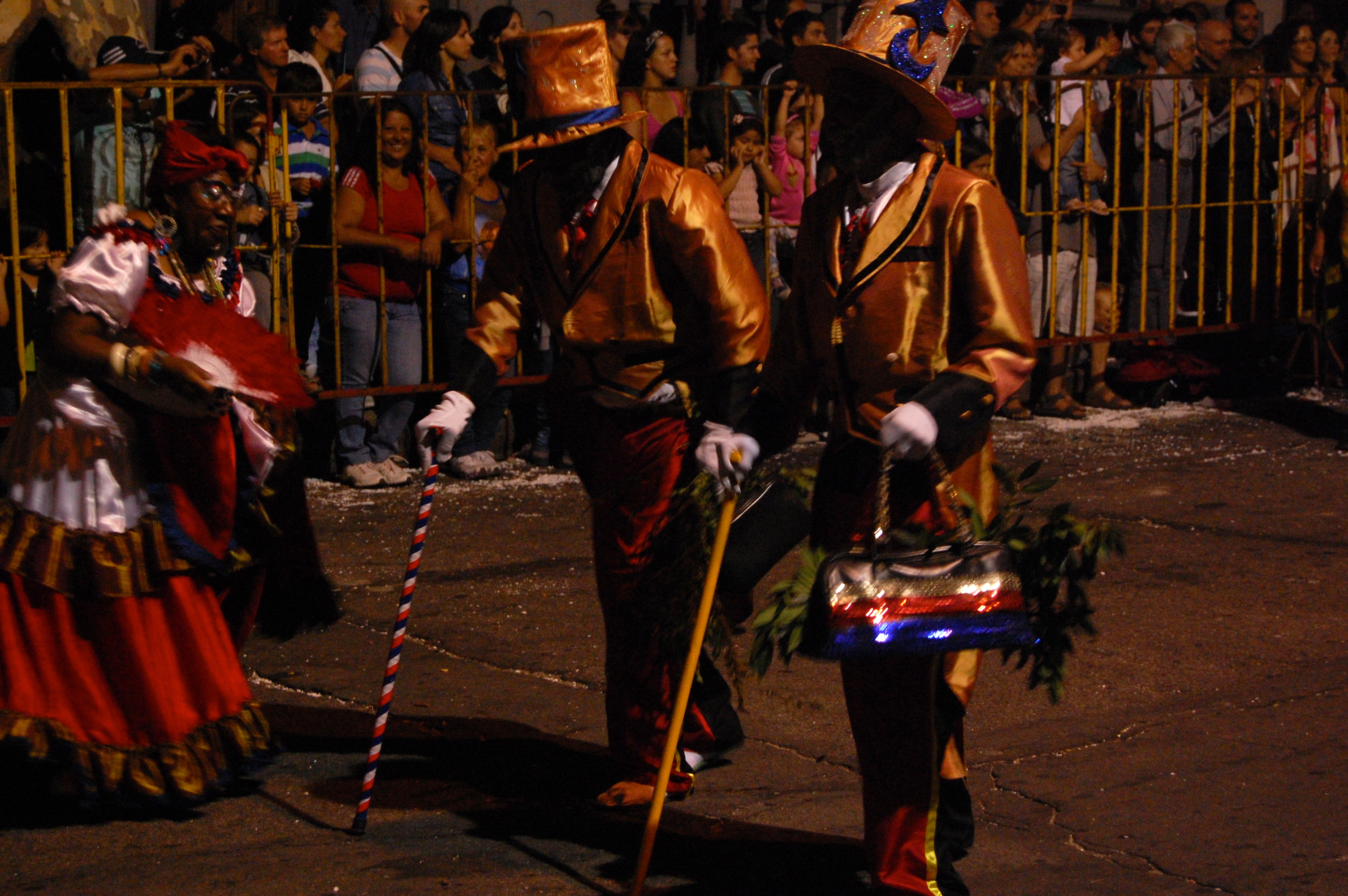
Following the dancers were a couple of pairs of old “geezers”; a men and women who are suppose to represent the eldest of the community. The men usually carried canes and wore fake beards and top hats, while the women wore long skirts with petticoats underneath to make them fluff up. All the while they danced and twirled down the street. One group that we saw on thursday night had replaced their old geezer with a young geezer who couldn’t have been more than 4 years old. He still looked the part; sporting a cane, beard and top hat.
Dancing around and through the old geezers and into the candombe drums were two or three girls in more elaborate costumes. Supposedly the prettiest girls in the group were awarded this honor.

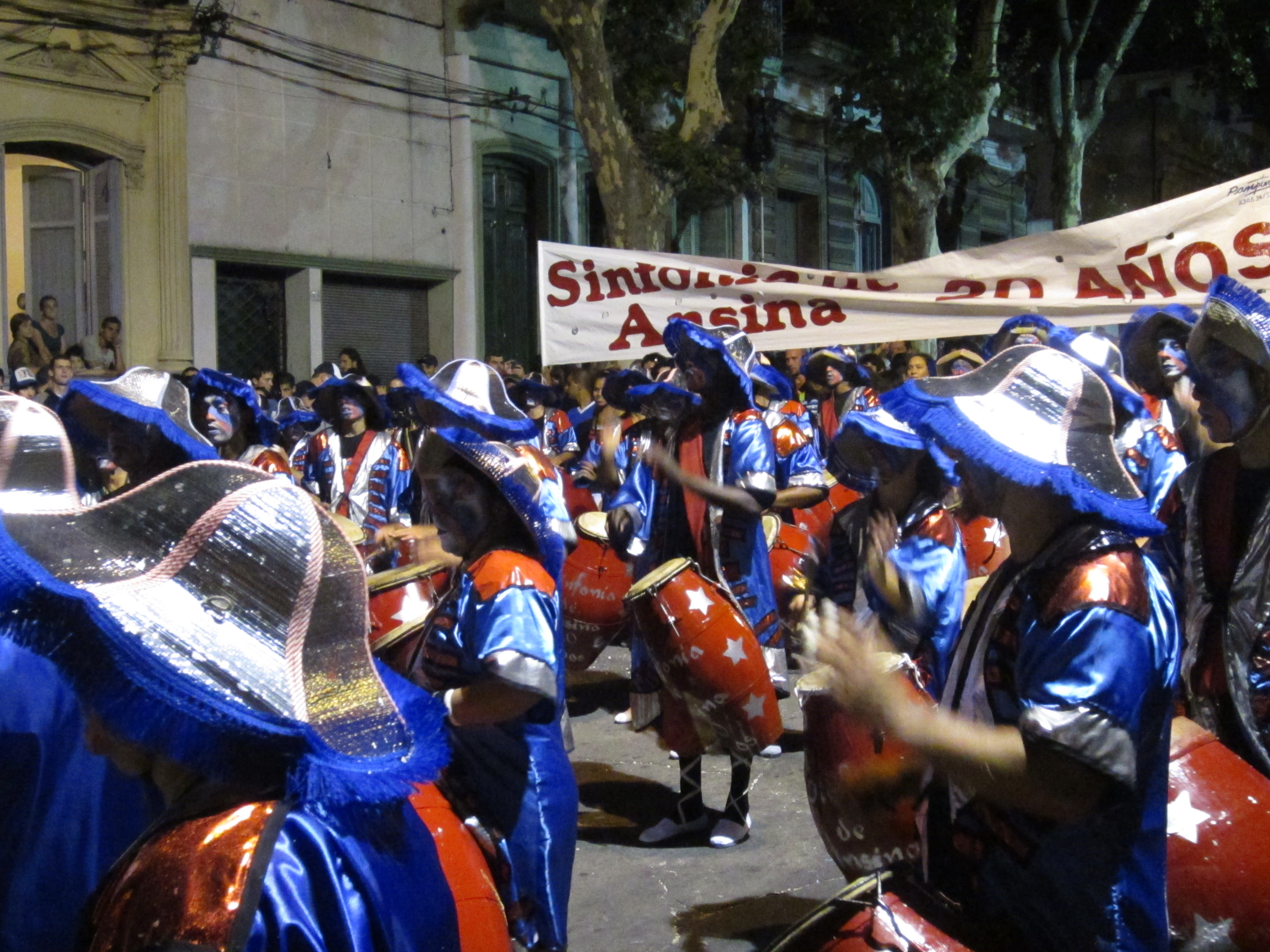
Then came the drums. Deafening, you could hear them coming from blocks away. The sounds from separate groups never  mingled because the one closest was so loud it overshadowed any other sound. The ground vibrated a bit. Each group had 60-80 drummers, almost exclusively men, each playing their own drum painted in the groups’ colors. Not all drums are created equal, as some are larger or smaller and produce deeper or higher pitched sounds. The large drums seem to stick to a 4/4 rhythm while the small ones beat to a different rhythm, maybe a 7/8. It was hard to catch the beat and dance, but it was obvious that was my own unique problem.

Some of the groups would continue playing until they were well off the end of the parade route and on to the next street block. They would be followed by their family and friends and inevitably someone carrying a broken drum.
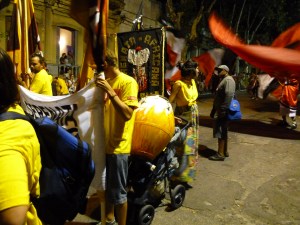
A broken candombe being pushed along the parade route in a baby stroller.

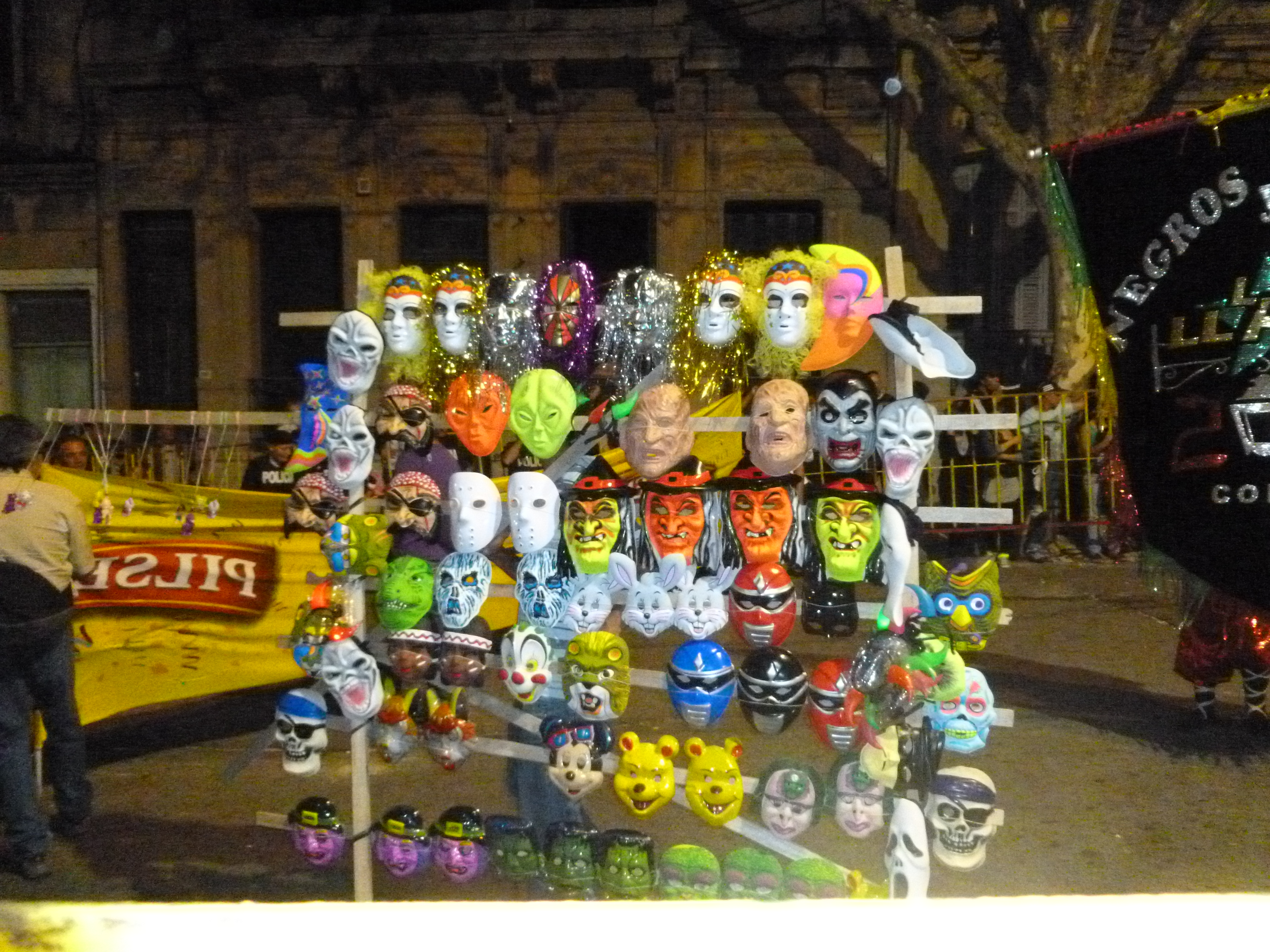
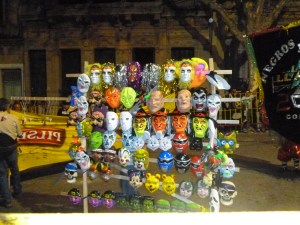
This went on and on, with groups following each other by a few minutes, until the full hours of the morning. Between groups people would come along selling things… carnival masks, light up toys, cotton candy, popcorn, and of course apples on sticks!
For more pictures, see Asa’s Flickr page at http://www.flickr.com/photos/cadburynaught/sets/72157629307021283/

Street Market

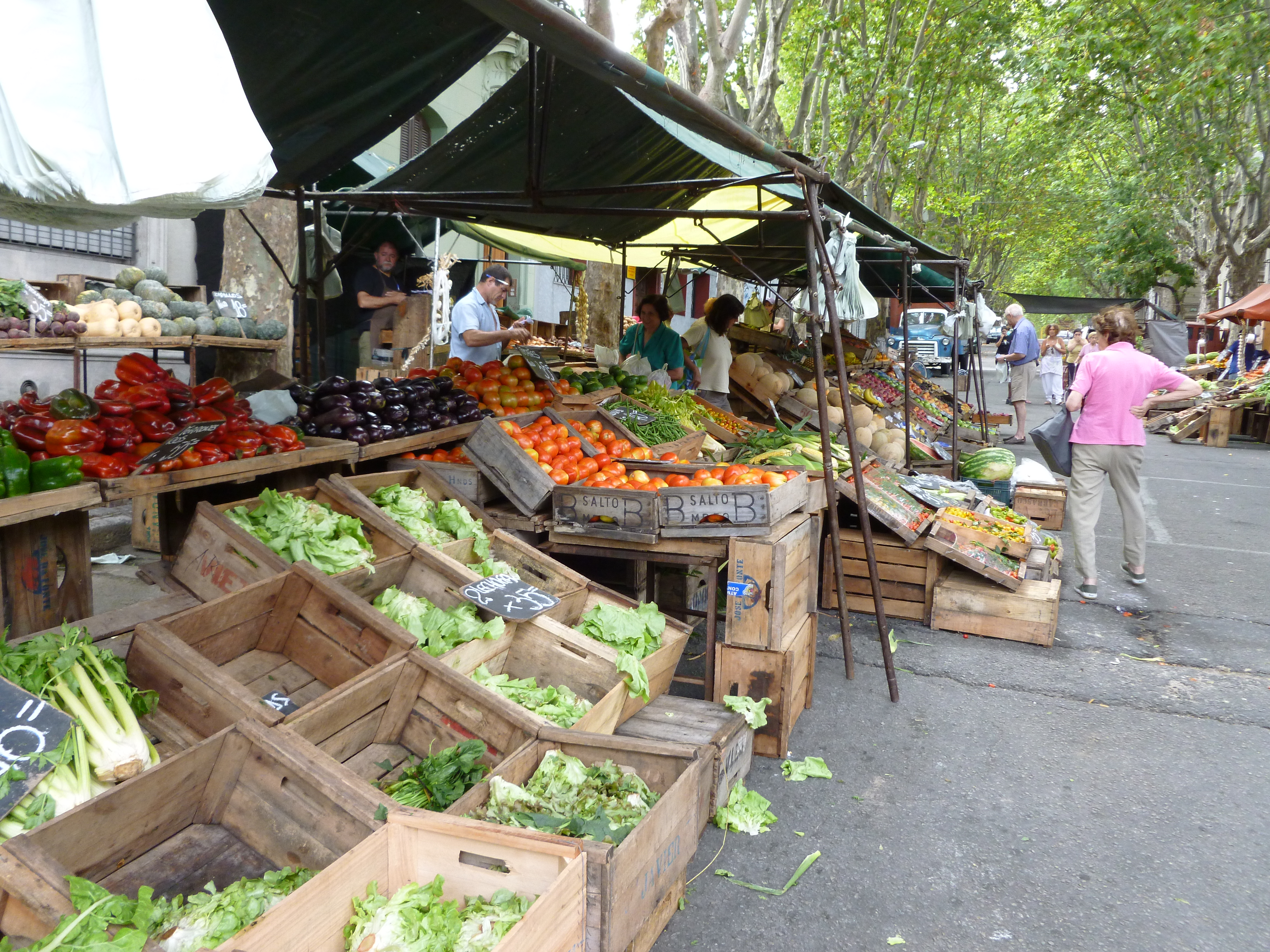
The street markets are definitely where it’s at! They have fresh and yummy tasting produce out the wazoo, and it’s cheaper than the supermarket. There are no barriers closing the street from traffic, but there isn’t really room for cars to pass. Every once in a while a motorcycle rides through slowly and people just get out of the way.

At one end of the market there are people who display wares for sale. For example, today I saw that someone had a pair of jeans to sell, while someone else had some trinkets. I didn’t see anyone actually buying anything and it seems like the people might be set up there on the off chance that someone saw something they just “had to have”. It reminded me of a garage sale, but on a much smaller scale.

The produce stalls make up the majority of the market. All of the stalls seem to have very fresh produce and a much wider variety than in the supermercado. At the majority of produce stalls the sellers will hand you a plastic bag or you grab one yourself and place what you want in it; each type of item in a separate bag. They then weigh the bags; writing each total on a slip of paper to be added at the end. There was one produce stall that stumped us; the biggest one. I guess we just weren’t paying enough attention, but we walked behind the stall to the second row of veggies and grabbed what we wanted. Little did we know, but at this stall everyone is suppose to take a number and then when your number is called you tell the sellers what you want and they put them in plastic bags and weigh them. The seller didn’t seem angry when I handed him the bag with our two bell peppers and said “es todo”. I was prepared to tell him that we didn’t understand and I was sorry, but he didn’t seem to care.

Just one of the many produce stalls!

There were two trucks that opened up to sell goods out of their sides. One was a cheese truck and the other was the local fish truck. We have been told that the fish is very good, but we were a bit too timid to try it today.

The fish man. Maybe next time we'll have the courage to try some of the fish.

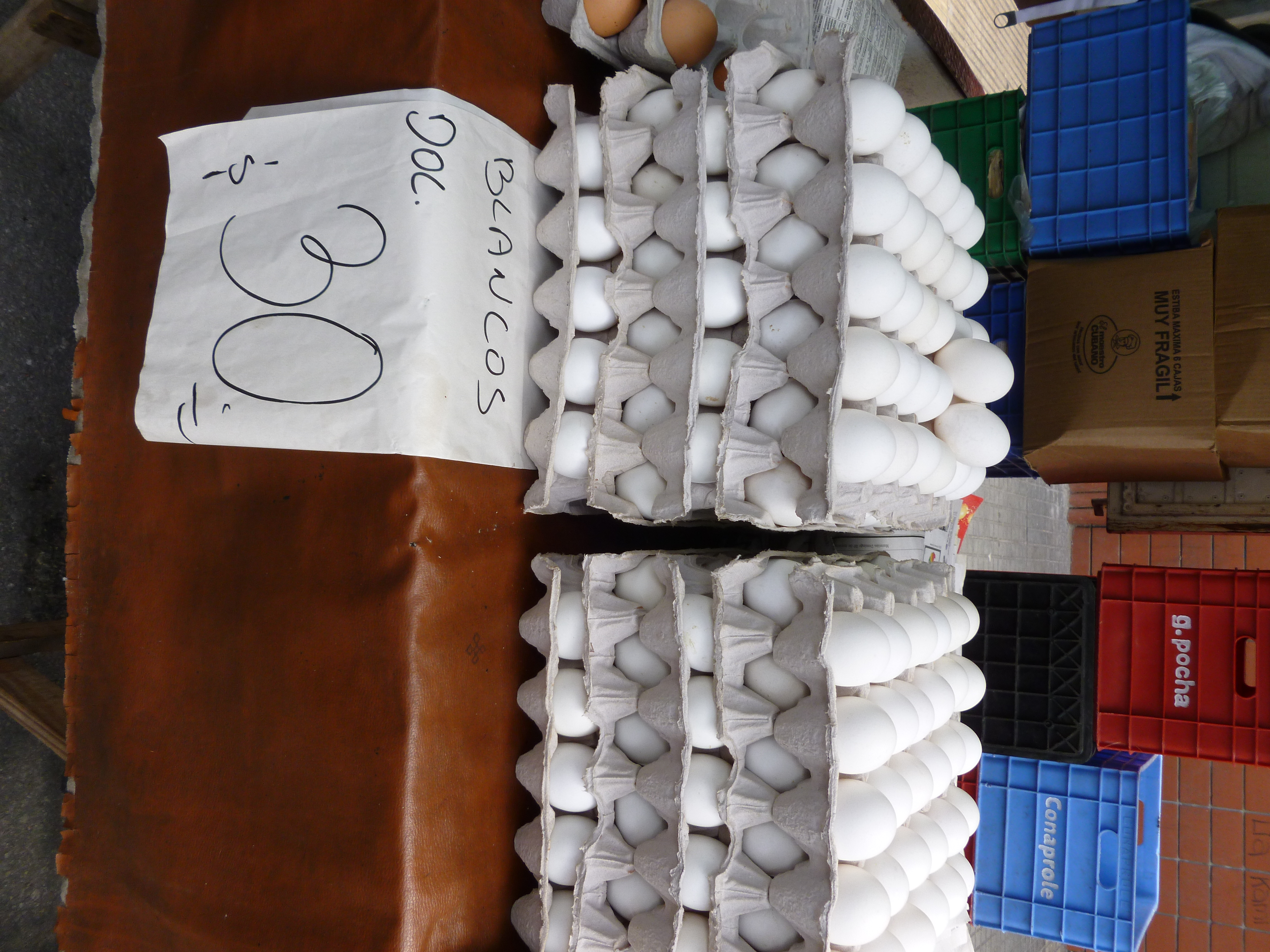
The cheese truck also has an add-on of an egg-man. He sells individual eggs if you want them or in a dozen (“una docena”) and wraps them in newspaper for you to take home.

Eggs for sale! He had both brown and white eggs. We got the brown ones. The brown ones were a bit more expensive, but we figured that must mean that they're better!

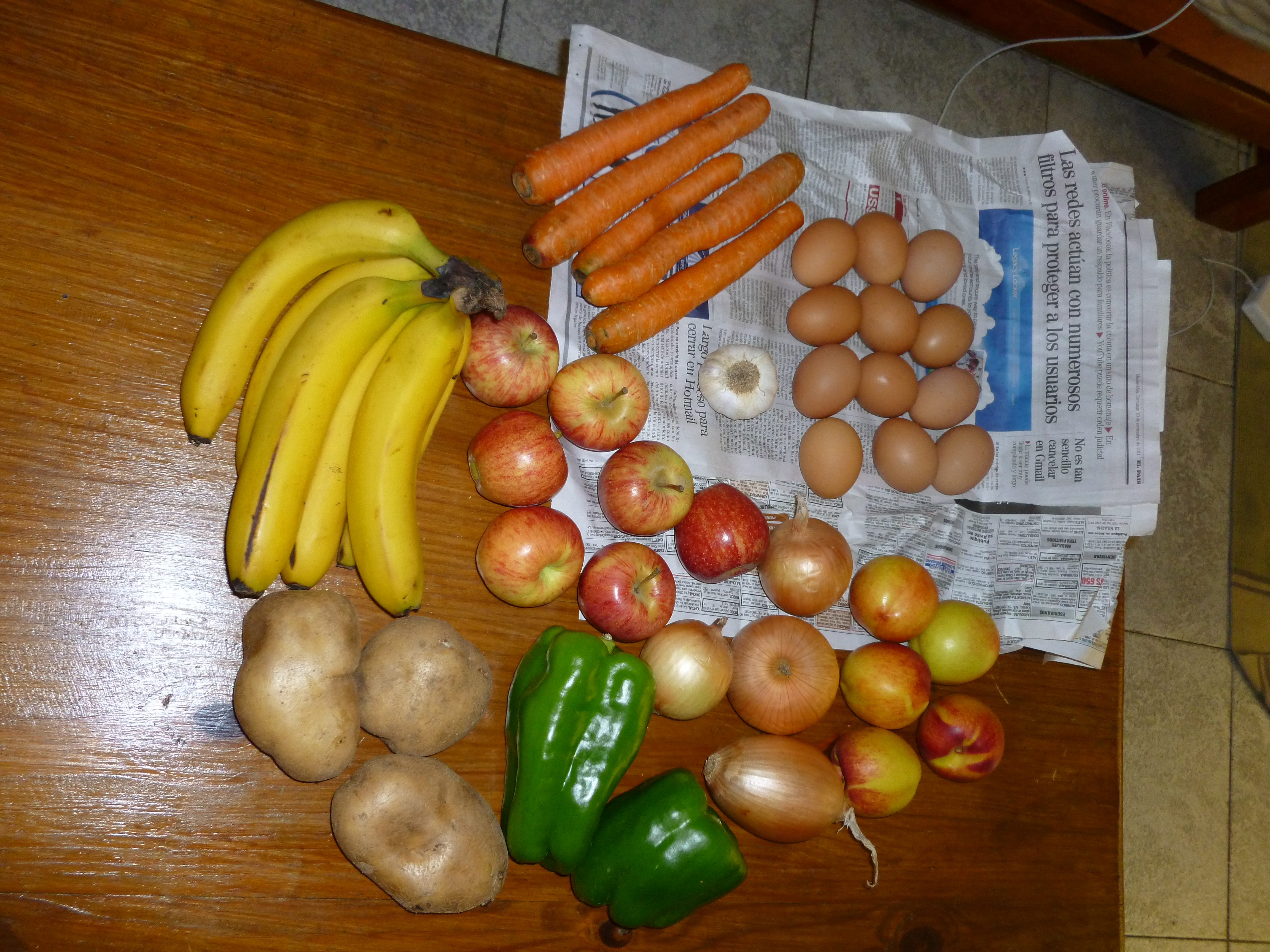
All the produce is for sale in kilograms and is remarkably cheap. We got potatoes, garlic, apples, bananas, nectarines, carrots, bell peppers, onions, and eggs for $174 pesos which is about $8US.

Our Spoils!

Getting Around Town: The Bus Edition

Not a lot of people in Montevideo own cars. The majority of people either walk or take the bus to get around town. This results in a couple of things:

1. There aren’t a whole lot of cars on the road. But beware, cars have the right-of-way here unless there is a stoplight or a crosswalk painted with white diagonals. This can be a pain in the butt at a busy street, but jay-walking is a common occurrence.

2. There are a whole lot of people on the bus. There are many stops (“paradas”) and many different routes that take people to all corners of the city and the suburbs. The buses don’t have air conditioning. It would be pointless with all the people and all the stops; the windows just stay open.

We all took our first trip on the bus yesterday to the frisbee fields in town. Luckily we had the help of a new-found ultimate frisbee friend who came to our house to get us. He showed us which bus to take and how to actually do it. We were all a little worried, as we had seen tons of buses but couldn’t figure out how one would actually pay to ride. The bus costs $19 pesos, about $1US, for each ride. You can purchase a more expensive 2 hour ticket if you want, which allows you to ride as many different buses for that amount of time, but I think that’s still a bit advanced for us.

Our friend showed us where the nearest bus stop was to our house and which bus to take. In every bus there is a driver and a ticket seller. The ticket seller sits on one side of the bus and will take your money and give you a ticket in exchange. He will also give you change if you need it. After you have gotten your ticket you either find a seat (rare during peak hours), or you hoof it as far back as you can in the bus and try not to fall over.

We got to see a lot of the city during the hour long ride to the fields. Not all rides take this long, but the fields that the City of Montevideo has given the ultimate team to play on are in the suburbs. We are told that there’s not a shorter way to get to the fields unless you want to pay for a taxi. Ah well, sometimes time seems to have a different meaning here anyway.