Trash Service in Montevideo

Some of you may be wondering about basic services in the city here. Well, the only one that we’ve found remarkably different is the trash service.

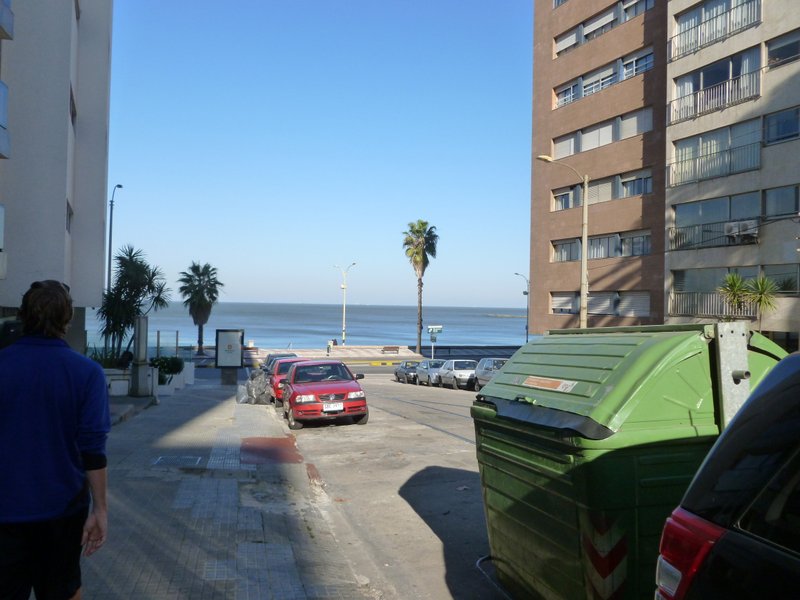
Individual households are not given trash bins, nor do apartment buildings have their own trash service. Instead there are large green dumpsters on the corner of every street. These dumpsters are covered and have a step pedal so that you don’t have to get dirty throwing your trash away. City trash men come around during the night and empty the big dumpsters into their garbage truck.

For those that don’t know, Buenos Aires trash service is similar except without the dumpsters. People throw all their trash (in bags) on the sidewalk on trash night and the garbage men come along to collect it. Makes walking around the city unpleasant on some nights and also makes for dirty streets.

Another interesting aspect of the trash service around here is that there are numerous people and families that make a living off of dumpster diving. They drive around horse-pulled carts in which they store their spoils. They collect anything of value out of the dumpsters including: clothes, plastic or glass bottles (see below), food, cardboard, or really anything that could be re-sold. Sometimes dumpster diving literally involves someone getting into the dumpster and propping open the lid, while other times it just means peering in and grabbing whatever is visible.

On a normal walk through the streets, even a short trip, you can seen these horse-drawn carts. The cars are polite and keep their distance. The horses all wear side blinders so that they don’t get startled by traffic. Most of the horses seem to be kept in pretty good condition, leading me to believe that people can actually make a decent living dumpster diving. Many of these horse-drawn teams likely live a bit out of the city center where there is more green space.

There is also no organized recycling service in Montevideo, but some plastic and glass bottles are returnable. When purchasing say a 2 liter bottle of Coke, it comes in a glass bottle and you pay a fee for the glass. The next time you go to the grocery store you can bring the empty bottle and get the fee back. There are machines in the back of large grocery stores where you can return bottles. Many of the 300 mL cokes that are purchased in restaurants are recycled in the same manner by the restaurant. It is not uncommon to purchase a coke in a restaurant and have the label be a bit worn from the process.

The Neighborhood

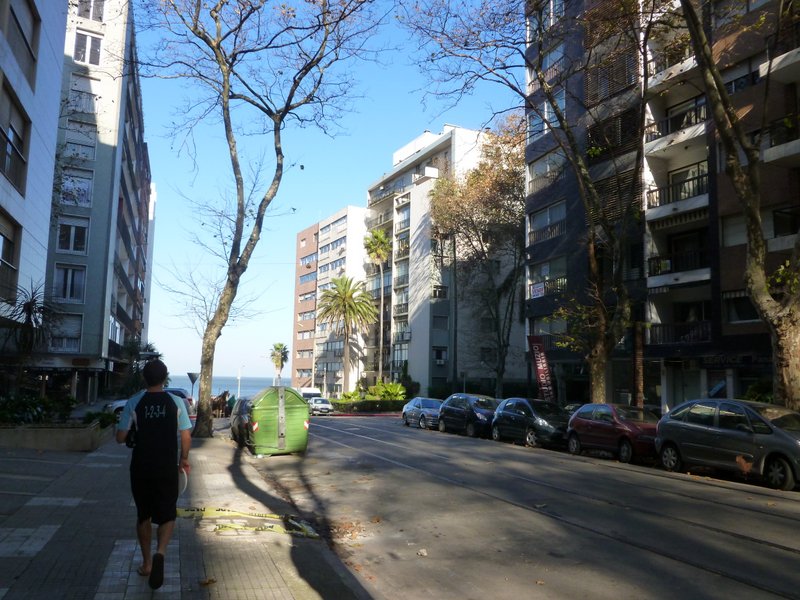
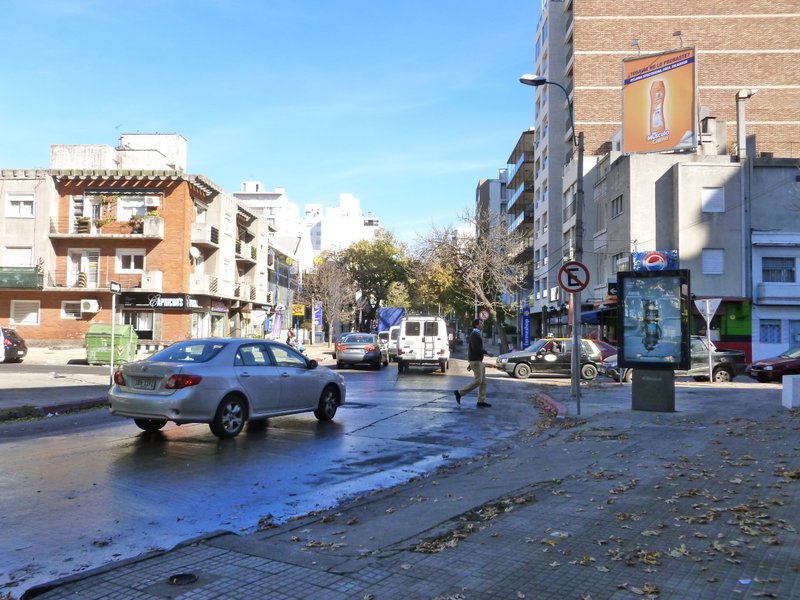
I thought I would take this opportunity to show everyone what the neighborhood is like around our apartment. At the first place we stayed I didn’t necessarily feel comfortable wandering around with my camera and acting like a tourist. The neighborhood we are in now seems much more friendly and affluent and I feel much more comfortable here.

Some stats on our apartment:

– We are two blocks from the beach

– We are 6 blocks from a Devoto (a large grocery store chain)

– We are 3 blocks from the nearest chivito restaurant

– We are within 2 blocks of, not one, but four bus stops

– We are within walking distance of Shopping Montevideo (a large shopping mall, about a 20 min walk)

– We are 1 block away from the farmer’s market on Fridays and 6 blocks from a farmer’s market on Wednesdays

– We are within 2 blocks of a bank

– We are 3 blocks from the nearest place to buy fresh empanadas

The neighborhood is mostly apartment buildings that have about 6-10 floors. Almost all the apartment buildings have lobbies with doormen. This means that no matter where you are going or at what time, you are being watched. This may sound a bit creepy, but it’s actually quite comforting to know that if something happened, someone would have seen it and be there to help.

There are a lot of people in the neighborhood which means that the sidewalks are sometimes busy and the streets are sometimes hard to cross (that is mostly because pedestrians don’t have the right of way) during rush hour. Many of the car garages have warning alarms so that pedestrians know to look out for a car coming in or out. These warning alarms always seem to go off late at night or early in the morning. Go figure!

Most of the apartments have balconies or at least large windows. When the weather is good, there is an abundance of laundry hanging out to dry on those balconies, or sometimes the rooftops.

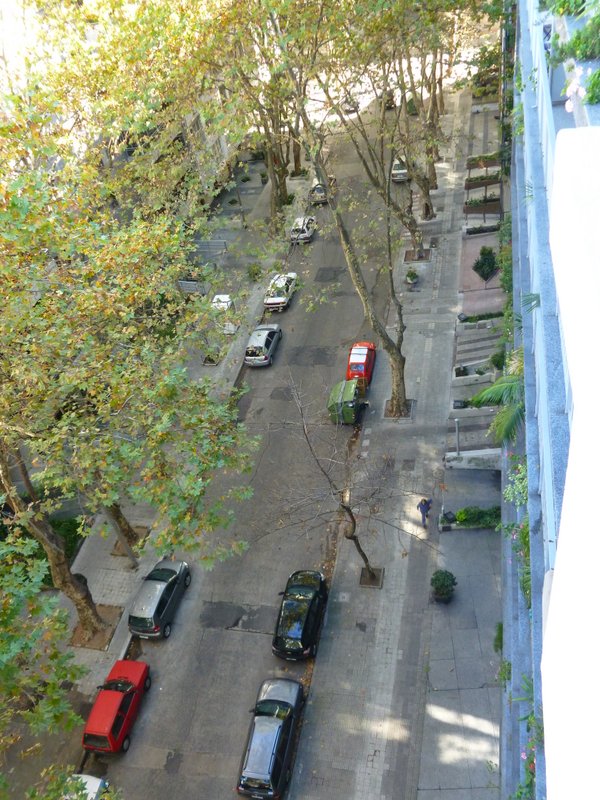
The trees that line the streets are tall, reaching to the 9th floor in some places. At this point, most of the leaves have fallen or are on their way to the ground.

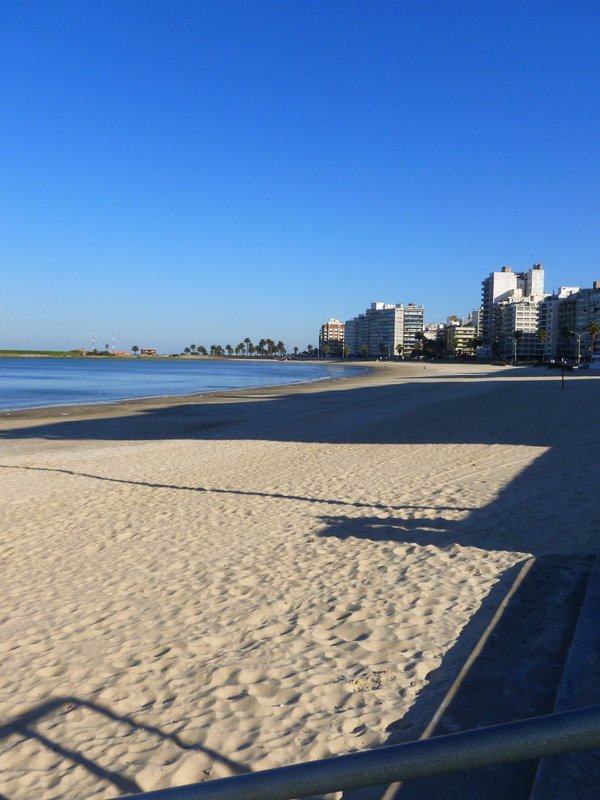
The beach is friendly. People walk and take their dogs to play there most days, weather permitting. It is a great place to throw a frisbee or have a little beach ultimate tournament. The city takes pretty good care of the beach. They rake the sand every once in a while and haul off garbage that the tide brings in. The Ramblas runs along the beach and makes a great place to walk, run, bike, or just enjoy the view while sitting in one of the many benches. I frequent the Ramblas most days for my morning run. There are always people using it!

The neighborhood also seems to have an abundance of construction going on. Fixing the sidewalks seems to be a common occurrence. There are also a couple large construction sites where whole apartment buildings have been demolished and new ones are being put up. Unfortunately one of these sites is catty-corner across the intersection from us. Despite the citizens of Montevideo being generally late risers, this apparently does not hold for construction workers. We wake up to the sounds of construction quite frequently, although it doesn’t seem to bother me much.


Montevideo Shopping

We now live within walking distance of Montevideo Shopping, one of the few shopping malls in the city. To get there it’s a nice 20 minute walk through residential neighborhoods.

The mall has a Tienda Inglesa in it. There are a couple of these stores around Montevideo and they specialize in getting and having American goods (of course marked up in price because of the import taxes). On our first trip to Montevideo Shopping our goal was to obtain a surge protector/converter that would function with our electronics (the plug shape here is three prongs in a line) and we knew we could find it at Tienda Inglesa.

The rest of the mall was a little confusing. We found the food court, which is a bit smaller than the one at the Punta Carrettas Shopping mall. It seemed that the shape of the mall was a large square with a space in the middle and the floors only connected at the corners. There also seemed to be one bathroom. No matter where we were the bathroom signs inevitably led back to the food court.

There were lots of shoe stores, book stores, and clothing stores, just like anywhere else.

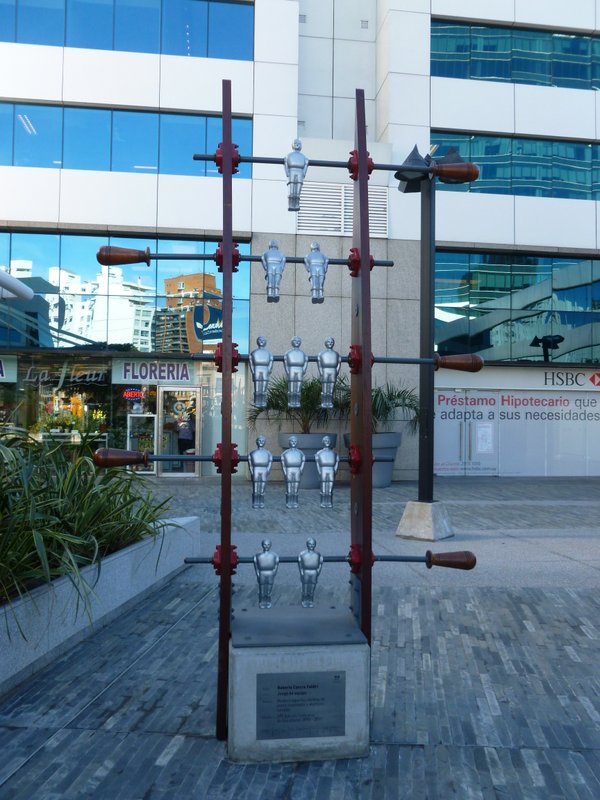
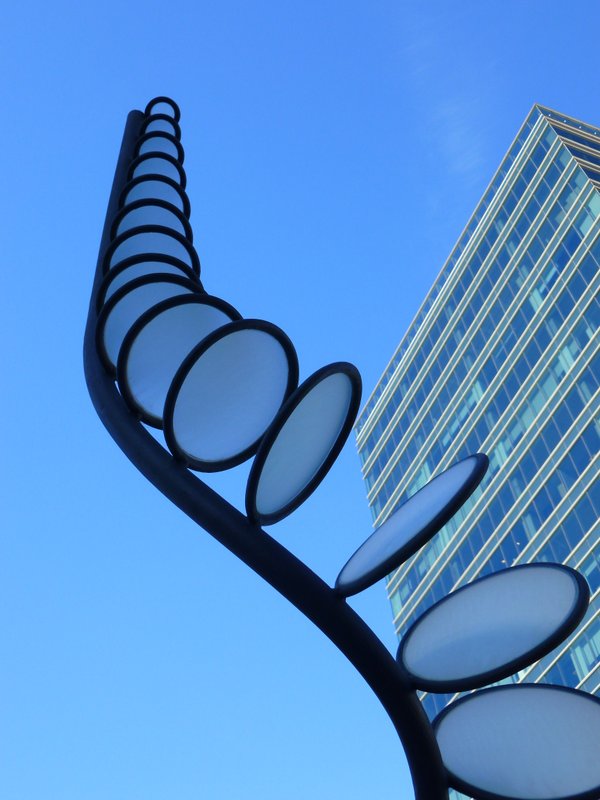
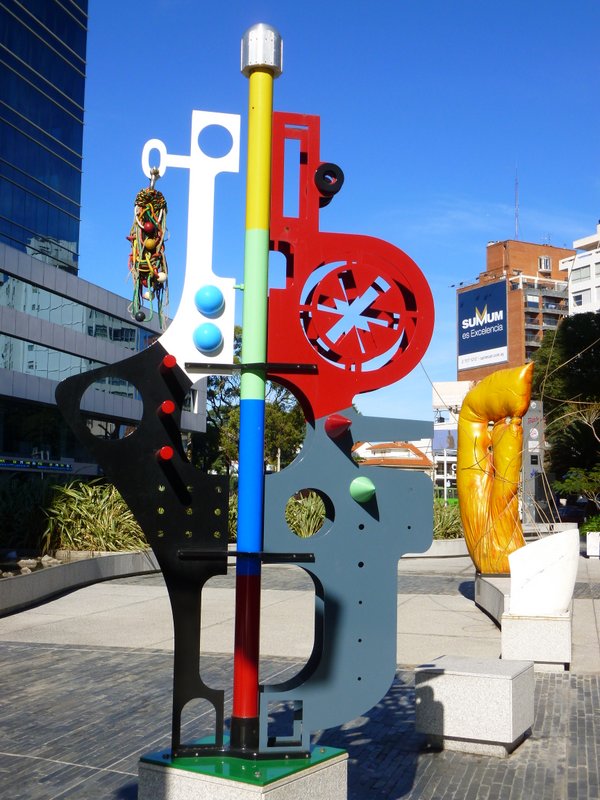
In front of the mall there is a nice plaza with a couple of restaurants and bank offices. There are art exhibits/statues featured in the plaza which I found particularly interesting.

Windy Montevideo

The weather here in Montevideo is amazingly similar to that in Atlanta. It is very hot in the summer and a bit chilly in the winter. We’ve been told that it doesn’t snow here, but it appears to be very humid all year long. There were thunderstorms in the summer and it has been getting very windy as we get into the fall.

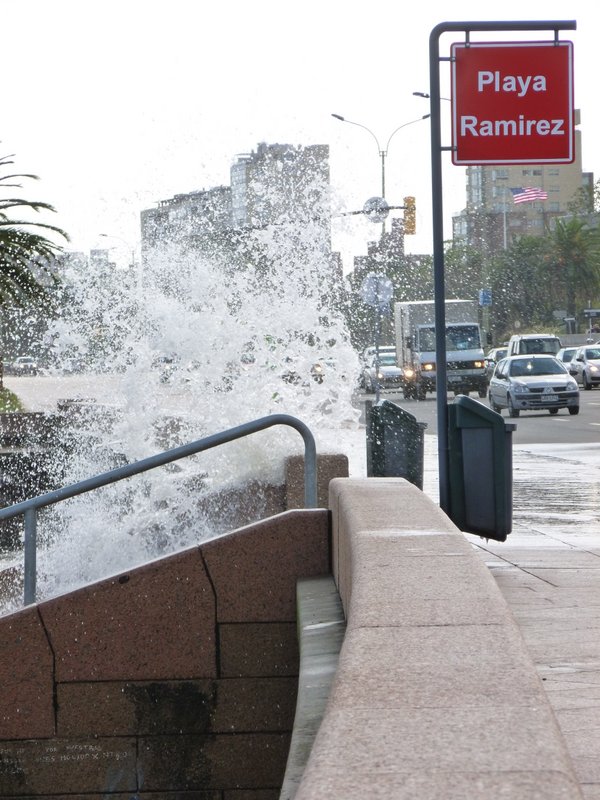
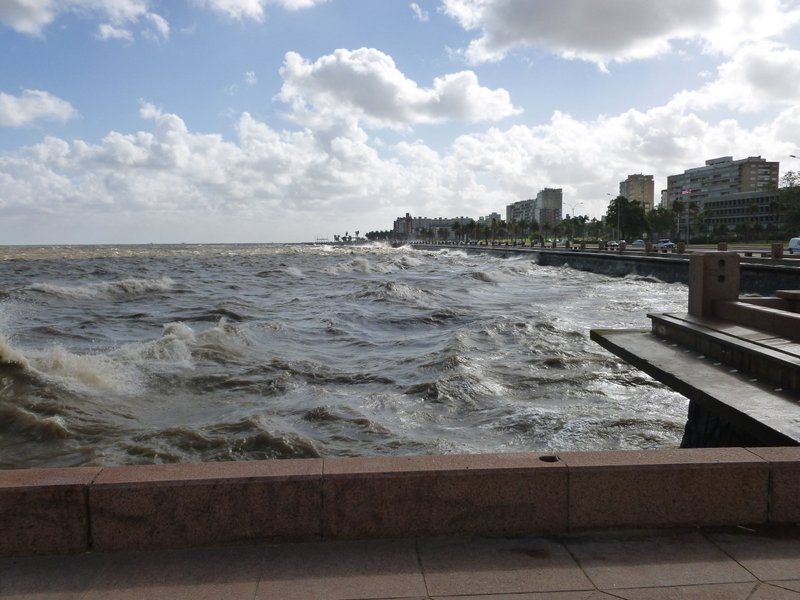
Montevideo is situated on the Rio Plata which means that it’s beaches don’t get a lot of surf and the water is usually a glassy calm. That is, until the wind comes up! When it gets windy it kicks up the surf on the beaches and throws waves over the Ramblas, making the cobbles slippery and running on them treacherous. I have even spotted windsurfers and kite surfers out on really windy days.

New Digs!

As many of you know, the plan for our 6 month trip to Montevideo was to stay at the Little House for the first three months and then find a different place to stay for the remainder. We want to experience as much of the city as we can. Luckily we found just the place and moved in yesterday!

We packed up all our stuff from the Little House, which amazingly fit right back into the suitcases we brought with us, and Matt and I loaded all of it into a taxi and drove over to the new place. Asa met us there from the office. The check-in process was a little more in-depth than at the Little House, but that’s because we are now venturing into the world of Montevideo rental apartments and agencies instead of just a listing on airbnb.

We had to sign a rental agreement, or I should say ,”I” had to sign a rental agreement. They knew who was the responsible one of the bunch. We also had to sign a 4 page inventory. Apparently when visitors come from Argentina or elsewhere with their cars they tend to take things when they leave. They don’t understand that American visitors can’t fit pots and pans in their suitcases. Oh well!

So the place… We are now in a two bedroom apartment on the 9th (and top) floor of an apartment building in Pocitos, complete with a balcony, heat, and a washing machine. It is a smaller than the Little House was, but it is much brighter, the kitchen is stocked with more than one frying pan, and we have a door man. How cool is that?

None of us have ever lived up so high! When the leaves finally fall off the trees, we’ve been told that we’ll be able to see the ocean. The apartment is two blocks from the beach and it’s apparently pretty empty this time of year. Maybe we’ll actually get to the beach to throw a frisbee more often! Here are some pictures of the new place.

Welcome to the Apartment! To the left is the living room and the door on the right leads to the kitchen.

This is the kitchen with a big fridge, double sink, and plenty of dishes.

This is our cute little front loader washing machine that may or may not fit more than one change of clothes. Then again, it won’t matter if we can’t figure out the settings. There are more than 20 different ways to wash things.

This is the living room, complete with table and loveseat. All that glare is coming from our awesome little patio balcony!

These are the interesting decorations on the wall in the living room. The hallway leads back to the bedrooms and the bathroom.

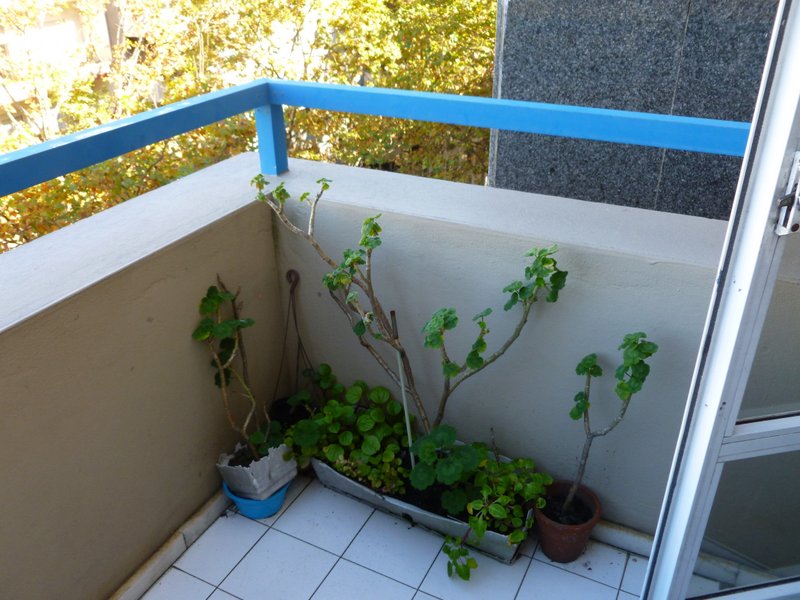
This is the balcony. These plants are on our inventory list so hopefully we don’t manage to kill them.

View from the balcony.

This is what the street looks like from the balcony. Nice wide sidewalks!

Bathroom. The toilet and bidet are on the left and the shower is on the right.

Master bedroom with lots of windows. One whole wall is closet and shelf space.

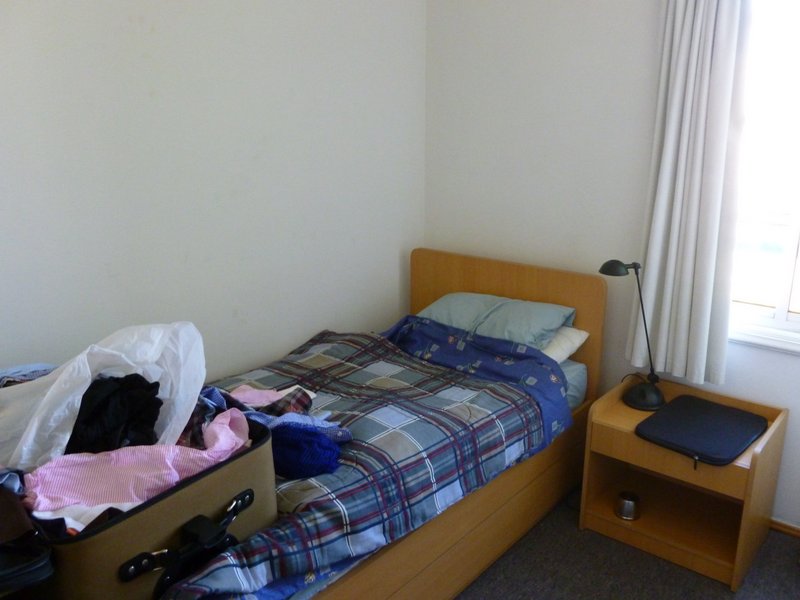
Other bedroom. Again, one whole wall is closet and shelf space.

When in Uruguay, Drink Maté

When in Rome, do as the Romans do.

When in Uruguay, do as the Uruguayans do… drink maté.

Maté is everywhere. It is similar to green tea. The taste is different, and takes a little getting used to, but it’s the same concept. Hot water with some amount of leaves or ground up foliage and a way to drink it without eating the foliage.

I’m a huge fan of green tea and maté is a readily available drink close to green tea in Uruguay.

I didn’t want to drink maté out of a regular glass or cup. I wanted to drink it like Uruguayans do. To do that, it requires the correct items and not one of the collectors glasses that we have from a whisky box set.

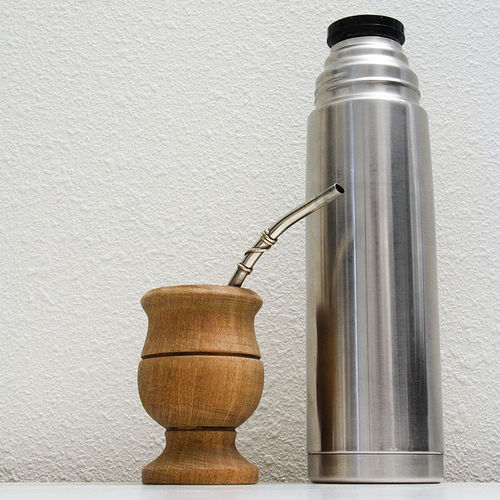
The different parts of a complete maté setup are:

Yerba maté, the tea

Maté gourd with yerba maté in it

Maté gourd (called maté)

Maté gourd and bombilla

Bombilla, the metal straw that looks like a spoon on one end with holes in it to act as a filter of the maté.

My shiny new bombilla

Thermos, to carry the hot water around since immediate access to hot water is very important.

Maté thermos

A maté gourd and thermos for all day yerba maté satisfaction

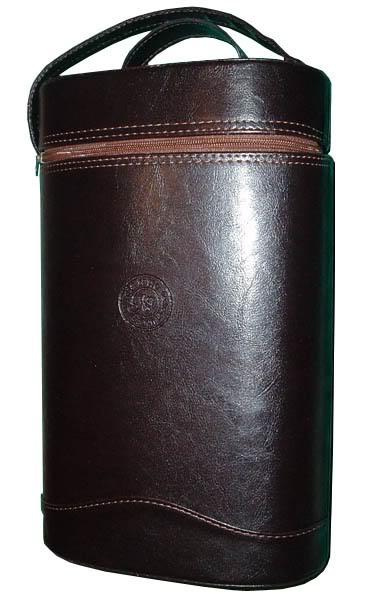
Matera, a leather satchel to carry everything around in.

Matera is used to carry a thermos, maté gourd, and yerba mate

Some people carry a matera around with them, but most people tuck their thermos under an arm and carry their gourd in the same hand of the arm with a thermos, leaving one hand free to do tasks.

Whenever we are outside, at least 1/4th of the people we see have a thermos tucked under one arm, while using the hand of that same arm to hold their maté gourd, full of yerba maté, hot water, and a bombilla.


And now, some maté information!

Appropriate times to drink maté: all day. Seriously, there is never a bad time to drink maté. You’re not cool if you’re not carrying around a thermos and maté.

Appropriate places to drink maté at: Everywhere!

I saw a guy struggling with 5 full grocery bags on one arm leaving a store, thermos and maté occupying the other while trying to take a sip without spilling or dropping anything.There is no way this guy would ever commit a party foul and spill a beer in hand, even if he fell down a flight of stairs. Hopefully he doesn’t fall down a flight of stairs though.

The most common places I see people with maté are:

  • The beach, even if it’s 100 degrees out, people are enjoying their super hot maté.
  • The bus, if you sit next to someone with maté on the bus and strike up a conversation, you might just get some maté.
  • La Rambla, the numbers increase of people drinkin maté at the La Rambla (street and large sidewalk next to the ocean/river). Seriously, it often gets close to 1 out of every 2 people have maté in hand around 7-8pm. The ones without maté are running or young children.
  • Walking on the streets, it seems important to never lose an opportunity to drink maté.

In case you are out and run out of hot water, you can refill your thermos with the correct temperature water at many gas stations, restaurants, bars, and more.

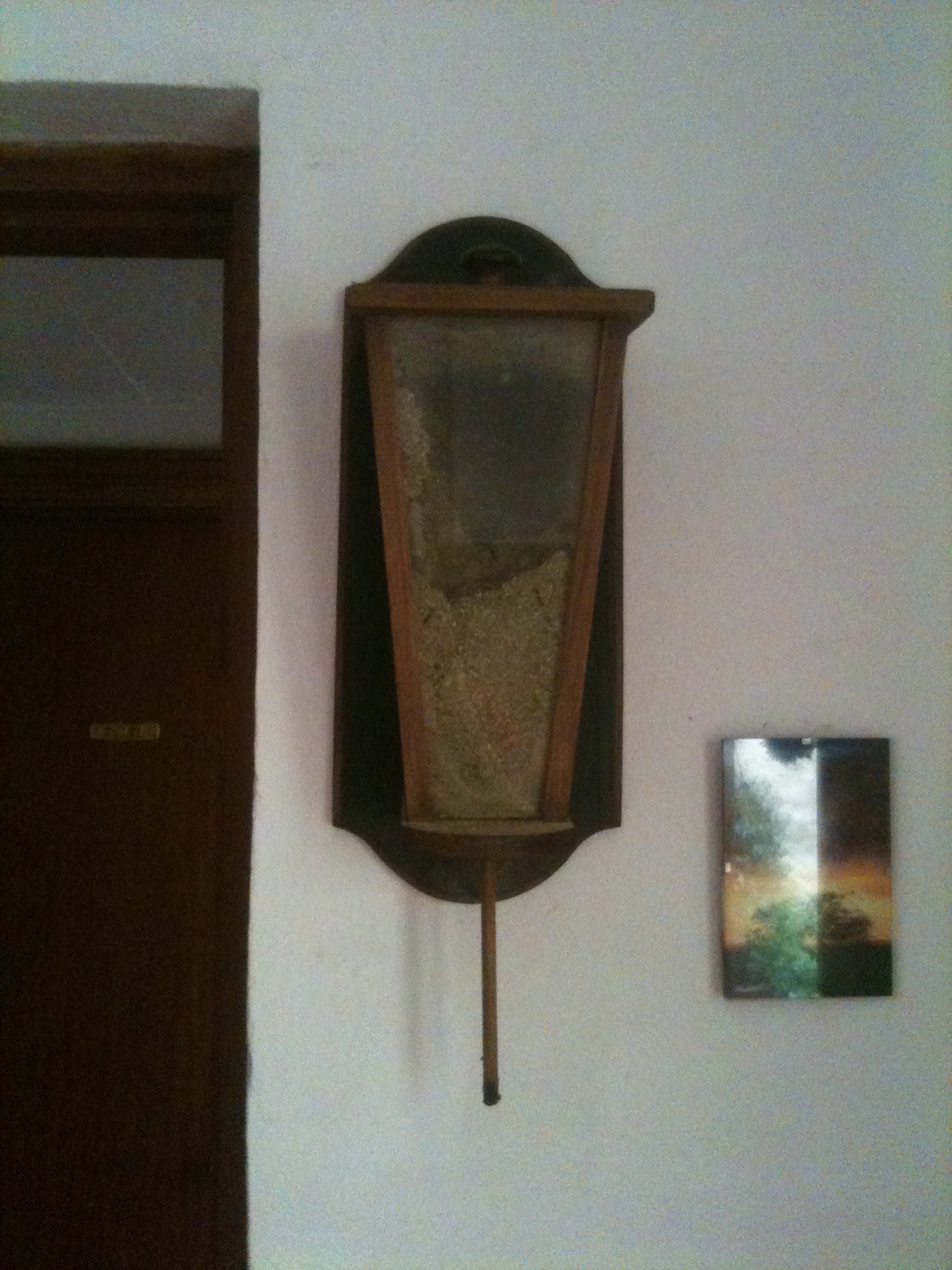
We have a maté dispenser on the kitchen wall in our house.

Push the gourd into the pole at the bottom and maté falls into the cup.

With all this maté going around, I’ve wanted to buy a maté gourd, bombilla, and thermos since I’ve been down here.

When in Uruguay, do as the Uruguayans do and drink maté!

This past Sunday, we went to the local market at Parque Rodo and I saw some maté gourds that I liked. After walking around to see what the market was about, I stopped and started talking to a very nice lady that was selling maté gourds and bombillas. She didn’t speak english except for a few words such as horse, english, and United States, and I felt pretty comfortable understanding and talking with her about the maté gourds.

Matt buying Maté

Buying a maté gourd and bombilla at the Parque Rodó market

About 10 minutes later, I walked away with my very own maté gourd and bombilla at a good price.

There were different sizes, different designs, and even gourds that were ceramic on the inside, but I chose to buy the traditional maté gourd with a logo of Uruguay on it. I’m sure only tourists have Uruguay on their maté gourd, but I liked it and figured people can pick out that I’m a tourist pretty quickly.

Preparing the Gourd

I was told that I needed to put cold water and maté in the gourd for 2 days to let it soak in and then lightly scrape the inside to remove the loose part of the gourd. This is supposed to take the bitterness out of the gourd. Everywhere online said to use hot water so I followed her directions and then the hot water directions.

So, here is my maté gourd and bombilla. I’ll buy a thermos and take my maté on adventures when I am more conversational in spanish. For now, I’m content with just drinking maté in our house.

Matt's maté gourd and bombilla


Featured image credits here.

Cleaning House

In Uruguay it is common practice to hire a maid to come clean the house once a week. A good maid, one that cleans well and also won’t steal anything, costs around 500 pesos or about $25US. They will come to your house at the appointed time, maybe even early, and clean for a couple hours. Some maids will only come once a week and will not come if you ask them to come every other week; their reasoning being that it will take too long for them to clean up the mess you’ve made in two weeks as opposed to one.

Raul is a bit protective of his house and requested that we get a maid to come and clean. He prefers she come once a week, but she could come every other week if we really wanted, and she agreed. So we decided we would appease the house owner, which is never a bad thing, and arranged for Moni (the maid) to come and clean. Raul told us she was “100% trust”.

Moni showed up 10 minutes early. This normally wouldn’t be a problem, but we happened to be out buying cell phones and were on plan to arrive just in time to meet her. We didn’t even think she would be early, as lots of things here seem to run on Montevideo time. Luckily Maria, our lovely neighbor in the house, knew her and kept her company until we arrived.

Moni promptly set to work with the kitchen, but not before asking which of us was going to pay her. The maids here will apparently wash dishes and take out the trash. We had been amassing a hefty little collection of empty 6L water bottles that she readily disposed of. Luckily she didn’t toss the two that Matt decided to fill up with water and use as weights. She then came to us with an almost empty bottle of some unlabeled cleaning liquid and said one of two things; that she needed more and she would bring it next time OR that she needed more and we should buy more for her for next time. I guess we’ll find out next time she comes and we’ll just be ready to dash to the store for her.

Other things that Moni did included; mopping all the floors, vacuuming the carpet, sweeping the upstairs, cleaning both of the bathrooms, and sweeping the stairs. I think the vacuum itself was a bit too big to vacuum the stairs so she sprayed the stairs with a water bottle and then swept each stair with a broom. I’m kind of unclear on the role of the water bottle, but she obviously has done it before and it works so I wasn’t about to ask. As she did all this work we tried to stay out of her way. She would come and tell us that she was about to do the upstairs and we would all come downstairs and vice versa.

Moni also asked if we wanted her to take the sheets off our bed to clean and change them. Since we don’t have another set, we said no. Apparently in Montevideo, if you are renting long-term you are expected to bring your own sheets and towels. Luckily Raul left us a set of sheets for each of the beds and said we should get our own at some point. I think we may just make sure that they are clean before we leave.

Maids here may also take things to be washed and brought back the following week. We are missing some of the kitchen rags we were using to dry dishes etc. so we hope they ended up with her!

I must say, she did a great job with the house, although I really didn’t think it was that dirty to begin with. Regardless, Moni will be back next week for more cleaning.


La Lavandería

So, it seems most houses around here don’t have a washer and dryer, and The Little House is no exception. There aren’t places to do your own laundry either. You take your clothes to a lavandería and if you’re organized enough to get them there in the morning, they’ll be done in the evening. I think we’ve seen numerous such establishments in our limited time here, but luckily for our decision making process Raul recommended one that he used.

We (or at least I) seem to assume everything here is going to be hard because we are still learning the language, but as it turns out getting clothes washed is pretty easy. This morning Randi and Kress dropped the clothes off and without too much trouble got a number (11) and were told they would be ready this evening at 7pm. Easy as pie.

Randi and Kress headed off to play Ultimate and I stayed behind for a meeting at work and just as I started making dinner about 8pm realized that I had forgotten. Luckily, we’re in Uruguay and the Lavandería is open until all hours of the night. When I got there with our laundry bags and the ticket our clothes were in fact ready and packed into 6 bags about the size of a pillow each, to ensure that the folding they had done wasn’t lost in transport. Incidentally, their ticket book was on 25 and washers and dryers were still running so there was plenty of action after our clothes were dropped off.

Stacks of clothes

After convincing the husband and wife team that the clothes would in fact fit in the bags (I trusted this was the case since Randi and Kress had transported the clothes this morning in the same bags) they relinquished our laundry and accepted my payment.

It seemed that was the test, after which, we were best friends. The guy behind the counter started asking me a few questions. Apparently, I hadn’t mangled the previous conversation enough to convince him that I was, perhaps, not the best target for conversation. He learned a bit about where I was from, or at least I think I communicated it pretty well. Upon learning I was from the US, he complemented my Spanish. I responded that I was just learning and he said, “Obviously, but it’s much better than my English.” I beamed and ducked out on a high note.

The Little House

Yep, that’s what Raul calls it… “The Little House”. When we finally made it to The Little House Raul had about 2 hours of instructions for us on how to take care of, and live in his house. He seems very nervous about renting his house out for the first time. Quite understandable. We assured him that we would take good care of his property. During our orientation he took us room by room telling us all about what we needed to do. Here is a brief recounting…

Entryway: There are two keys that were given to us for the two doors. There is a door that opens to the street and another door into the apartment. Between the two doors there is an atrium of sorts with a stairway up to the roof and some plants and such. Raul told us to be respectful of the space between the doors and to be quiet.

Looking out the window into the entryway. The doorway you see leads to the street and the stairs lead to the rooftop.

Living room: The living room has a cool tile floor, a couch, a chair, and a coffee table. There is also a TV with DVD player and cable which we’ll probably never use. There is also a stereo which Asa has promptly set up with our airport so we can play music through it from our computers. There is also a fire place which we’ll definitely never use, as its way too hot. Raul also directed our attention to an antique drum, a “candombe” drum, which is a traditional Uruguayan drum used during carnival. He told us under no circumstances, especially when we were drunk, were we allowed to play the drum.

The living room from the front door.

Atrium: The atrium is a great little place open to the sky and contains numerous plants. Raul gave us specific instructions on how to water the plants. This might be my biggest concern about The Little House. Asa and I have been known to kill bamboo (of course we didn’t tell Raul this). We’ll do our best. There is a beautiful table and set of chairs to use in the atrium but need to be brought in from the rain. Thus far, every day we’ve been here has had a chance of rain greater than 50%, but we’ve only seen a couple of drops. Guess we’ll figure out when it’s actually going to rain once we’re more familiar with the weather patterns.

Table and chairs out in the atrium.

View of the atrium from an upstairs bedroom window.

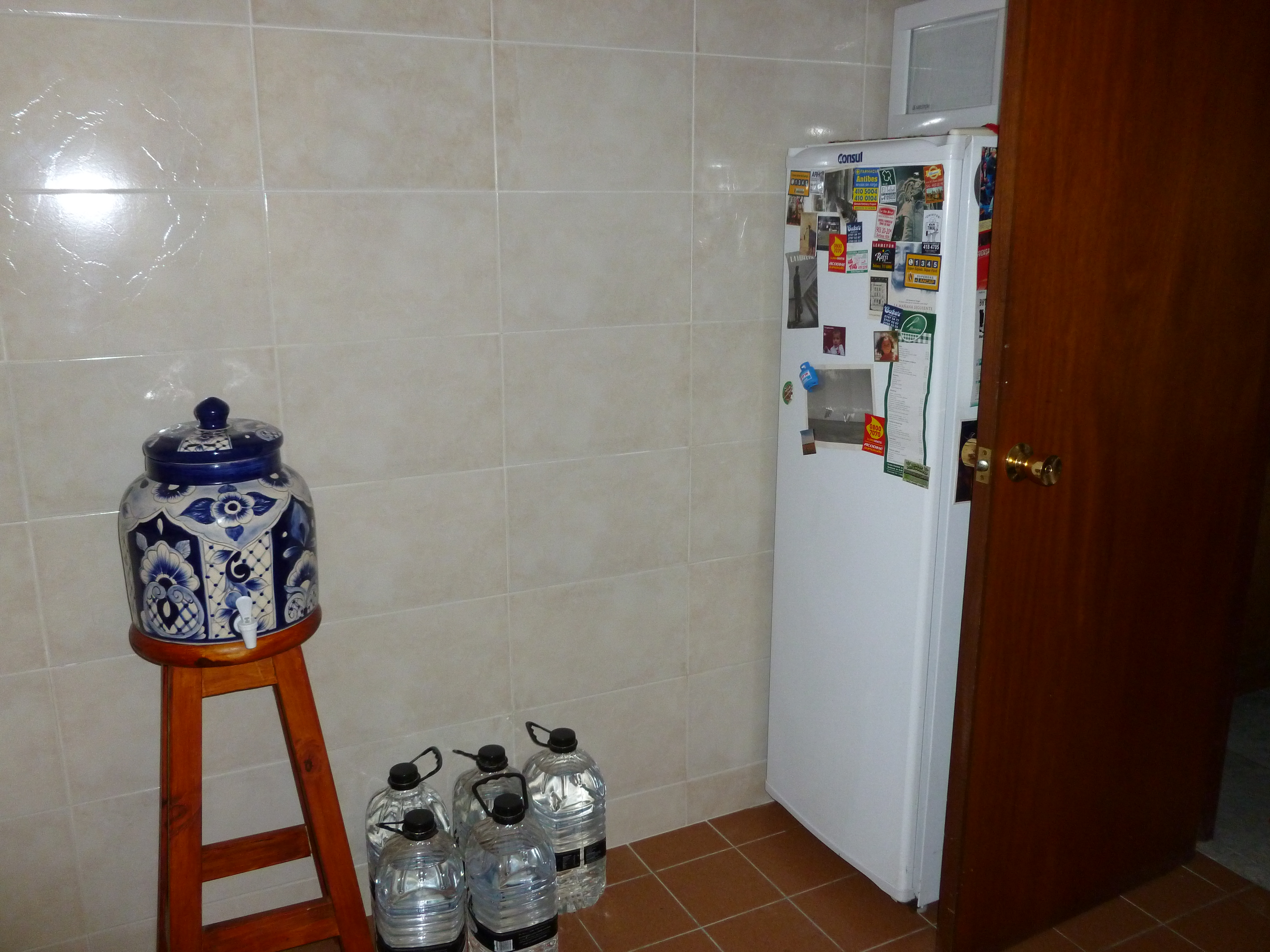
Kitchen: It’s tiny. There is a new, small gas stove with burners, a sink, minimal counter space, a small fridge, a microwave, a toaster, and a hot water pot. The Little House  and its water tank are almost 100 years old, so Raul recommended not drinking the tap water and instead buying bottled water. There is a large ceramic jug with a spout on a stool for this purpose. Raul also has a collection of glasses and has requested we use the ones that are not part of any sets, that way its not so bad if we break them.

The kitchen featuring the new little gas stove and the door into the atrium.

Yes, this is all the counter space we have!

The water jug and our half-size fridge.

Bathrooms: There is a full bathroom upstairs and a half bath downstairs. Both toilets have a holding tank and flush on the wall above. It takes forever for the tank to refill after its been flushed. We’ve also been warned not to put too much paper down the toilet. What “too much” is, is a mystery I hope we never solve.

This is the upstairs toilet and shower. Yes, that is yet another live plant we'll try to keep alive!

Bedrooms: There are three small bedrooms upstairs. A somewhat larger bedroom has a queen bed and a somewhat smaller bedroom has a twin bed. Both beds have a mosquito net hanging from the ceiling, although we’ve only seen a couple of mosquitos. We keep the windows open all day and night so the house can “breathe”, so the mosquito nets can’t hurt. Both of these bedrooms have windows that open to the atrium. The third bedroom is an office with a desk. Its’ windows open into the entryway and it’s darker than the other two rooms for most of the day.

The master bedroom.

This is the office.

Rooftop: In the entryway there are stairs leading up to the communal rooftop (there are two other apartments in the house). The stairs have a locked gate at the top so that no one can get into the house from above. On the roof there is a table and chairs, a place to hang a hammock, and a space to grill. The grill is old-fashioned and necessitates building a fire and placing meat over the flame. There’s not much of a view from the roof, as all the buildings are about the same height and the streets are lined with trees.

The rooftop. The gate on the left leads down the stairs into the entryway.

All in all… It’s a pretty awesome little house.