Bouza Bodega Boutique Winery

When my parents were in town they decided that they wanted to get out of the city a bit and sample some of Uruguay’s fine wines. Luckily there is a small, yet popular, winery and vineyards about 20 minutes from downtown Montevideo called Bouza Bodega Boutique. They specialize in low quantity, high quality wines.
Bouza Bodega Boutique

They made a reservation for the three of us to get a tour of the winery and vineyards and then do a tasting. We headed out there in a taxi, only having to pay about $15 US. The sky was blue and the grass was bright green. It was a perfect day.

View of the old church turned fermentation room and cellar at Bouza.

The property was built in 1942 as a small farmstead and church. It was refurbished in 2002 to it’s present state consisting of a restaurant and fermentation rooms. They have also expanded their operation to have a small farm where they produce milk and raise chickens and cattle (all in small quantities). The vineyards produce grapes of 5 different varieties including two whites and three reds: albariño, chardonnay, merlot, tempranillo, and tannat. Tannat is a varietal famous in Uruguay.

The tour started off with their classic car collection. The Bouza family has a collection of more than 30 vehicles representative of those driven since the 1920’s in Uruguay and  includes Fords, Fiats, Vespas, and Volkswagons. They even have an old railcar from 1929 on display in the gardens.
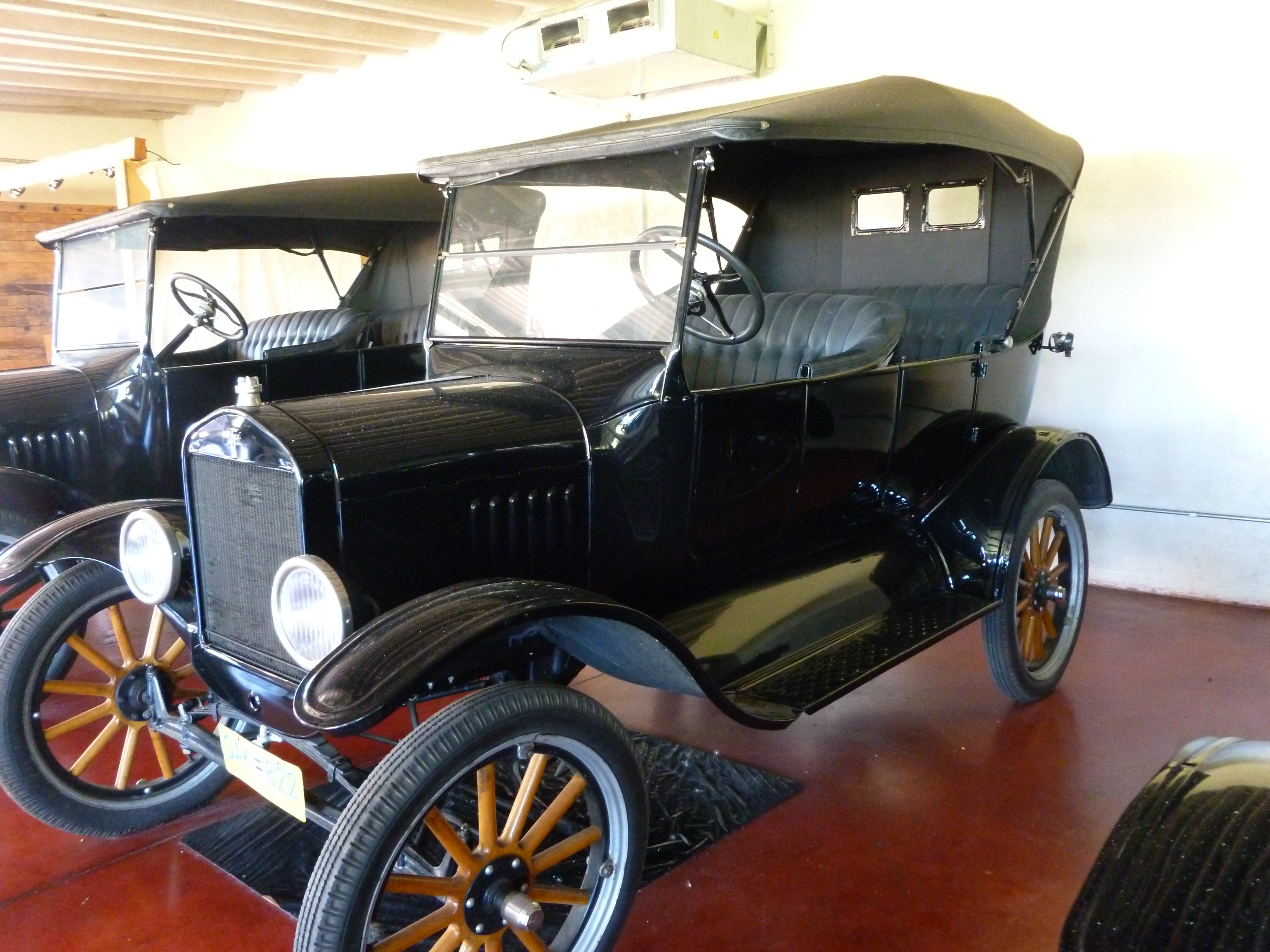
Just one of the cars in the classic car collection.

From there the tour went into the vineyard where the tour guide discussed the different varieties of grapes that were grown and how and when they are harvested.
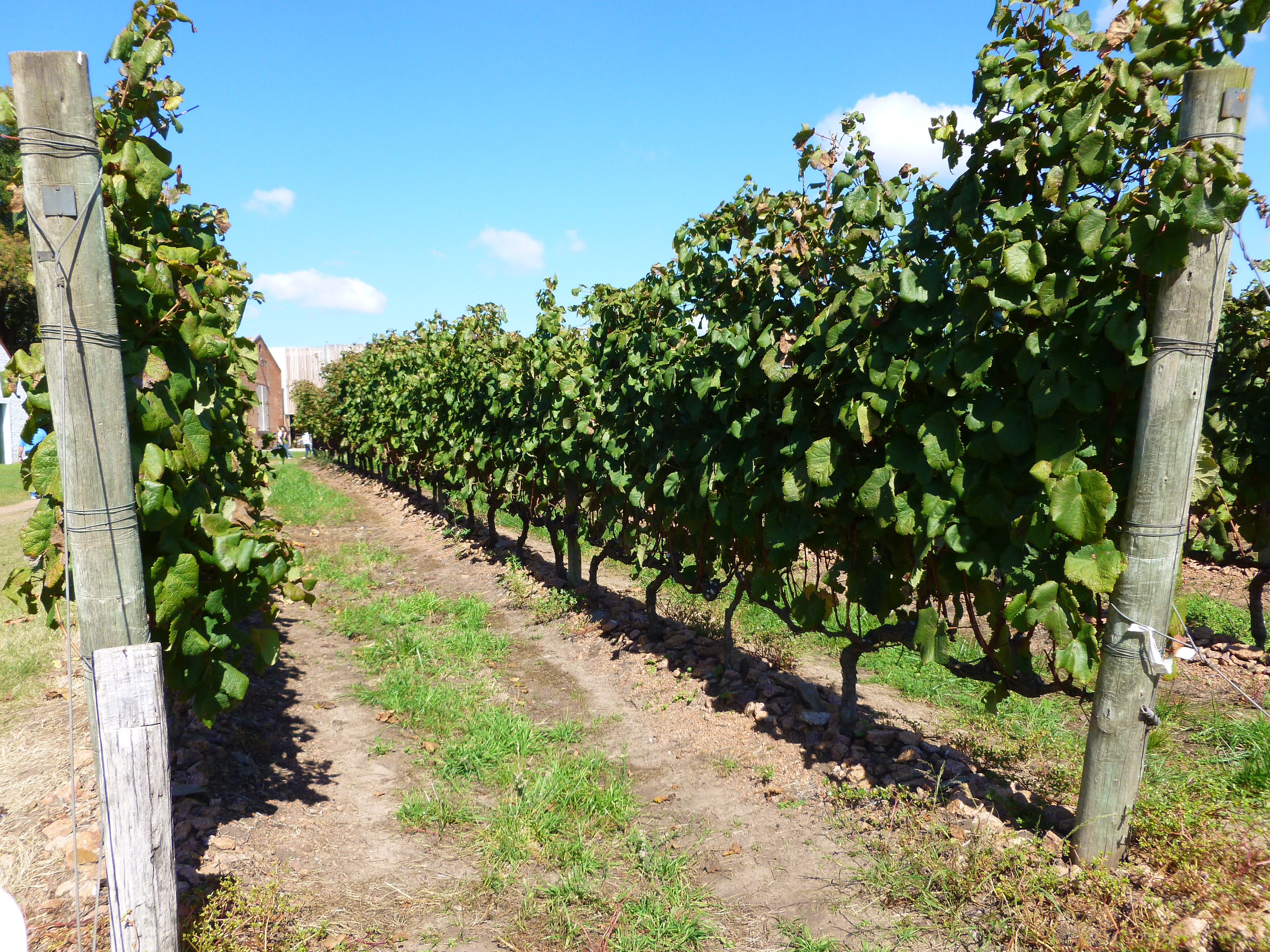
View of Tannat grapes. They are harvested in February/March each year and in August the vines are cut and treated with an anti-fungal because of the humid weather.

Oh, I forgot to mention that the tour was all in spanish. The tour guide knew english very well and told us that if we didn’t understand (we told her we spoke a little spanish) to ask her and she would explain in english. I must say that I understood the majority of what she was saying and relayed to my parents when needed. Progress is being made on my spanish skills.

The next stop on the tour was the primary fermentation room where they have wines fermenting for up to 8 months in steel, cement, or oak barrels. The differences between the containers being the amount of oxygen and flavor (in the case of the oak) imparted to the wine.

These are the stainless steel barrels for primary fermentation.

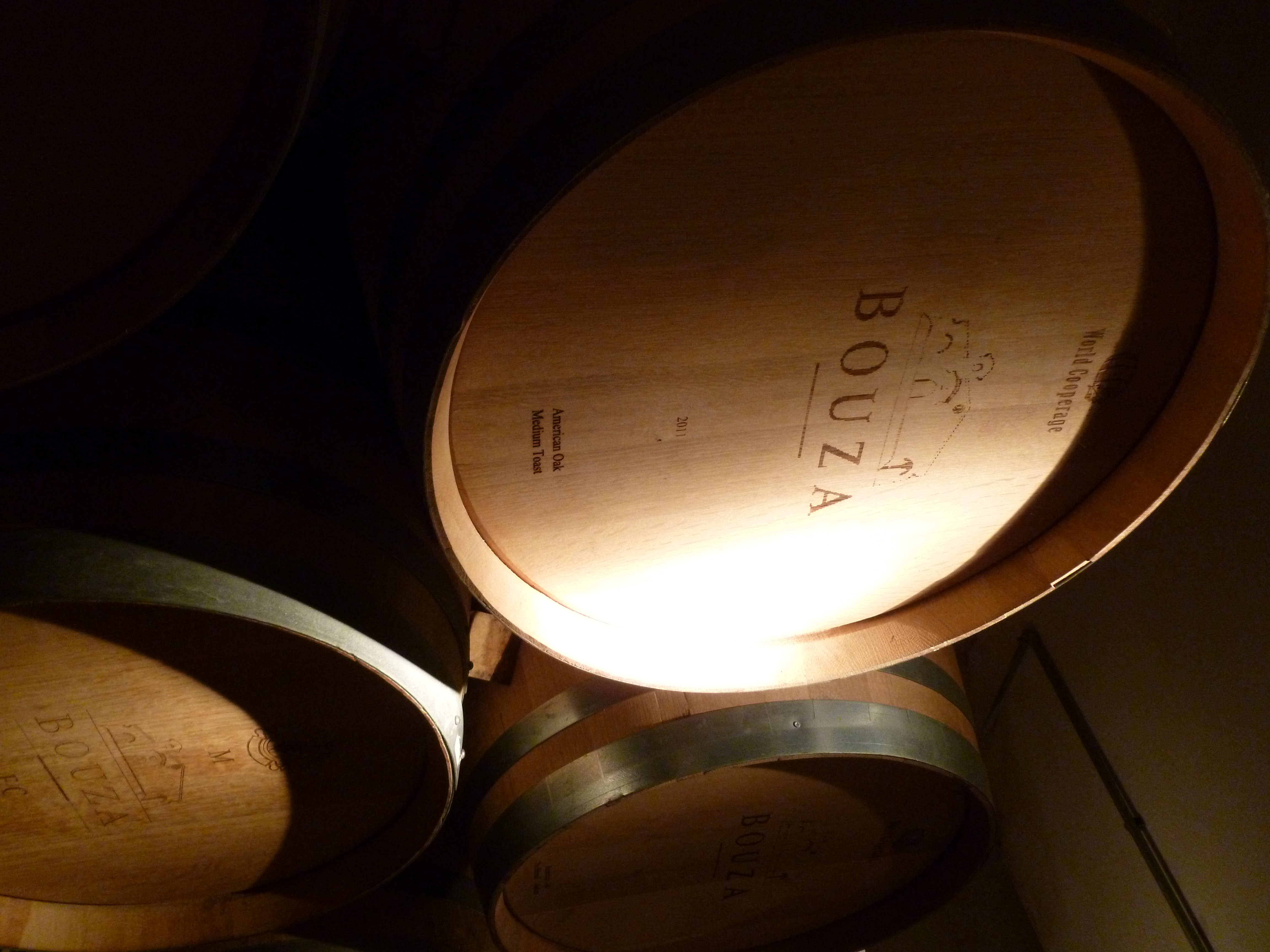
Following that, we headed to the cellar where the wines undergo a secondary fermentation in american and french oak barrels for up to 3 months. This is also where they store bottled wine for at least 6 months before it is sold in stores. There is also a special section of the cellar under the floor where the winery maintains about 40 bottles of it’s wine from each harvest year for posterity. For being a small operation, there were quite a few barrels in the cellar.

Barrels of wine in the cellar undergoing a secondary fermentation.

That ended the tour and we were led back to the restaurant and seated at a table dressed with one large glass and four smaller glasses at each place-setting. Pretty soon a setting of bread with various cheeses and meats was brought to the table along with four bottles of wine. The man leading us through the tasting spoke very good english and did a great job explaining each of the wines to us. He went through each wine individually, explaining and pouring, until he had gone through all four wines and then left us alone to taste them. It was much nicer tasting at a table with snacks than the usual tasting standing up at a bar.

These are the four wines we tasted. From left to right: tannat, merlot-tannat mix, merlot, vino blanco (which I already drank most of before I remembered to take a picture!).

The wines… The first was their “Vino Blanco” which was a special mix of albariño and chardonnay grapes that they make only for their tasting room and for sale at the vineyard (i.e. it cannot be bought in stores). The second was a merlot. The third was a merlot-tannat mix and the fourth was their special 2011 tannat. This wine was special because it was purportedly the best grape harvest in the last 40 years for taste, and because of this they did not apply a secondary fermentation to it. The result is a very strong-flavored, crisp, 15.5% alcohol content wine.

We enjoyed all the wines, but my favorite was the tannat, my mom’s was the merlot-tannat mix, and my dad seemed to enjoy all of them (especially toward the end, wink wink!). Of course we couldn’t leave without purchasing a few bottles, especially because they were cheaper than expected (in the $12-15 US range).

We had them call us a cab and we made our way back to the city, tired and a bit tipsy, but very happy!

Ultimate Tournament Espíritu Sudaka

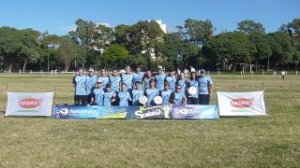
We were in Buenos Aires a week and a half ago for the biggest ultimate frisbee tournament of the year in this part of the country. Asa and I met the rest of the team at a hostel in the center of the city shortly after they arrived on wednesday afternoon. It was an awesome hostel; close to all the major tourist attractions in the downtown area, they served breakfast, and always had hot water for the showers. They were also able to fit all of us into two rooms!

The tournament itself was held at Parque Sarmiento on the west side of the city and about an hour travel from our hostel via either a subway and bus ride or a train and walking.

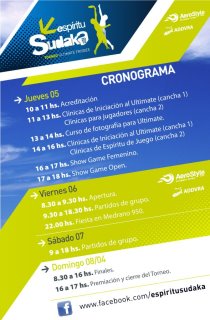
The tournament schedule was as follows:

The tournament schedule had clinics on thursday designed to help players with their throwing and defensive skills. It was run by some of the organizers of the tournament. There was also a clinic designed to discuss spirit of the game. They discussed things like interpretation of the rules and how to deal with disagreements on the field in a sportsman-like manner. A much greater focus is placed on spirit of the game and camaraderie here than in the United States, although it still forms the foundation for the sport in the states.

Thursday ended with two showcase games; one women’s and the other men’s. The women’s showcase game was played between the first (and only) women’s team from Buenos Aires (formed last August) and the rest of the girls from the tournament. This gave the Buenos Aires team a chance to play together and start figuring out how to work as a team. The men’s showcase game was between the Argentinian men’s team and 2-3 all-stars from each of the other teams. The Argentinian team will be attending World’s this summer in Japan. I played in the women’s game and Asa, Juanma, Cabra, and Juan Diego played in the men’s game.

Friday and Saturday were pool play days. There was one pool of 5 teams and one pool of 4 teams. The team from Colombia had some travel troubles and had to stay home at the last minute, hence 9 teams instead of the planned 10. We drew a spot in the pool of 5 and had to play Brazzinga (the top team from Brazil) in our first game. It took us a bit to figure out what we were doing and managed to keep the score fairly close. It was a hard game to have first and we ended up losing.

Our second game of the day was against the Cadillacs, a team from Beunos Aires. We worked together really well, with everyone getting good play time and we won. This was the first game that Cimarrón has won as a team!!!

Saturday started out with a game again Del Rial, or the mustachios. They all had drawn on mustaches and were giving gifts of stick-on mustaches. This was a hard game to have first in the day. They had picked up a couple of the Columbian players that happened to make it to the tournament. They were young and fast and moved the disc really well. We tightened things up a bit and made some strategy adjustments and won Cimarrón’s second game!!

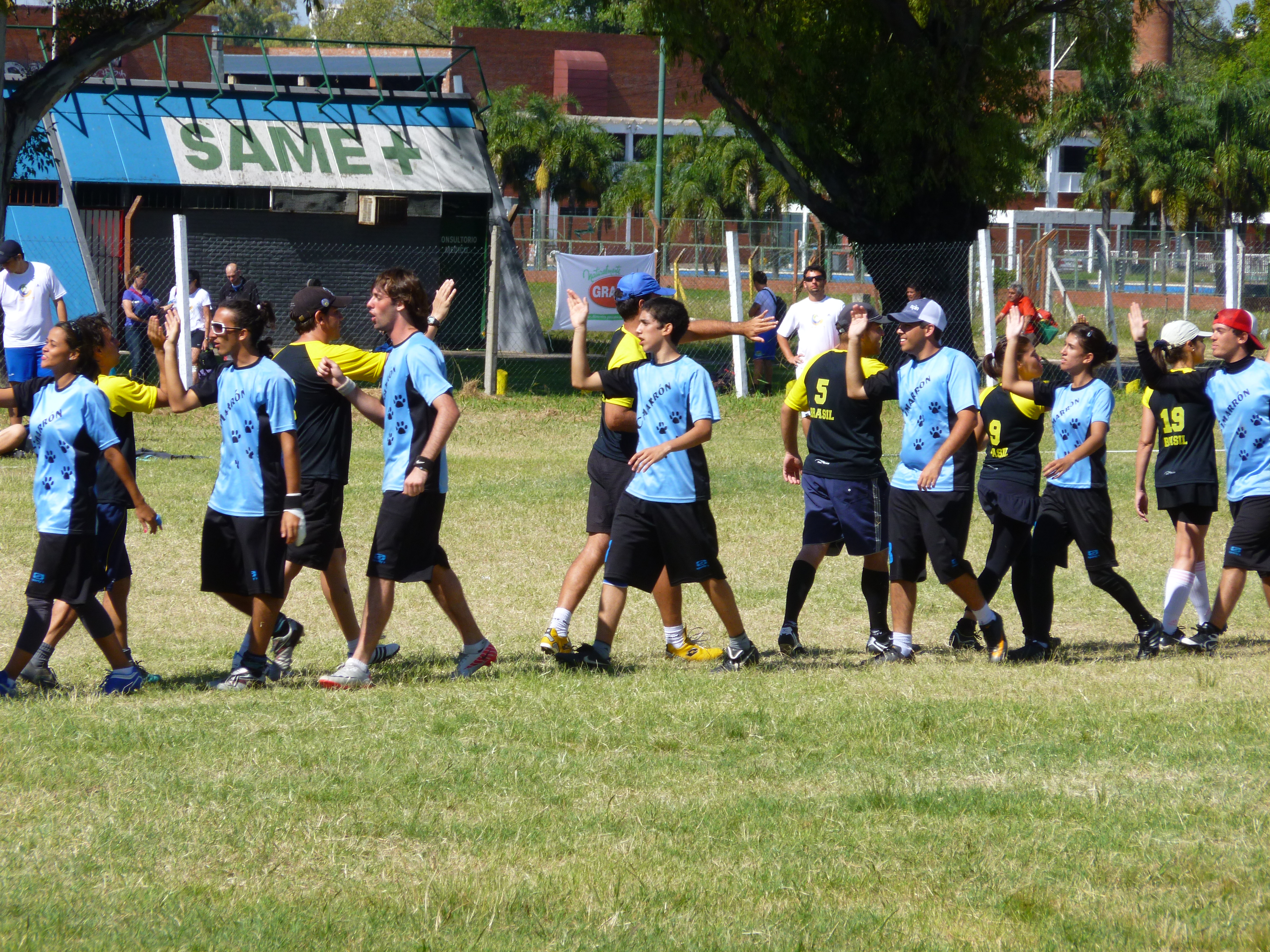
Our second Saturday game was against a team from Chile. We rotated everyone through the lines and tried a little zone. Cimarrón won it’s third game!!! This was enough to put us second in our pool and in a cross-over quarterfinals game against the Bahía Blanca team. This team consisted of people from Monte Hermoso where Matt went to play the beach tournament in February, so he knew most of them. The game was a bit rough with calls and was more aggressive than any of our previous games. We stuck with it and Cimarrón won it’s fourth game!!

That put us into the semifinals Sunday morning against Big Red, Buenos Aires’ best team and the team that had won the tournament last year. We came out ready to go. We started playing a zone defense with two ladies in the cup and were able to shut down their offense for a bit. We were down for most of the game and brought the score back to 10-10 with us on defense. We threw our zone and got a turn. Asa sent a deep shot to Juanma who was wide open. Juanma ran toward the back of the endzone and tried to “toe” the line, but to no avail. We set our zone again, but Big Red managed to work the disc all the way back up the field and score. Cimarrón lost the semifinals by one point.

We still had the third place game to play against Sol, the other Brazillian team, but we had worn ourselves out playing Big Red. Cimarrón lost the 3/4 game, racking in a fourth place showing at the tournament.

Cimarrón’s end record was 4 wins and 3 losses, a remarkable tournament for the team and all of it’s players! Other players and teams continually commented on the improvement in Cimarrón’s players and team strategy from last year’s tournament. There was also a general excitement that Uruguay was building it’s ultimate program and actively seeking ways to improve and participate in the region.

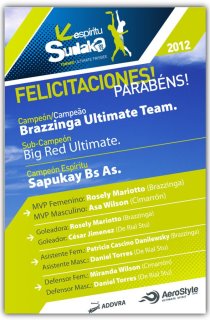
Cimarrón also managed to get some awards at the end of the day: Asa won male MVP for the tournament and Randi won Defensor Feminino.

Thanks needs to be given to the organizers of the tournament for a great show. Also, thanks to all of you on the blog who have been with us from the beginning, providing financial and emotional support for the team here in Uruguay. The tournament was a great culmination of two months of hard work and there’s no doubt that Cimarrón will continue to improve and participate in future regional events! Thanks again!

Wandering Alone in a Huge City

On monday Asa had some work that he wanted to do so I decided that I would go ahead and explore more of Buenos Aires on my own.

I spent a while reading reviews of tourist attractions and figuring out when things were open. I decided to head out walking toward the botanical gardens. It sounded like a nice quiet spot where I might be able to do some drawing. Monday was an Argentinian national holiday so everything was closed, but that didn’t stop the still numerous people on the streets from window shopping.

It took me almost an hour to walk from the downtown area to the botanical gardens, but the weather was nice and the walk was pleasant.

The botanical gardens are free, which I found can have its ups and downs. An up is that it’s free! A down is that anyone and everyone can get in. When I got there almost every bench was full and only the ones in front of mud puddles or in the sun were empty. There is a central building and a greenhouse, but the day I was there both were closed. There were several sculptures and water features, but none very impressive. It was just a nice fenced-in park. I walked through and went on my way.

I strolled back toward the cultural center and Recoleta cemetery. On my way I passed by the city’s central library and an impressively large sculpture of Evita in front of it. I wandered through the street fair in the park again and centered my sites on the cemetery, this time with the desire to do some drawing. I meandered through the rows of mausoleums and finally settled on some nice statues. About an hour later, with pictures drawn, I headed back to the hotel by way of the grocery store again.

The next day, a tuesday, the Museo de Nacional de Bellas Artes was open. I headed there after an adventure to the post office which was around the corner from our hotel. I was delayed there for about 20 minutes because I had to take a number and wait in line to send my 10 postcards to the states. For anyone interested, it cost about $1.50 US to send each post card and hopefully they will get to you lucky ones soon!

Anyway, back to the art museum. I was impressed with it’s collection. Although small, it was well-rounded and interesting. They had a very nice collection of small Rhodin sculptures (about 15 in total), and paintings by Monet, Manet, Van Gogh, Degas, Gauguin, and Renoir to name just a few. They also had an interesting temporary exhibit featuring drawings and paintings from the “Claridad” magazine which featured prominently in the socialist and anarchist movement in Argentina in the 1920’s and 1930’s. This museum is well worth the free entry fee!

This sums up my tourist activities in Buenos Aires. Things that I would like to do if we get a chance to go back include a tour of the Casa Rosada (which are given in spanish or english), explore the sunday market/fair in San Telmo, and see the La Boca neighborhood with it’s brightly painted houses and street performers. Until next time!

Exploring Buenos Aires

We had another full day of exploring Buenos Aires together. The first thing we decided was that we weren’t really interested in figuring out how to take the bus or the subway yet and that we’d rather walk.

So we set off with the goal of going to the MALBA, Museo de Arte Latinamericano de Buenos Aires, which is suppose to have art from all of Latin America from 1945 – present. We walked down Avenida del Libertador which is lined by numerous green spaces and tourist destinations.

Our first stop was the Plaza Naciones Unidas which is park containing a very large metal sculpture of a flower standing 75 ft high called Flores Genérica. The flower was designed and donated by artist Eduardo Catalano. The flower opens and closes mechanically each day, mimicking a real flower opening and closing with the sun. It was quite stunning!

Our second stop was the MALBA. Their collection of Latin American art could be described generally as modern art. They had some cool pieces including: a wooden bench whose ends curved up and around and down the wall, a set of moving malleable metal circles whose shadows made intriguing designs on the wall, some painted metal figures, a seascape whose bottom portion was a functioning fish tank, and a work with large prisms.

Other sections of the museum were filled with special exhibits. One called “Bye Bye American Pie” which documented an American view of war in the U.S. (including the war on poverty, drugs, welfare, abroad, etc…) through the pieces of 6 U.S. artists. The other was an exhibit of work by León Ferrari depicting an odd mix of religious artwork with erotic and war based images superimposed. Both of these exhibits had warnings stating that children under 18 should be accompanied by an adult. I don’t think I’ve ever really seen such an odd mix of art under one roof before.

Nothing was planned after that so we just started to wander. We found ourselves playing on some exercise equipment in a park and wandering through a mesh of street vendors near the Cultural Center of Buenos Aires. They were selling everything from leather book coverings to jewelry, to maté paraphernalia, to clothes, to artwork. It was all very beautiful.

By the time we navigated all the little booths we found ourselves at the entrance to Recoleta Cemetery, the main cemetery in the city. It is filled with mausoleums, both old and new, made up of concrete and marble and any building material in between, and in various states of disrepair. The mausoleums usually had ornate iron doors with glass to protect the shrines inside. All the shrines were different, but most had some kind of religious ikon and decoration. Below these would sit the actual coffins or small urns. Each mausoleum had a staircase leading below-ground. I couldn’t figure out if this was for more storage, as each mausoleum could be for an entire family or set of families, or if it was for drainage purposes. We wandered around for a while, enjoying the relative quiet in comparison to the rest of the bustling city.

In front of the Recoleta Cemetery and the Cultural Center in the park is a magnificent tree. Its branches stretch out  about 50 m in every direction and are supported by large beams that keep them up off the ground. A fence of about 15-20 m in diameter surrounded the trunk. It was incredible, but alas no picture. You’ll just have to use your imaginations!

On the way back to our hotel we stopped by a grocery store and picked up some sandwiches which we later consumed in our hotel room as a reward for our new discoveries!

Walkabout: Buenos Aires Edition

Sorry for the delay in blog entries. We’ve been traveling! Yay!

When Asa and I arrived in Buenos Aires it was a beautiful sunny day. The boat ride was really pleasant despite all the children running around. When we disembarked, our first order of business was to get “the picture” of the boat. We thankfully bypassed the lines of people waiting for bags and headed straight out the door. We wandered around the corner and instead of seeing the perfect shot of the boat, we came face to face with a three-masted tall ship docked in the harbor, the frigate Libertidad. It was open for tours, but we had all our stuff with us so decided not to partake. We got the best picture of our Buquebus boat that we could and headed toward the hotel.

As luck would have it, the street that the Buquebus terminal is on was one of the cross streets for our hotel. All we had to do was walk about 8 blocks and we were there, the Dazzler Tower Maipu. We walked in and told them we had a reservation. We managed to conduct the entire check-in process in Spanish and understood just about everything we were told. Success!

The room was just like any other room in any other decent hotel and had all the amenities. We were on the fifth floor, which was a little unfortunate because we already know the floor numbers up to five. We were hoping that the elevator could teach us the words “sixth”, “seventh”, “eighth”, etc… Oh well! Can’t say that the view was spectacular, but what can one expect in a city full of tall buildings stained by years of pollution.

Anyway, we dropped our stuff and headed out to explore the city. Out first stop was the obelisk. It looked like a mini Washington monument surrounded by a sea of cars. It is positioned in the middle of one of the largest roads in the world, Avenida 9 de Julio which has 24 lanes. All this we determined in subsequent days, because at our first look on Saturday afternoon the road was completely closed and barriers were set up everywhere. There was a rally car race through downtown Buenos Aires TC2000, with the Obelisk as one turnaround point. People were everywhere trying to get a good look at the cars as they came wizzing past.

We followed the race through the streets trying to get our own good look. We ended up with a fairly good view and quickly realized that there were more interesting things to be seen. We found ourselves in a large square opposite the Casa Rosada, the government building where Evita made her famous speech rallying the people of Argentina. They light the building with an insane number of bright pink lights, hence the Casa Rosada or pink house. As it was just starting the get dark we were able to revel in all it’s glory.

As we were taking the requisite photos and remarking about the extreme pinkness, we heard a trumpet. Of course we were just in time for the ceremonial lowering of the flag in the square. Seven uniformed guards performed the ceremony and then marched into the Casa Rosada.

After this we meandered our way to Puerto Madero, or the port in Buenos Aires. There are several pricy restaurants overlooking the port, another three-masted tall ship, and some ice cream stores. The port itself is divided into 4 or 5 sections via bridges. The outer-most bridge, closest to the Buquebus dock, opens every hour by rotating the entire section of the road that runs across the water into a parallel configuration which allows boats to pass through. Even the Puente de la Mujer, a fashionable bridge in the middle of the port, seemed to be capable of rotating to allow boats to pass. The yacht club was located in the outer-most section of the port and looked fairly upscale.

At this point, we were hungry and went to find a place to eat some dinner. We finally settled on a touristy spot on one of the main streets. We easily ordered Milanesa de ternera napolitana with french fries for two. Milanesa is a common breading for meats and can be found covering chicken or beef. It can then be fried or baked. Napolitana is a topping that includes a cut of ham, cheese, tomatoes, and some tomato sauce.

Fútbol Game!

Last night Asa and I were lucky enough to attend a local fútbol game. Our friend Carlos won some tickets to the game and invited us along for the fun!

Just a quick note about fútbol outside the United States and in Uruguay. Fútbol is a “national pastime” in many countries and in Uruguay especially. The Uruguayan Futbol Association (the country’s governing body for the sport) was founded in 1900. The national team has won the World Cup twice; once in 1930 during the first World Cup Tournament (also held in Uruguay) and again in 1950. They came in 4th during the 2010 World Cup and have won the Copa América a record 15 times, including in 2011. The success of the Uruguayan national team has been cited as amazing by many in the press because of the country’s small size (about 3.5 million people). Check out the great info about the team on Wikipedia.

In short: Fútbol is important here. Children start playing in local leagues when they are very young (i.e. when they can run and not fall over immediately) and they keep playing. There are numerous teams in the country’s professional league, the two most popular being “Nacional” and “Peñarol”.

When there are important games on television the city stops functioning (literally). Carlos told us that people will leave work early, stores will close, and people can only be found where they can see the game (i.e. at home or in bars). This type of interest/obsession with a sport can only be rivaled in the United States by the Super Bowl, which comes in at a very very distant second.

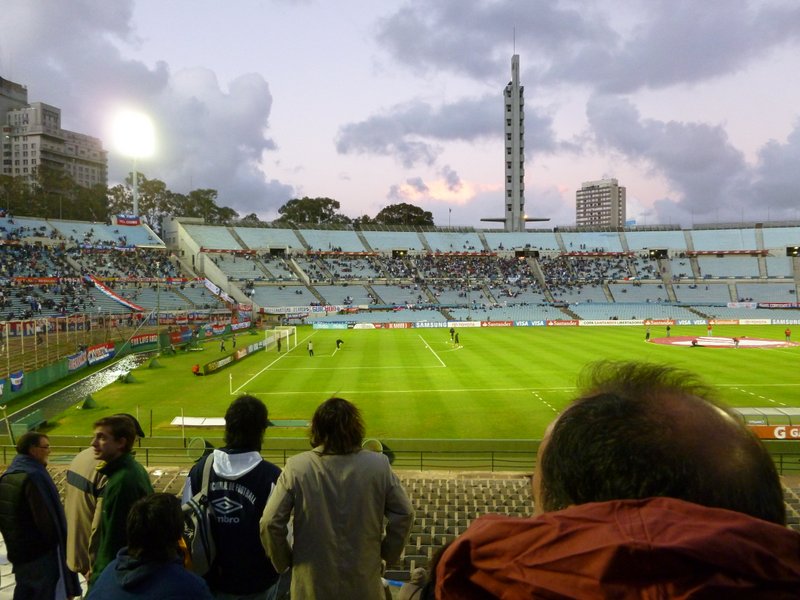
The game last night was Nacional vs. a team from Chile. It was one of several games in the Copa Santender Libertadores that occurs from January to July and involves teams from 11 South American countries. The game was at the open air Centenario Stadium. On our way to the stadium a crowd of fans from Chile were walking down the middle of the street yelling and carrying on, stopping traffic. Of course this was about 2 miles from the stadium.

The turn-out for the game was pretty poor because of a cold rain forecast in the weather. We went prepared with raincoats, thick socks, and beanies. Despite the small crowd as a whole, the die-hard fans were there in throngs. Clubs in the city get together and get seats behind the home-side goal, where they spend the entire game singing, dancing, lighting flares and small fireworks, and in general being the “life of the party”.

There was a huge fireworks display as the home team, Nacional, took the field. Carlos said that sometimes they fire off so many that they have to wait for the smoke to clear before they can start the game.

Vendors walk around the stadium selling various things to eat including: potato chips, peanuts, coffee, tortas fritas (fried bread), and sodas. Just like anywhere else, prices were a bit more expensive than in the supermarket or local corner store. There were police patrolling everywhere, but weren’t checking bags or preventing people from bringing things into the stadium. We brought some sandwiches and cookies.

The game itself was fairly frustrating. The home team, Nacional, had a ton of shots on goal and runs down the field, but for whatever reason couldn’t score. There were lots of yellow cards. A man sitting behind us even yelled “tarjeta (i.e. card)” every time a player hit the ground. I guess that’s part of the recent efforts to try and crack down on fouls in the game. Nacional managed to score in the second half with a nicely deflected ball from the heel of a foreword; home team wins 1-0.

The game was a blast. Asa and I are looking forward to other games, as we imagine each game has a different “feel” based on who is playing and the weather. We really want to see a Nacional vs. Peñarol match. Here’s to hoping that there will be one while we are here and that we can get tickets!

Check out some short videos I took with my camera: Video 1 and Video 2.

Tournament Practice!

The Uruguayan ultimate team will be playing in a big tournament in Buenos Aires, Argentina April 5-8. We have been helping them prepare by teaching them the fundamentals of the sport along with strategy and plays.

The team normally has practice on Tuesday, Thursday and Saturday afternoons. Attendance on Tuesday and Thursday is usually scant because people have school and work commitments in the afternoon. Saturday is advertised as a “come one, come all” and learn about the sport of ultimate day. Amazingly, there is usually one or two people every Saturday that are new to the sport. Kids show up to learn as well as teachers, making ultimate an all-inclusive and enjoyable sports experience.

As the teams’ goal is to win some games and do well at the tournament, we as “coaches” suggested that we have a team practice on Sunday afternoon for all the people that will actually be playing at the tournament. We felt that it was important so that the team could learn how to play with each other, and it would be a good opportunity for learning tournament-specific information (like plays).

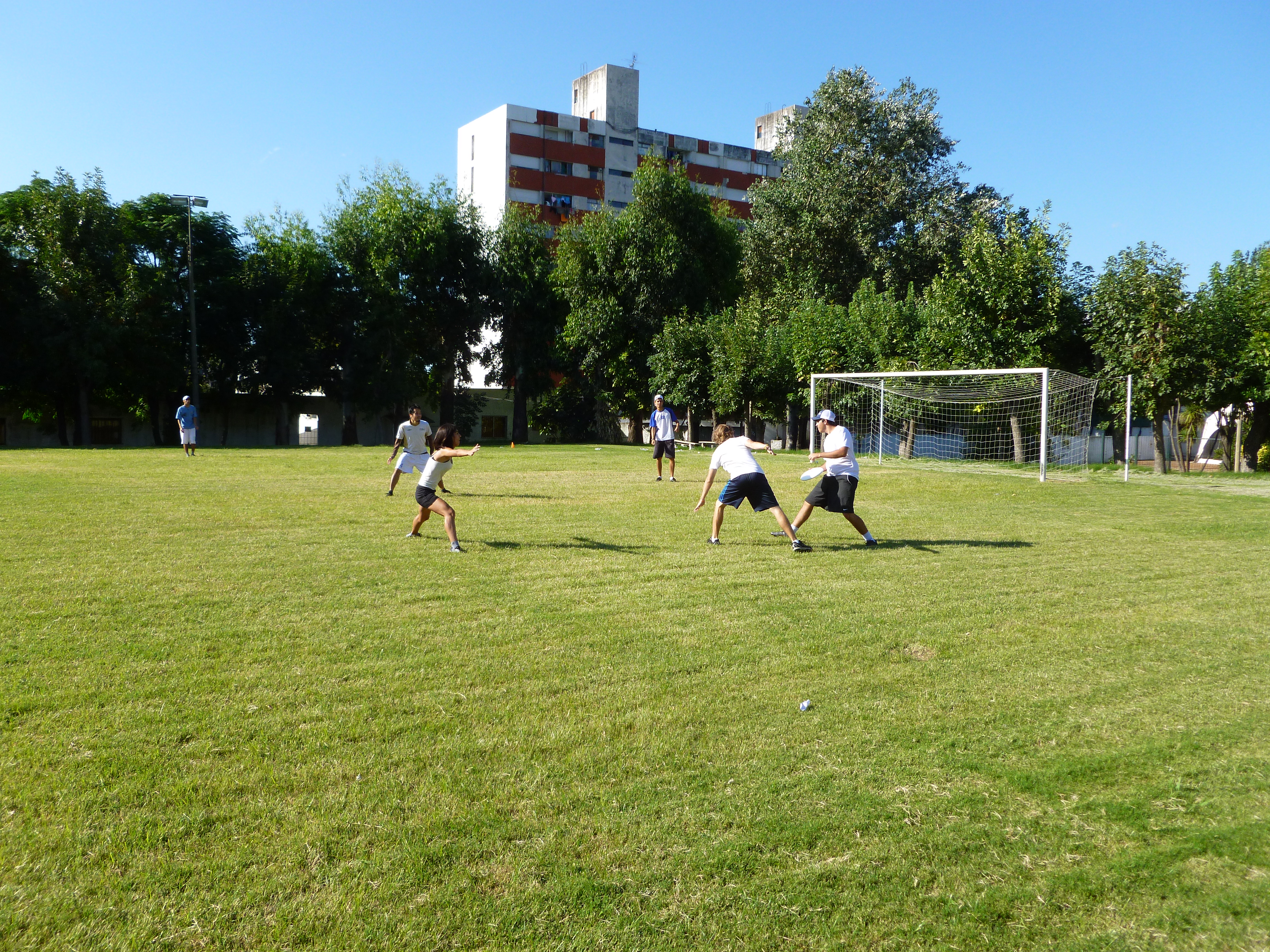
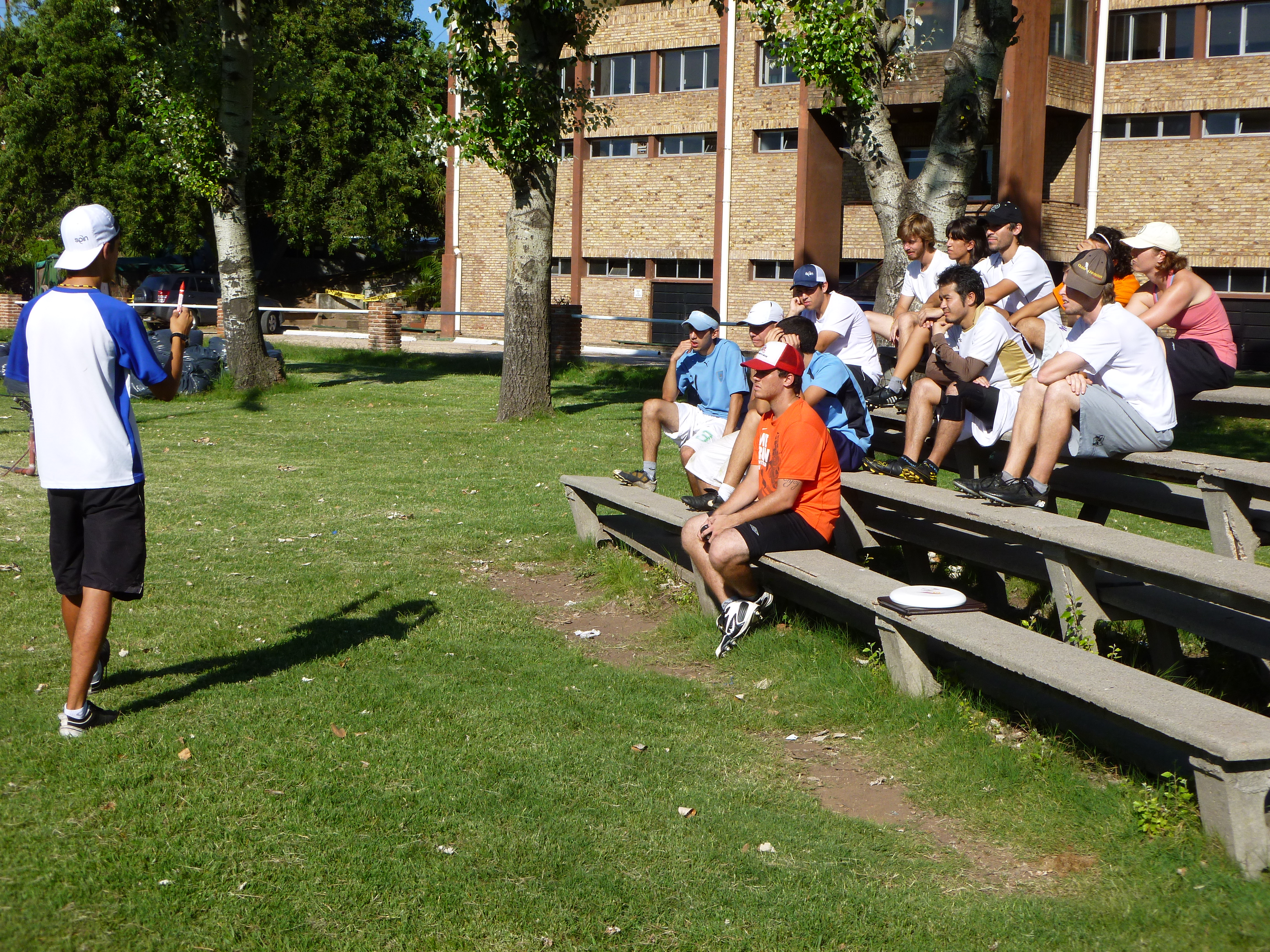
So last Sunday (March 18) we had our first practice as a team! Carlos was able to secure some nice fields for us to play on at the local military school/base. The fields were nicer than many of the fields in the United States that are used for practice and tournaments. Nice fields go a long way to running hard, laying out, and feeling like a team!

The practice was wonderful! Everyone was focused and eager to learn. We practiced movement and timing of the cuts from a vertical stack, cup movement for zone defense, and reading the disc in the air. It was really productive and everyone had a great time!

Juanma (Carlos' brother and fellow captain) reviewing zone defense for the team.

Chandro throwing upfield.

We had another practice this past sunday (March 25) to work on plays on the field and in the end zone.

We are super excited about the tournament in a couple weeks! There is no doubt about the potential of this team. They have improved immensely since we arrived and have transformed into a competitive ultimate team. There is also no doubt that when we leave they will continue to improve and grow the sport of ultimate here in Uruguay!

Vaccinations

Sorry we’ve been MIA for a while. Nothing bad has happened, but we’ve neglected the blog a bit in favor of interacting face to face with people. This has resulted in a bunch of posts that will be forthcoming, so stay tuned. We’ll start with today’s adventures and work backwards in the coming days until we’ve caught up!

“Vaccinations” might be an odd title for this post considering that we’re not little babies any more and we’re not traveling to any crazy places. Uruguay is not a third world country and does not have any crazy disease carrying monster insects. Well, turns out that we will be traveling to a crazy place with crazy disease carrying monster insects while my parents are here visiting in a couple weeks.

We are traveling to Iguazu Falls which is in the northern-most part of Argentina and borders Paraguay and Brazil. It’s the jungle and the mosquitos in that jungle sometimes carry yellow fever. It is recommended for people traveling to this area to get vaccinated for yellow fever, but it is not required. See these sources about yellow fever and where vaccinations are required: National Institutes of Health and Vaccination Info. Since yellow fever is a very serious disease and at the request of my parents, we got vaccinated for it.

Montevideo has a dedicated office at the port for travelers who want to be vaccinated against yellow fever. I imagine this is because there is a very real risk of yellow fever in many northern parts of South America and many countries require travelers to be vaccinated against it before being granted entry into the country. This is definitely the case for travelers to Brazil.

So what does one do to actually get vaccinated for yellow fever? Well it’s a four step process. The first step is a phone call. This was a very interesting step considering my tenuous understanding of the spanish language and the lack of facial expressions and hand gestures for contextual support. After figuring out how to actually make a phone call on my cell phone (dial 0 and 2 before the number in case you’re wondering), I fairly easily stated what I was calling about, told the nice lady where we were traveling, and set up an appointment for 9 am Friday morning.

Then she said she had some questions to ask me. I understood that, but could not for the life of me comprehend the actual questions she asked me. This became apparent fairly quickly and she handed the phone to a man who’s english was just as bad as my spanish. After some exchanges in “spanglish” I managed to answer the questions to his satisfaction and he wished me happy travels and hung up.

The second step in getting vaccinated against yellow fever is to figure out where the heck the office is. The office of “Sanidad de Fronteras” is at the port of Montevideo, which is a fairly large place. There is a cruise line terminal, the buquebus (boat to Argentina) terminal, and a variety of large and imposing brick buildings. On google maps it was very clear where we were suppose to go. Unfortunately reality sometimes doesn’t look like google maps.

What did we do? We asked someone who said to go until reaching the big brick building and the office was at the end. He also pointed in the direction we should be going. At the end of this brick building there was a pair of glass doors that looked like it could be a doctor’s office. We went in and asked again and were told it was around the corner. As we were walking out one of the dock crew smiled and pointed around the corner. Guess we’re just that apparent.

Looking toward the end of the very large brick buildings. The Sanidad de Fronteras is at the very end!

Well we got to the unlabeled door around the corner and went in. Signs were plastered everywhere saying that the yellow fever office was on the first floor, so we went up.

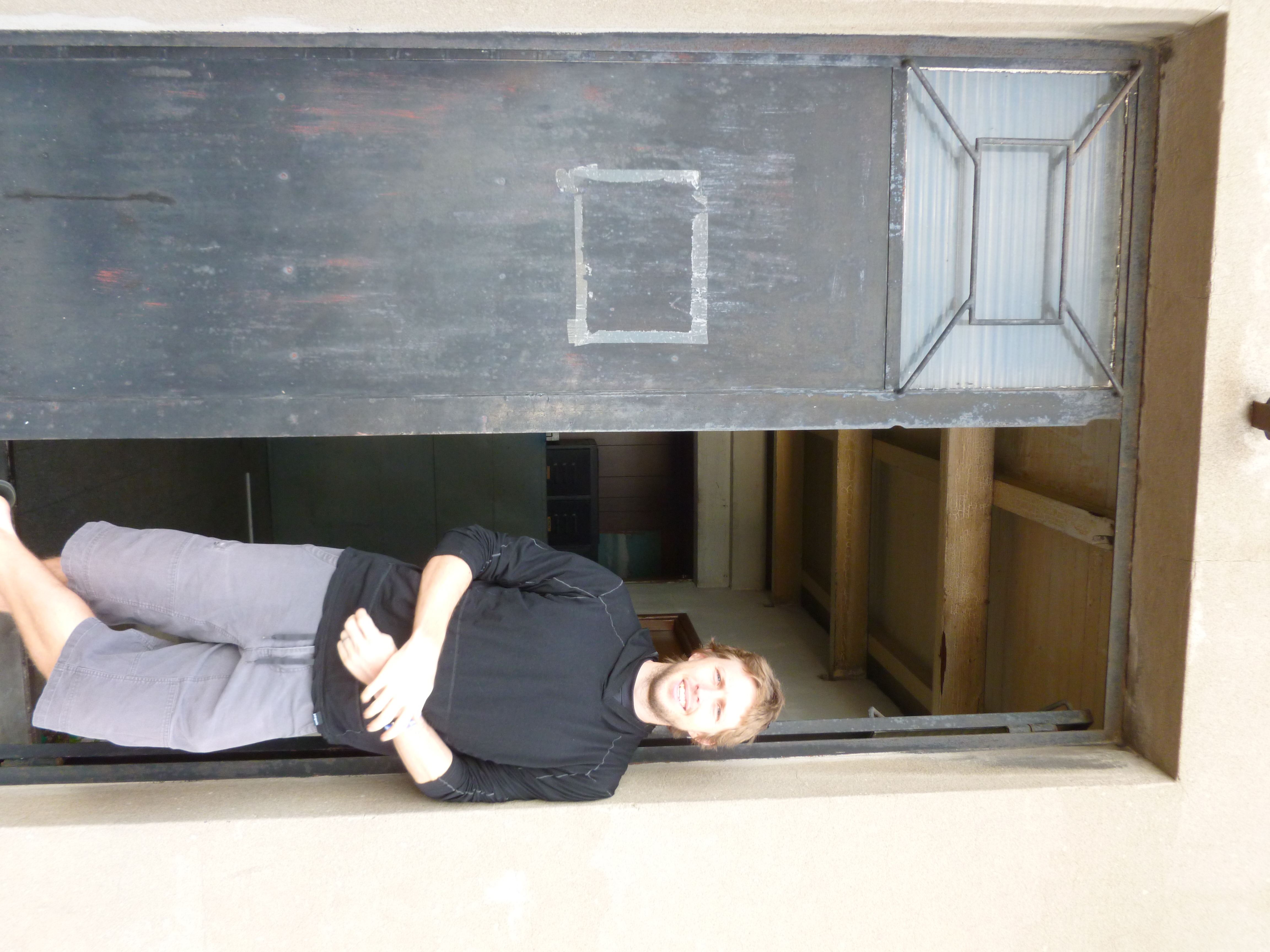
The unmarked doorway to the vaccination clinic.

Signs posted up in the office.

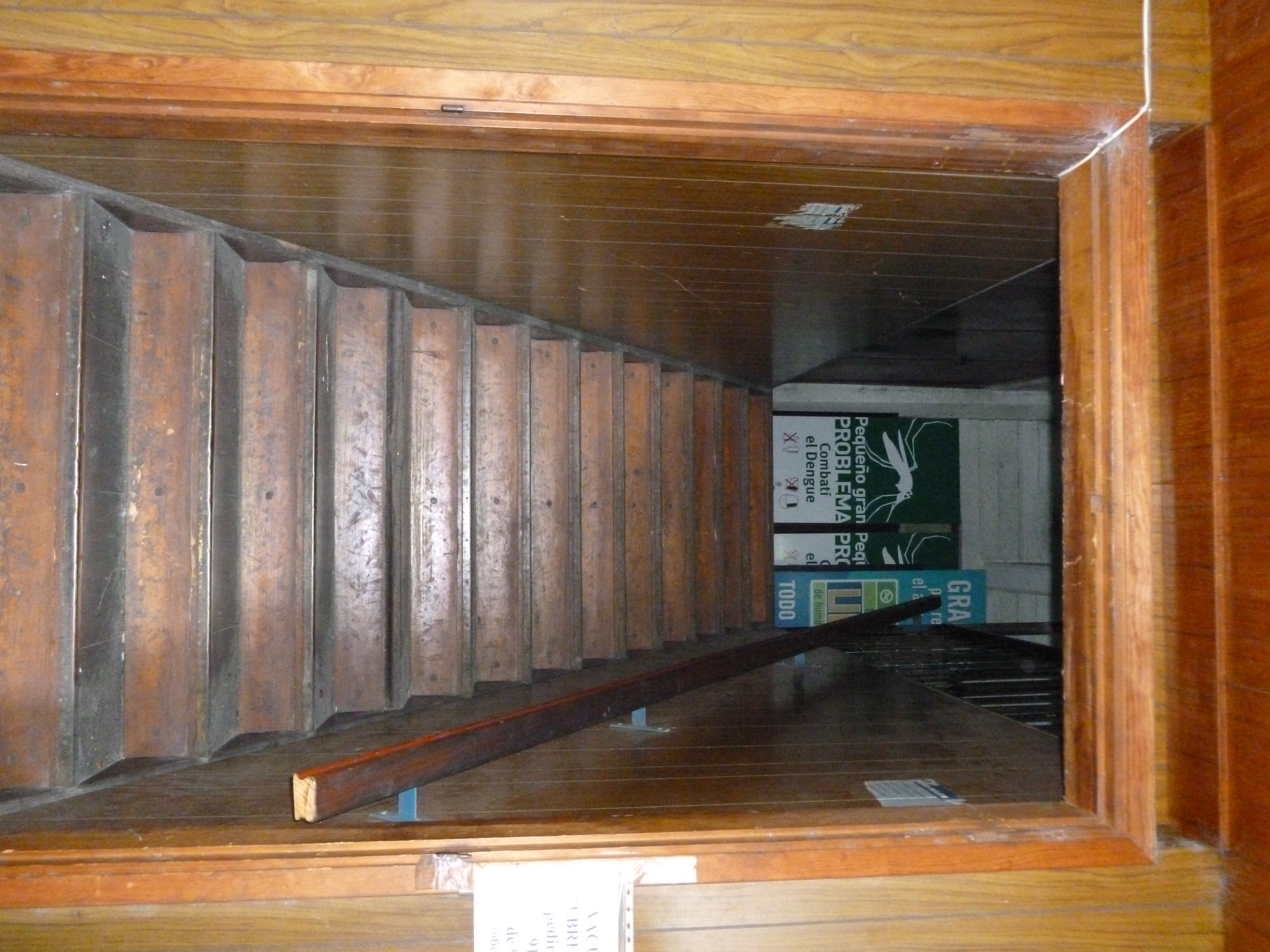
Stairway up to the vaccination office.

The third step in getting vaccinated against yellow fever is waiting to get the shot. On going upstairs, we found ourselves in a dark foyer with several closed office doors (looking deserted), a locked bathroom, and one door in the corner that said “Fiebre Amarilla” (i.e. yellow fever). There were 5 people already standing in the foyer. They had all made appointments for 9 AM and were upset about having to wait in line and apparently it doesn’t matter if you make an appointment because they just call the next person in line.

While we were waiting the man behind us saw our passports and asked incredulously if we needed them, at which time we told him that we were from the United States and that we were told to bring them. Our answer quelled his fears and he asked us where we were traveling.

The fourth step in getting vaccinated against yellow fever is actually getting the shot. We were called into the office which consisted of one room containing three people: a woman acting as receptionist, a man answering phones, and a nurse. The room had a couple desks which the first two people were sitting at and a corner with a curtain where the shots were actually administered. The nurse was wonderful and put us at ease right away while the receptionist took our information and drew up our international vaccination cards. We paid $352 pesos each (about $17US) for each shot, and that was only because we didn’t have international vaccination cards already. I think the shot is free for Uruguayan citizens.

Before we actually got the shots we had to answer a bunch of questions, many of the same ones that I had already answered on the phone: allergic to eggs? allergic to antibiotics? pregnant? and other vaccinations in the last 30 days? The she gave us some mandates and advice… Don’t get pregnant in the next 3 months (check!), keep eating and exercising regularly, and if we got a fever to just use an over-the-counter remedy. All this in spanish. She spoke slowly and deliberately, but we both understood every word she had to say which also put us both at ease.

The shot itself may have been the least painful shot I have received in my adult life. Here’s to hoping that there aren’t any side effects! We thanked them heartily and made our way home.

Empanadas

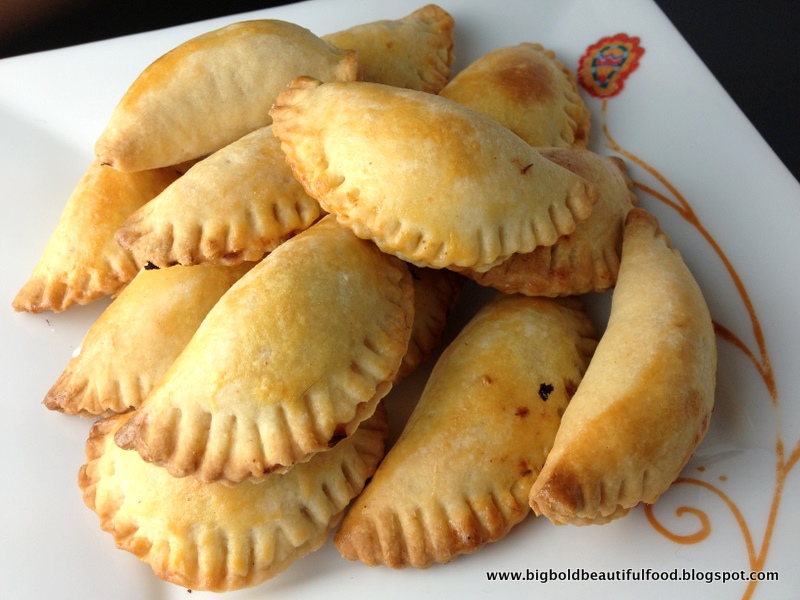
“An empanada is a stuffed bread or pastry baked or fried in many countries in Latin America,Southern Europe, and parts of Southeast Asia.” – Wikipedia

Here in Montevideo all the empanadas we have run across have been baked instead of fried. Across the river in Buenos Aires they have baked empanadas that they call “salteñas”. Empanadas are available at a variety of venues in Montevideo. At the supermarket they can be found near the bakery items. Empanadas can commonly be found at rotiserías that also sell fresh pasta and torts, and occupy little hole-in-the-wall stores that are hardly big enough to display their food. Empanadas can also be found at empanada specific restaurants or delivery centers.

At supermarkets and the small rotiserias the fillings are fairly limited and usually include carne (beef), pollo (chicken), acetuna (olives), jamón y queso (ham and cheese), and espinaca (spinach). At empanada restaurants and delivery centers there is much more variety, including dessert empanadas. El Taberna del Diablo (a restaurant and delivery center near our house) has 46 different kinds of empanadas.

One of the confusing things about buying empanadas, especially if you get different varieties, is coming home to a collection of stuffed pastries that all look alike. On closer inspection, each type of filling is shown on the outside using a unique marking. Small rotiserías will sometimes use pieces of dough to make shapes on the tops that correspond to their filling. Large delivery centers will use a combination of small holes punched in the edges and folded corners to distinguish the fillings. Though, without a guide map to the markings, the only thing to do is take a bite. Things could be worse!

Empanadas are so prevalent in the culinary sphere of Montevideo that most supermarkets carry pre-made empanada dough disks. All one needs to do is buy them, stuff them, and bake them to have a delicious snack or entire meal.

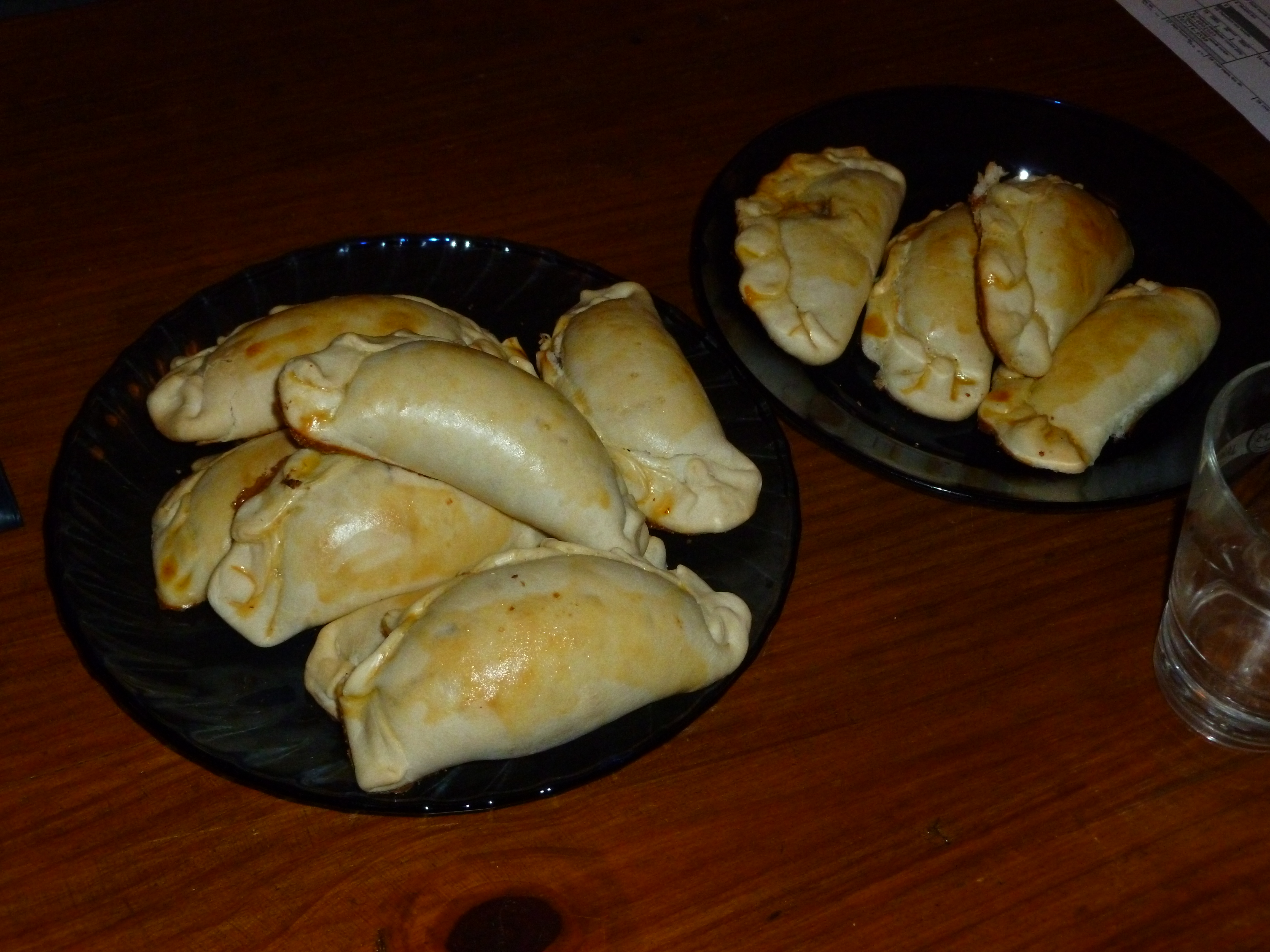
So, that’s exactly what we did! I made two types of empanadas, beef and apple. Below are the recipes that I created:

Beef Empanadas (recipe makes about 30 empanadas)

Ingredients:

3 tbsp olive oil

1 med onion chopped fine

1 large green bell pepper chopped fine

1 tbsp garlic chopped fine

2 peppers chopped (don’t know what kind, they call them “picante” here but jalapeños would work great)

1 tomato chopped

1.5 lbs ground beef

1 tbsp oregano

1 tbsp red pepper flakes

1 tsp cayenne pepper

1 tsp black ground pepper

0.5 tsp salt

Directions:

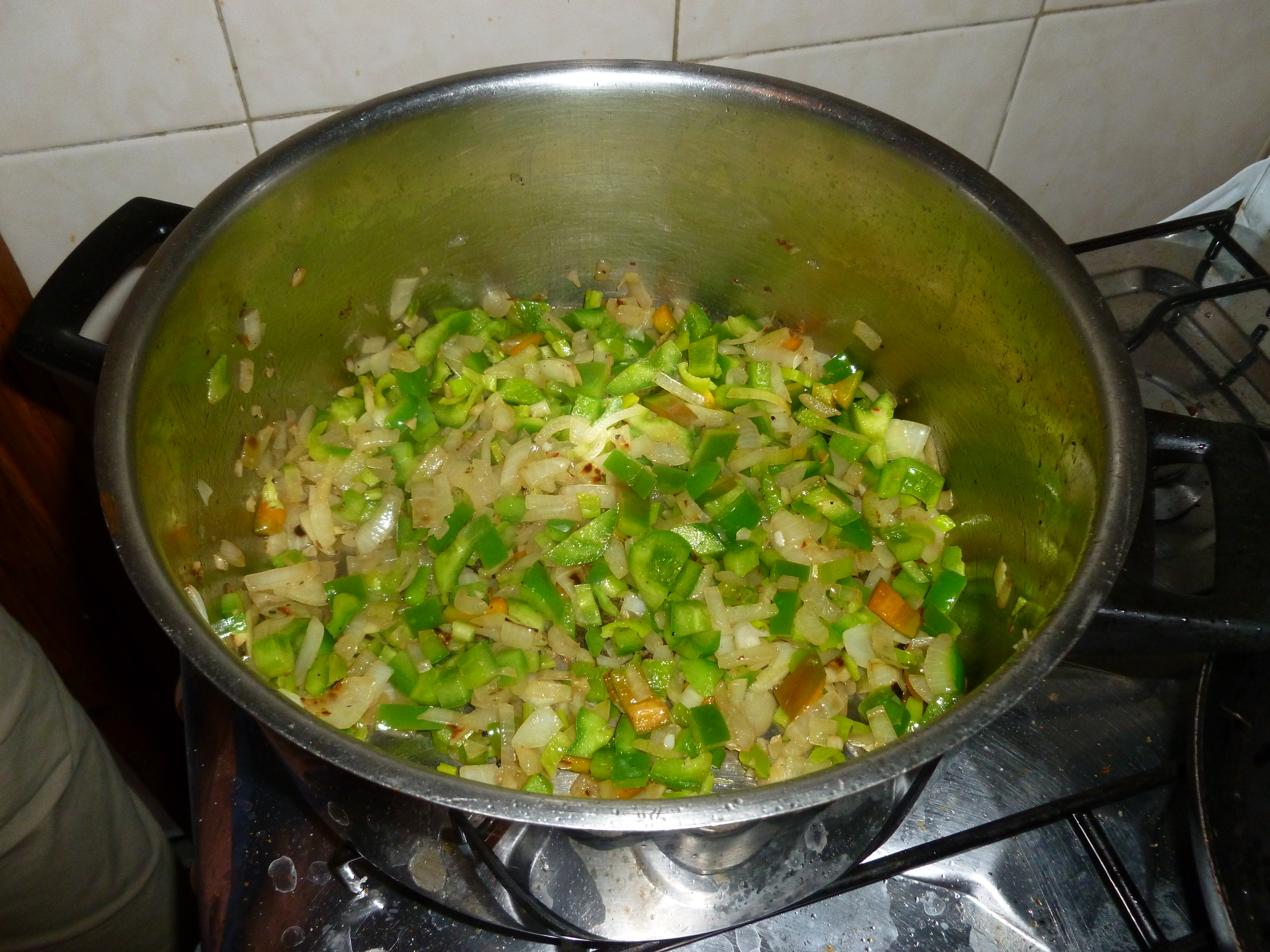
1. Saute onions, garlic, bell pepper and hot pepper in olive oil until just browned and soft.

2. Add meat, tomatoes and seasonings. Cook until meat is browned and broken into very small pieces.

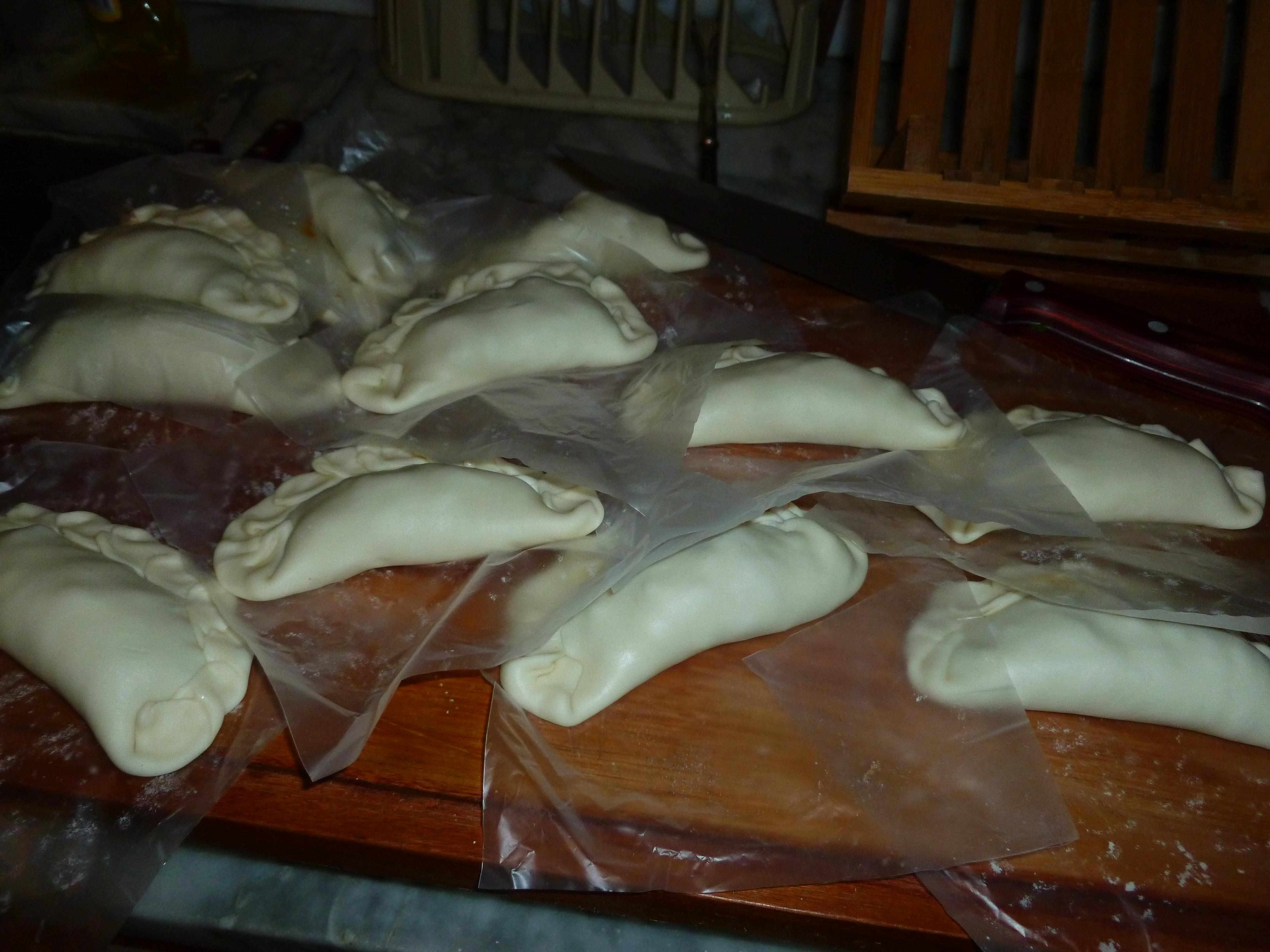
3. Cool mixture in the fridge for 1 hour, then add one spoonful to the center of a dough disk. Wet the edges of the disk with your finger and then fold over and seal. There are lots of different ways to seal empanadas including with a fork or with a braid. This video shows how to do it using the different techniques.

4. Brush the tops with egg yolk to help brown them in the oven. Since the oven here is a bit funky… I’ll just suggest that at home you bake the empanadas at 350 F for about 15 min.


Apple Empanadas (recipe makes about 15 empanadas):

3 large granny smith apples chopped

2 tbsp margarine

0.5 cups sugar

0.25 cups dulce de leche (like caramel)

1 tbsp flour

Directions:

1. Place the apples, margarine, and sugar in a pan and sauté over low heat. When the apples are soft, add the flour to thicken the mixture. Off heat add the dulce de leche and mix.

2. Place in the fridge for an hour and then fill the empanada disks with goodness! Use the same cooking instructions as above. Enjoy!


The Mall at Punta Carretas

We have now been to this mall twice. Once to try and find phones and this time to try and find fresh herbs. It is approximately a two mile walk from our house. The supermarket near our house has some fresh herbs, but doesn’t have cilantro, parsley or dill. We wanted to get some cilantro to include in our next project, making empanadas!

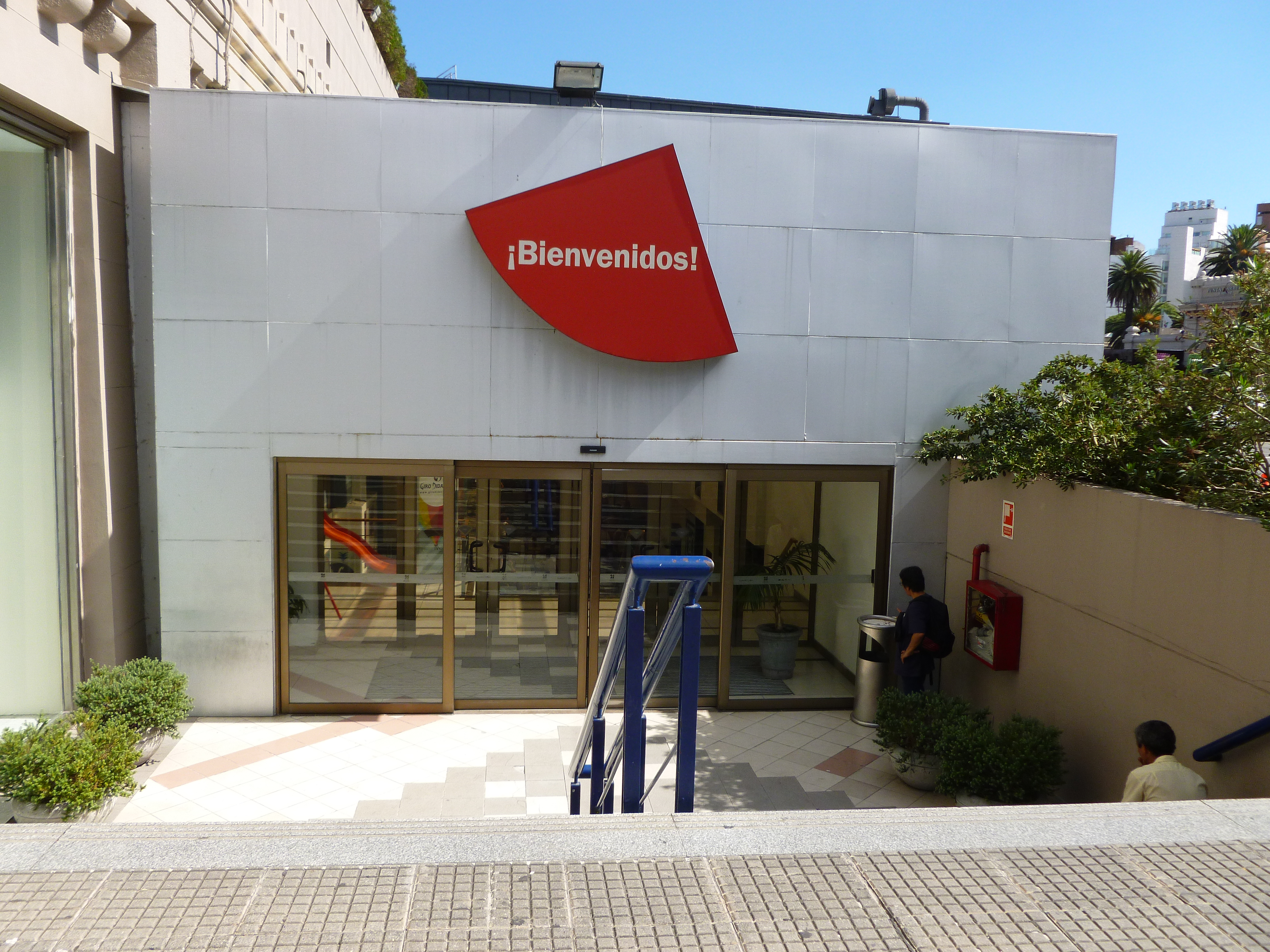
Entrance to the Punta Carettas mall.

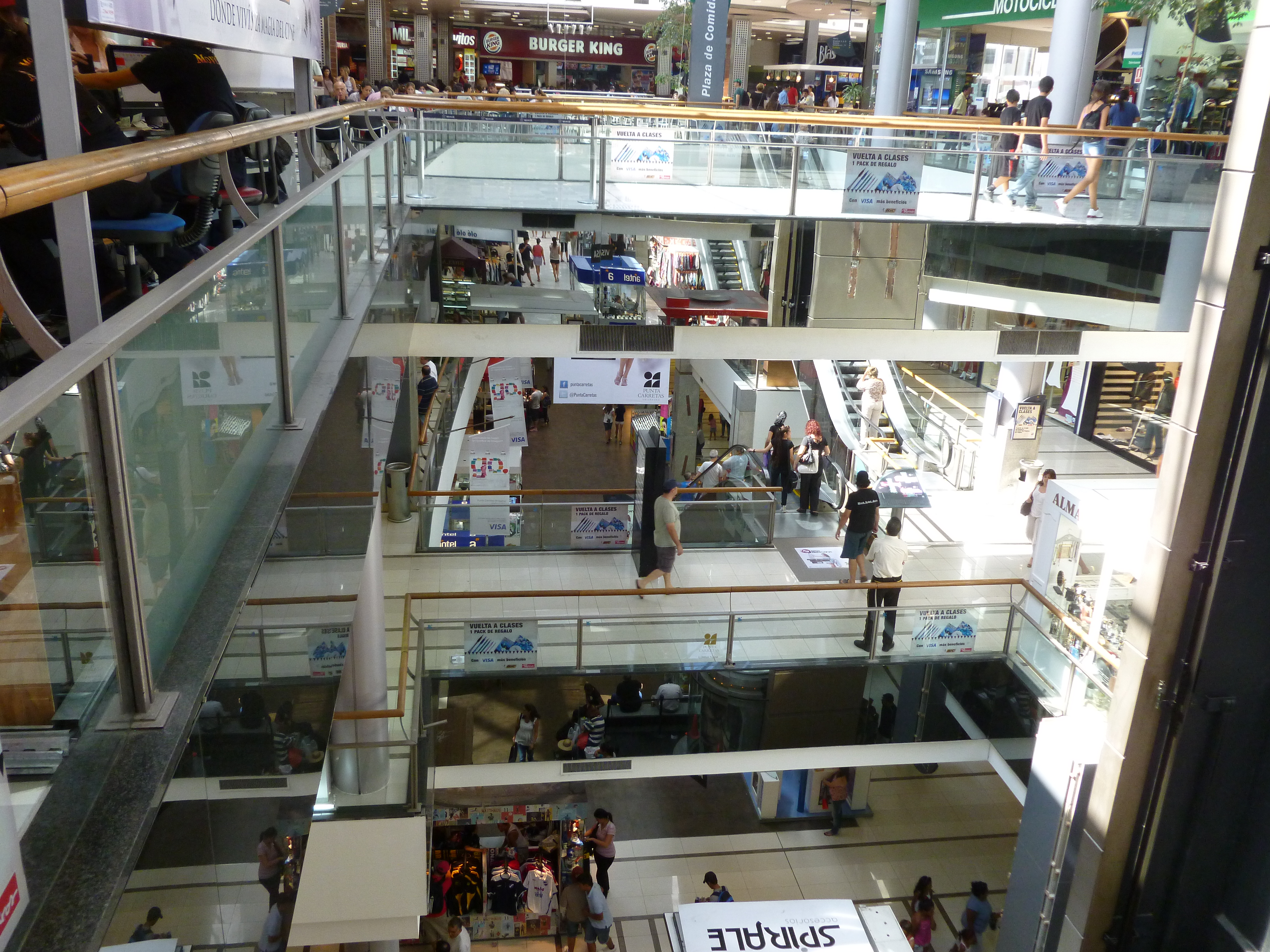
The mall is very similar to malls in the U.S. There are lots of stores, lots of little places to eat. They have a food court that includes the token chinese food, mexican food, McDonalds and Burger King. We couldn’t really understand why the lines were so long at the McDonalds and Burger King when people could get fresh made chivitos, pasta, or pizza for the same price or cheaper. I bet it has something to do with the super-size coke. Most other places include drinks that are small (i.e. less than a can of soda), whereas McDonalds has the same 20 oz beverage as their small size. We enjoyed the chivitos and fresh pasta!

The mall is huge. It has three separate floors and skylights in the ceiling. There seem to be a lot of people wandering the mall on the weekends, possibly taking advantage of the air conditioning. In the summer this can be a big deal, as most people and other small stores don’t have air conditioning.

Inside the Punta Carettas mall looking down from the third floor.

The mall has a movie theater. Matinee price is about $6US and regular price is about $8. It looked like all the movies were in spanish so that might be a good adventure for the future.

There are many lots of little stands selling a variety of goods including: phones, hair bands, scarves, mate paraphernalia, jewelry, and trinkets. Most of the stores are fairly small and packed with merchandise. Many things are expensive. For example, a large paperback book can cost more than $20US. Again, the more expensive things are those that are imported.

There is a very large supermarket in the mall which has a wonderful produce section where we found our cilantro and dill. In most independent stores, including the supermarket at the mall, people are required to deposit their bags into a locker before going into the store. Stores have lockers with keys set up at the entrances just for this purpose. People are allowed to take purses with them into the store, but not backpacks or shopping bags. A security guard usually observes. I guess this is one of the measures put into place to deter petty theft.