We Say Goodbye To Matt

Matt made his exit from Montevideo on Thursday night. The days coming up to his departure were full of seeing people and fun activities.

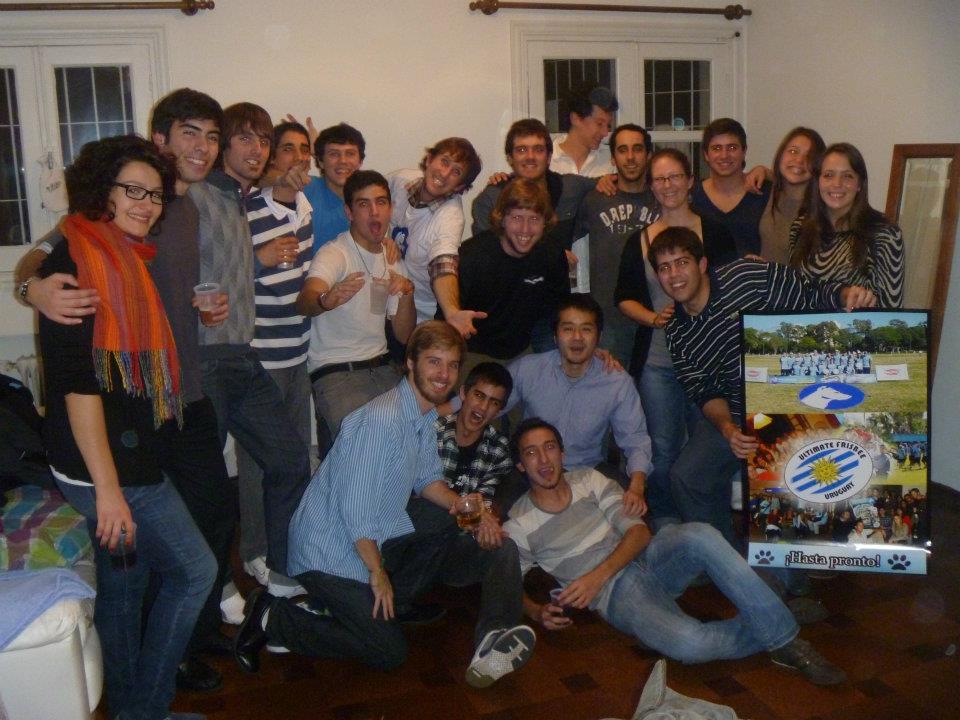
Saturday night a couple of friends were gracious enough to host a “Despedida” (going away party) for Matt at someone’s house. There were drinks, food, and good conversations. There was also some gift giving and some challenges to drink beer out of a frisbee. For those of you that don’t know, it is possible to fit an entire pitcher of beer within a frisbee. Many people don’t believe this and do stupid things to prove that it is false (like trying to drink an entire frisbee full of beer within 20 seconds… good luck with that one).

The majority of the ultimate team here in Uruguay. They made Matt a poster collage of photos from his time in Montevideo.

Sunday was a great day of frisbee out at the beach. After finishing up, Matt did a great job practicing his minimalist lifestyle by giving away a bunch of his ultimate jerseys to the players here in Montevideo. The people here will greatly appreciate nice jerseys, and Matt has about a billion of them. At this point, Juanma can dress completely in clothes given to him by Matt (including cleats). It’s like a South American version of Matt!

Juanma, Matt, and Carlos at the beach.

Tuesday was dinner with our good friend Paco at La Lupita. We have been here once before, and yes, the margaritas were just as potent as the first time!

Wednesday, Matt’s last night in town, we went to a parilla (grill) so that Matt could eat one last steak. Chandro was gracious enough to come with us. The restaurant was great! Chandro had a traditional asado, Matt had a cut of steak, and Asa and I split some chicken and veggie skewers. The boys ordered caipirinha’s, a Brazilian cocktail. It is made from a Brazilian liquor called cachaça, which is similar to rum but made from cane sugar.

Thursday Matt and I took a trip downtown with the quest of finding gifts for his family that they would actually use and enjoy. The day was a little gloomy and once it actually started to rain all the vendors quickly packed up their wares. Matt was left with only the small magnet he had purchased. It’s probably for the best because his family probably didn’t really want bracelets or little wire figurines anyway. I imagine they’ll be happy enough just to see him again!

Matt managed to pack everything up, including the 5 bottles of grapamiel (a local liquor that I’ll talk about in another post) he had saved to take back to the states. He headed to the airport with plenty of time, as they had delayed the flight by almost an hour. Unknown if the delay was caused by weather here in Montevideo (it was rainy) or by weather in Miami (from TS Debby).

Based on our intelligence, Matt made it to Las Vegas for his sister’s wedding, but only after being detained by US customs for about 45 minutes in Miami. They apparently found his story about quitting his job and moving to Uruguay a little fishy. He missed his direct flight to Vegas and had to be re-routed through Los Angeles. Hopefully he’ll get on the blog and tell everyone about his experience.

So what are we doing now? Well Asa and I are going to enjoy our last four weeks in Montevideo. We have already taken over Matt’s room. Just kidding! We don’t really have a bucket list of things to do before we leave. We’ve already done most of the things to do in the city and the ones that we haven’t done don’t sound that interesting. So I think we’re just going to enjoy immersing ourselves in the Montevideo culture for another couple weeks and call it good!

Matt is in Vegas for about a week and then he is headed to the Philippines for a two week internet business program being held at some resort right on the beach. Poor Matt! He’ll be there two weeks beforehand and probably two weeks after. Beyond that, it’s anyone’s guess (including himself) what he’ll do. I tell you all this so that you won’t wonder why Matt fell off the grid for so long, but we’ll get him to come back to the blog when he’s got some time! We wish Matt good luck in his travels and know we’ll see him sometime in the future!

Uruguayan Greetings

I arrive at a function here in Uruguay. It could be any function: game night, frisbee practice, a party, a spanish lesson. The typical Uruguayan greeting involves a kiss on the right cheek. Sometimes you can feign a kiss, but cheek touching is mandatory. Regardless of how many people are present, it is expected that you follow this routine with everyone present. This includes people you may not have ever met.

With each person you must also politely ask them how they are doing and respond quickly before moving on to the next person. People will usually get up from their seated position to accept your greeting (unless they are occupied doing something on a table like playing a board game). I haven’t perceived any special hierarchy as to the order of greetings. It seems like a proximity thing; whoever’s cheek you happen to be nearest gets the first kiss.

If you do not know the person whom you are addressing, it is custom to say your name after your greeting in lieu of asking them how they are doing. That person will usually also say their name. As you may be thinking, sometimes this results in both people saying their names at the same time and neither one will actually get the other’s name correct. It’s just the nature of the beast.

Sometimes a gentlemanly handshake is accepted as a greeting or farewell between men, but never between ladies or between a man and a lady.

Farewells usually consist of the same process as greetings. Sometimes when trying to leave a large group of people that you don’t know very well, it is acceptable to kiss those you do know well and give a hearty wave and “chau” to those you don’t. Otherwise a kiss for each person is required along with “nos vemos” (literally translated as we see each other).

For someone, like me, that wasn’t well practiced in the Uruguayan art of greeting, the act of saying hello and goodbye to people has resulted in some fairly humorous and painful moments. I have frequently and accidentally jabbed people in the head or eye with my baseball hat, I have stepped on toes, tripped on things trying to get close enough for a kiss with an acquaintance which resulted in my falling onto said acquaintance, and knocking heads on accident. All of these incidents were met with laughter. I mean really, you can’t be mad at the silly “gringo” for too long.

As you can imagine, the process of greeting and saying farewell can be long and tedious (and potentially dangerous) depending on the size of your party. On the other hand, it provides a personal connection with each person to whom you are interacting. There is an opportunity to address each person as an individual and show them with a small gesture that you value their company. I know that when I am greeted by my friends here I feel like they care about me and genuinely want to interact with me. I feel included regardless of what I am doing.

Just imagine if people in the US greeted each other with a kiss.

What did they just say?: Language Lessons

One of the hardest things about learning a new language is figuring out how to understand other people. Sure you may know the vocabulary and know how to conjugate verbs, but what do you do when someone asks you a question?

Inevitably they will speak very quickly, have an accent, and be mumbling all at the same time. What do you do? Do you:

A) Panic

B) Nod like you know what they are talking about

C) Say “sí” which is the only word that you can remember in the heat of the moment

D) Calmly and quickly answer their question

When we first arrived in Montevideo answers A, B, and C all described our efforts at communication. In preparation for all of our outings we would review the adventure-specific vocabulary we were likely to hear, but inevitably something would come up that we didn’t know.

The following are a few of our language experiences…

– The first week we were in Montevideo the lady at the check-out counter in the grocery store would say something when we arrived in front of her. Our confused faces and “No se, lo siento” (I don’t know, I’m sorry) would quiet her. We eventually deciphered her words as “tarjeta más?” and we eventually figured out that she was referring to their rewards card. We had never seen anyone using one of these cards which made it especially difficult to figure out.

– There is an ATM at the market that is enclosed in a little room. There is a card swipe on the wall that lets people in. I tried it on the way into the market one day and the door failed to open. So when I got to the check-out counter I tried to ask the lady if the ATM required a card to get into, but of course I momentarily forgot the word for “door” and, based on the incredulous look on her face, most probably ended up asking her if I needed a card to get money out of the ATM. Doh!

– When we stayed at a hotel in Buenos Aires, we were able to check-in completely in Spanish. On check-out, we were ready to do the same, but got derailed when the man asked us if we had consumed anything from the mini-bar. Neither Asa or I had ever heard the word for minibar (“frigobar” which really isn’t all that different) and got really confused. The bilingual man quickly realized we had no idea what he said and continued the entire check-out process in English.

– Our first week in Montevideo took us to the local panaderia (bakery). We went in with the desire for bread. We told them that we were learning spanish and that we wanted one of those, and pointed to what we wanted. Then we asked them what the word for it was… “baguette”. Go figure!

– When we first arrived in Montevideo we started frequenting a local chivitos restaurant. What made this place problematic for us is that they don’t have a menu. The first time we went there, we were accompanied by some spanish speaking friends who ordered for us. The second time we went on our own was fairly comical. We ordered chivitos how we wanted them (we remembered that part) and then we ordered “dos papas fritas”. The waitress looked at us like we each had three heads. Then she smiled and asked, “dos porciones de papas fritas?”.

– Tiqui Taca is the local chivitos place near our new Pocitos apartment. They have a special: buy three chivitos and get one order of french fries for free. So we went in and ordered our sandwiches and two portions of french fries. Obviously the man knew we were not from around here and said, “uno es un regalo… 1 FREE!”, practically yelling the english part. Hilarious!

– When Asa and I had to get yellow fever shots I had a fairly humorous and frustrating phone call that ended in the necessity of speaking to someone in english. Check out a recounting of that adventure here.

There have been many more awkward and embarrassing language moments, but for the most part people are very nice. Telling people that you are learning a new language is usually really helpful. Most people, upon learning that, will speak more slowly and try and help with words you may be trying (but failing) to say. They are usually interested in where you are from and how you like Montevideo.

If you really get into a bind, there is usually someone around that speaks English. All the schools in Montevideo now teach English as part of the curriculum. So when in doubt, seek out a young person. Most of the older generation doesn’t know any english.

Just like in many countries, locals seem to appreciate us trying to speak in their native language no matter how much we botch it!

Learning a Language

There are a variety of ways to learn a language which include taking classes, using websites, using learning software, or getting a pen pal to practice writing or speaking with. Despite these options, they say that the best way to learn a language is to immerse yourself in it by spending some time in a place that only speaks that language. This would force you to learn the language or perish.

Asa, Matt and I all took Spanish classes during high school which taught us some basic vocabulary and how to conjugate verbs. As these experiences were about 10 years ago, we quickly found that we had forgotten a substantial amount of what we learned. Really learning a language requires constant exposure to it.

When we decided to move to Uruguay, the first thing I did was start working on learning Spanish again. The first place I turned was the internet. There are several free “learn Spanish” websites of varying degrees of helpfulness. My favorite is: http://www.spanishdict.com/learn. It has a variety of really cool learning tools including: flashcards, matching, spelling, and speaking exercises, and videos describing language concepts and vocabulary. The website also tracks your progress through four different levels and you always have access to their dictionary and phrasebooks. I really enjoy the website, but it’s a bit difficult to watch the videos and do the exercises when the internet connection is slow.

A very new website (set to go public June 19) designed to help people learn languages is http://duolingo.com. It is designed by the same group that created the reCAPTCHA system that helps digitize old books by having consumers decipher text that computers cannot. Duolingo is an internet program that helps people learn languages (just Spanish and German currently) through exercises and translations. The text available for translation is actually real snippets of text taken from the internet. One goal of the inventors is to make the internet more accessible to the world-wide population via translation into a variety of languages. Studies have shown that their design is equally effective in teaching language as other well-tested software products (like Rosetta Stone). Another highlight of Duolingo is that they have gamified their product, allowing people to gain points and compete against their friends while they learn. Here is a TED talk describing the creation and purpose of Duolingo and reCAPTCHAs. I really like Duolingo. It is fun and I feel like I am doing something good while I am learning!

The second place I turned was more traditional language learning software, specifically, Rosetta Stone. My mother had purchased level 1 Spanish years ago which I promptly borrowed. Rosetta stone uses a visual recognition system to help people learn languages. For example it will show you a picture of an apple and tell you what the word for apple is in Spanish. The program then builds on your knowledge of the word for apple to teach other words. For example it will show a photo of 5 apples and 3 oranges. In this way a person can also learn the number 5 because they already know the word for apple. The program uses a variety of exercises including matching photos to written words, matching spoken words to photos, practicing pronunciation, practicing spelling, and requiring participants to verbally describe photos. Rosetta does a great job with its voice processing software. I really like using Rosetta stone for its work on verbal skills which are often ignored in other beginner classes. It also does a good job with reinforcing concepts and vocabulary by requiring review and learning concepts through a variety of the exercises.

The biggest downside to using Rosetta Stone is the cost. The company does not allow consumers to purchase individual levels besides level 1 (there are 5 levels available). Rosetta Stone offers packages that include the first three levels or all five levels. The cost for all 5 levels is normally $500 US (P.S. they are having a Father’s Day special right now and all 5 levels only cost $400 US). The first level by itself costs an insane $179 US. Sometimes these packages are a little cheaper from Amazon, but not all the time.

There are other language learning software programs that are much cheaper and claim to have the same results as Rosetta Stone. One such program is called Instant Immersion and I haven’t tried it. The only reason I know about it is that they sell it at Costco and online in a yellow box deceptively similar to Rosetta Stone.

The third place I turned to explore Spanish learning was by utilizing a pen pal. I started writing letters in Spanish to a friend who speaks Spanish fluently. It was wonderful until I got busy and stopped writing. There are numerous websites that specialize in connecting people that want to practice their language skills. One such website can be found here. One of the benefits of these websites is that they can connect you with a native speaker in the language you want to learn, where that native speaker reciprocally wants to learn your native language. During verbal practice, they recommend splitting the time speaking in each language so that each person gets practice. Some websites/services will even provide speaking prompts so that you don’t even have to think of topics to talk about. Other services such as SKYPE can be used as a free way to contact people once you have found them. You can even video chat if you have the equipment. I haven’t actually used any of these internet services (besides Skype), but I really like the idea!

The last thing to do was to actually move to a Spanish speaking country. Check!

I currently go to an hour long spanish lesson once a week. It is a one-on-one session with a native speaker and it costs me $10US an hour. The whole lesson is in spanish unless I have specific questions about vocabulary translations. The lessons are arranged such that we spend about half the time chatting about life and practice using specific words, tenses, or grammar. The rest of the time is spent doing exercises that practice vocabulary, verb conjugation, or speaking skills. I am thoroughly enjoying myself!

Stay tuned later in the week for our spanish speaking experiences here in Uruguay.

My Journey to Cabo Polonio: A Magical Place Off the Grid

Voted as one of the best beach towns in the World for 2012, Cabo Polonio might not be here in 2013 if the Uruguayan Government has anything to do with it.

Cabo Polonio was founded by fisherman, hippies and squatters (now locals) and is located about 5 hours by bus outside of Montevideo, Uruguay. Many of the houses were built illegally and expanded illegally, adding a wall over a few months time, then 6 months later adding a roof, then adding another wall. Park Rangers actively tear down new improvements as they see them come up.

Now is the time to visit since the government is trying to demolish many of the houses and let big business come in and put up a resort.

A friend and co-worker sent me an article from a magazine that talked about Cabo Polonio being the best beach town in the World. Without that article, I’m not sure I would have visited Cabo or even know about it. Thanks, Doug!

I started asking friends in Montevideo how to get to Cabo Polonio and here are the two sets of directions that I received:

The first set of directions are:

  • Jump on a bus going out there
  • Get off at the stop near Cabo Polonio (Cabo for short)
  • Find a truck that will take you to Cabo
  • Pay them 100 pesos (about 5 US dollars) to take me to Cabo
  • Ask locals for the place I’m staying at and they will know since it’s small.

I had a friend who knows someone who owns a house in Cabo and helped me get in touch with her to stay at her place.

The second set of directions are:

  • Go to Punta del Diablo.
  • Walk four hours through the dunes to Cabo Polonio.
  • Ask for a hostel there.

Yeah, I wasn’t about to do that my first time there.

I decided to go with the first set of directions.

My worries about going to Cabo:

  • I was going by myself and didn’t speak much Spanish. I wasn’t confident I could communicate with people if I needed to.
  • I didn’t know where to get off the bus
  • I didn’t know how to find a truck to take me to cabo
  • Once in Cabo, I didn’t know how to get to the place I was staying
  • I had no clue how to deal with eating food or what to do

Other than those things, I was looking forward to having a great adventure.

Getting to Cabo Polonio

Cabo Polonio is past Punta del Este which is like the Hamptons of South America, past the small surfing villages of La Paloma and La Pedrera, and past the cement, cobblestone and dirt roads.  The journey starts by taking a bus from Montevideo or a car to where the dirt road ends. If you take a car, you have to leave it about 30 minutes away from Cabo Polonio.

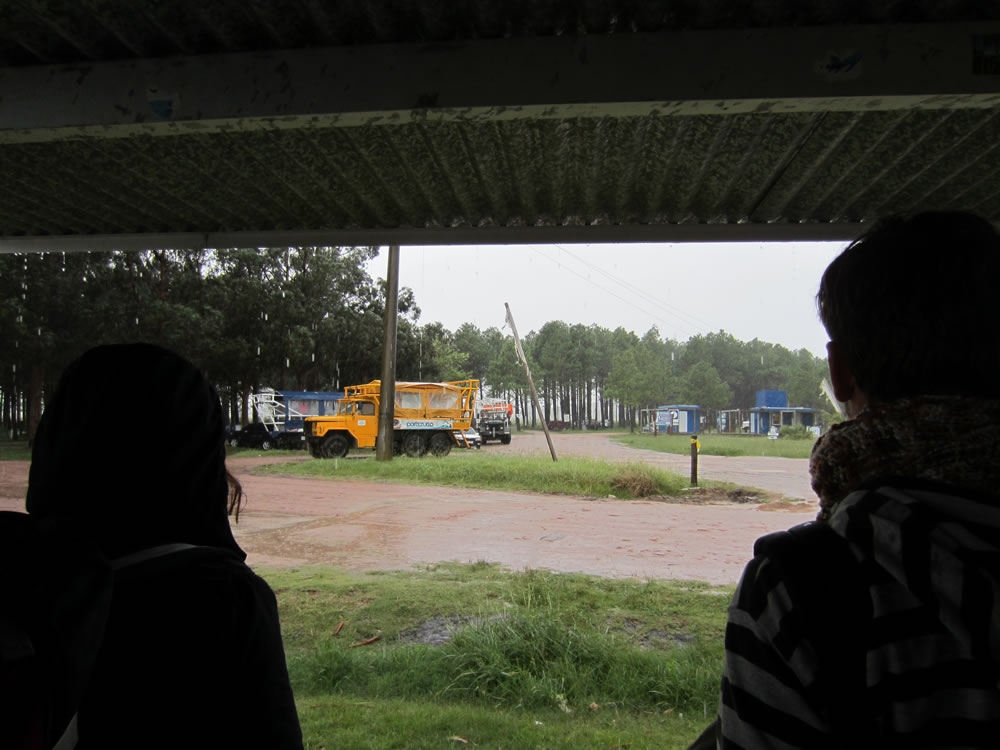
Waiting out the rain under the bus stop looking at the trucks.

You have to jump in a giant truck for the 30 minute journey through a national park, over and around sand dunes, along large stretches of beach with waves crashing on the large tires of the truck.

Say goodbye to the city, electricity, running water, and hello to nature and a village off the grid with less than 100 inhabitants.

The trucks are almost monster trucks built to transport army personnel. I jumped on a truck with a large tarp over the back to keep dry from the rain. There were holes in the tarp and the back of it didn’t cover the whole seating area so me and the 5 other people that arrived when I did got wet. The ride took about 30 minutes.
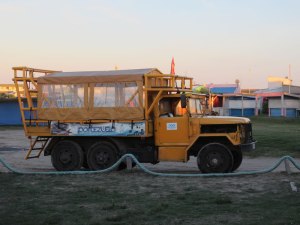
Much nicer than the truck I rode in. It has a sponsor.
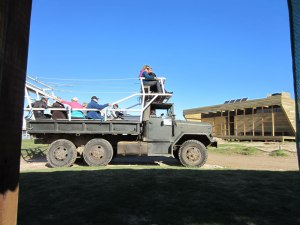
Tourists…

I made it to the place I was staying. All my clothes were soaked, especially my shoes and socks from stepping in big puddles of water and getting rained on.

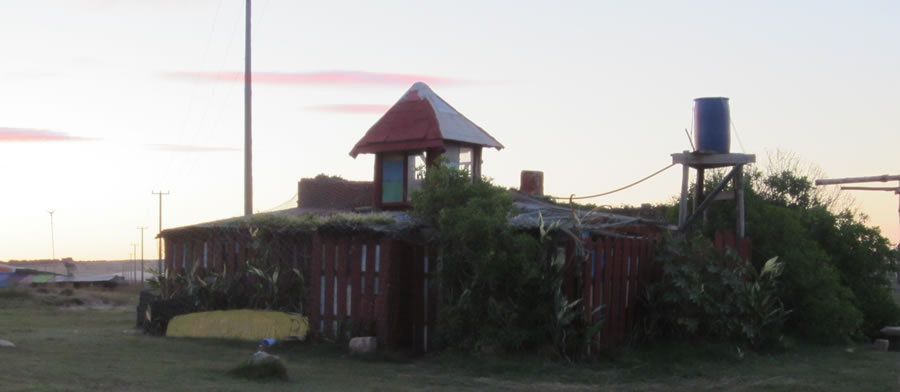
It was one of the largest houses in the village. It was built and recycled glass bottles randomly placed throughout the wall as a way for light to shine through.

We had fun conversations mixing the little spanish I could talk and the little english they could talk. The lady I was staying with had a boyfriend who was the local surf instructor. He had surfed all over the world including California, Alaska, Hawaii, and Australia. We listened to Sublime and Jack Johnson while we played scrabble in spanish. I lost. I got lucky with a few words, but it was pretty difficult for me to play in a new language.

As I looked out the window the next morning, I noticed a completely different day. There was a bright blue sky, a couple white clouds creating a picture-perfect background for the light blue water crashing on the long stretch of beach.

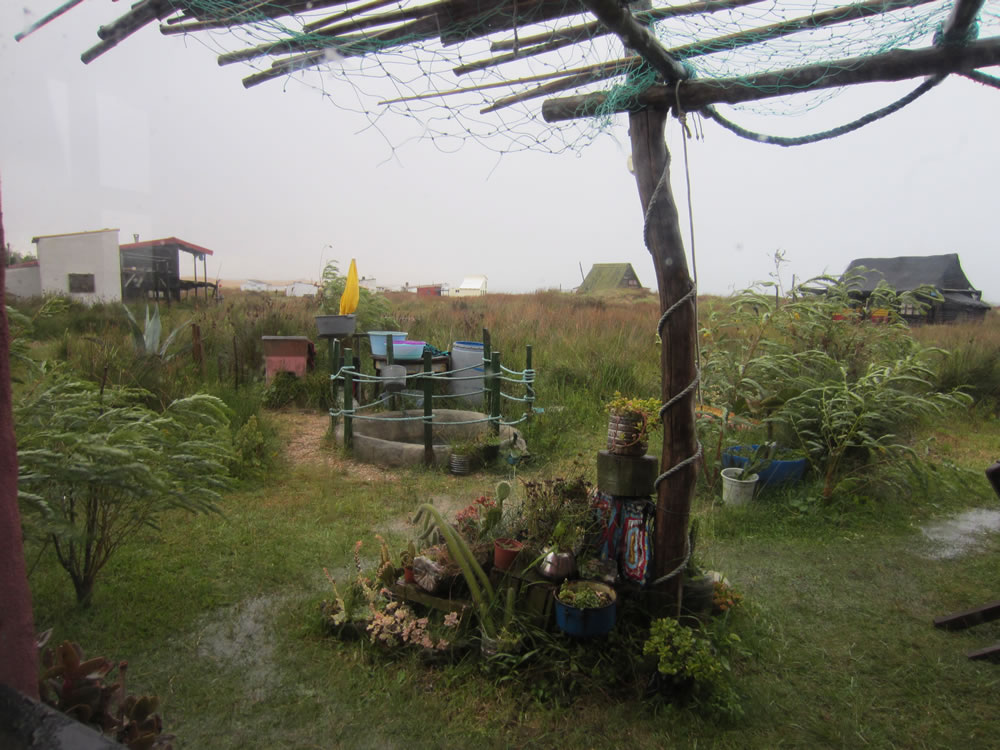
Here’s the view from the side of the house. You can see the well for water.
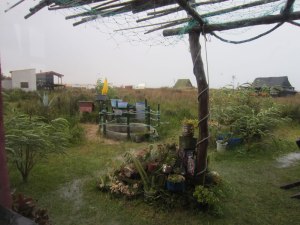
View from the side of the house

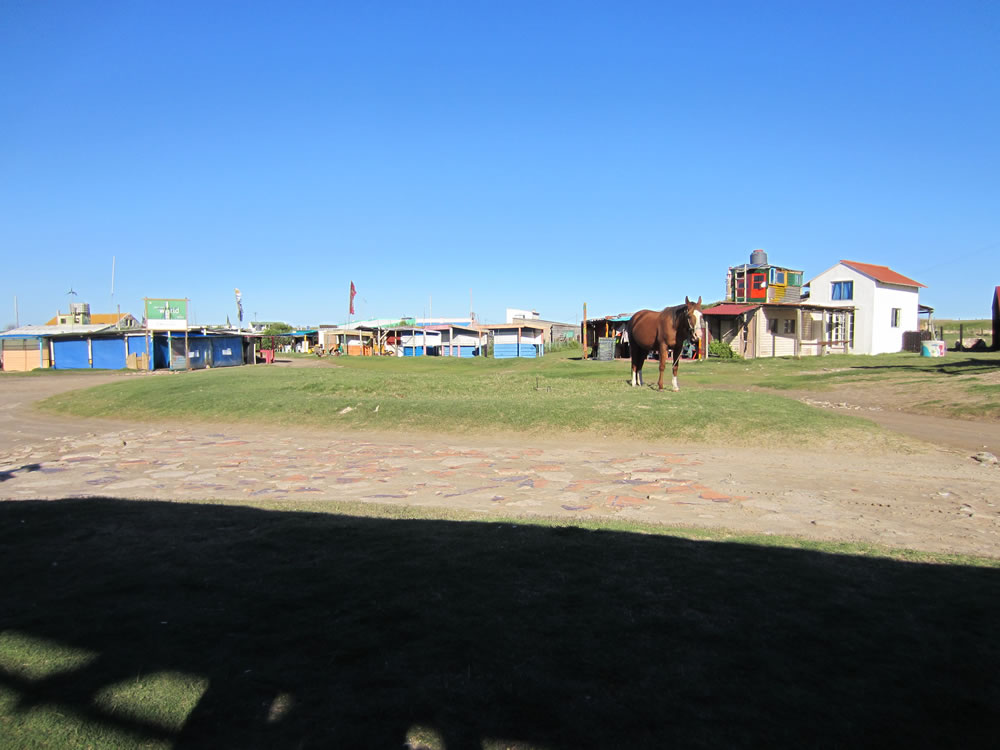
Many of the little restaurants in the town were closed. The village seemed deserted at times.Because of the time of year, not many people were living there and there weren’t many visitors. I felt like I had the whole beach to myself.

I was able to get away from it all and enjoy nature. No cell phone, no computer, no electronics. There were 2 LEDs in the room I was staying in that were powered by solar power if I needed them at night.

The house had a large tank of water above it so we could shower. There was a propane tank with a burner to heat the water as it goes through a pipe to have warm water. To get warm water, we had to turn the water on, open the gas line, light it, then shower with a little warmer water than normal.

Besides the room I stayed in, most everything seemed to be lit by candle light at night. There were large plastic water jugs recycled with sand in them where you would place a candle and light it.

I met an awesome couple from the Netherlands and enjoying talking with them one night at the hostel they stayed at.

Candle light reading
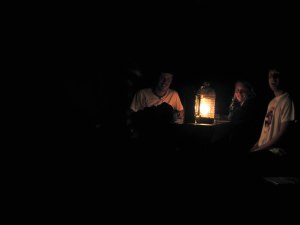
Great conversation, drinks, and candle light

The nights in Cabo Polonio were amazing. After talking with a couple people who had hiked Patagonia and have been traveling for 1-year in South America. They said the night in Cabo Polonio was the best night they had seen anywhere.
I’ve never seen so many stars in the sky along with a gray-ish band of stars that was the Milky Way. It was incredible.

It put me at home when I used to go up to our cabin in the Mountains away from everything. If I were to have one place in the world that I absolutely loved, it would be at our land in the mountains under the stars next to a friends and family and a warm fire with S’mores in hand. Cabo Polonio reminded me of that place and gave me chill bumps when looking up and admiring the sky.

One night, I laid down for around an hour outside looking up at the stars letting thoughts pass through my mind and feeling completely relaxed.

I’ve tried describing the stars in the sky and how it looked in Cabo Polonio to people, but then everyone says, “Ohh, come out to the mountains,” or “Yeah, I’ve seen a lot of stars in the sky outside of the city.”

I’ve seen those skies though. They aren’t the same. The closest picture I could find online was from a picture on earthsky.org here

Image that best resembled what I saw at night. This image is not from Cabo. http://en.es-static.us/upl/2012/01/milky_way.jpeg

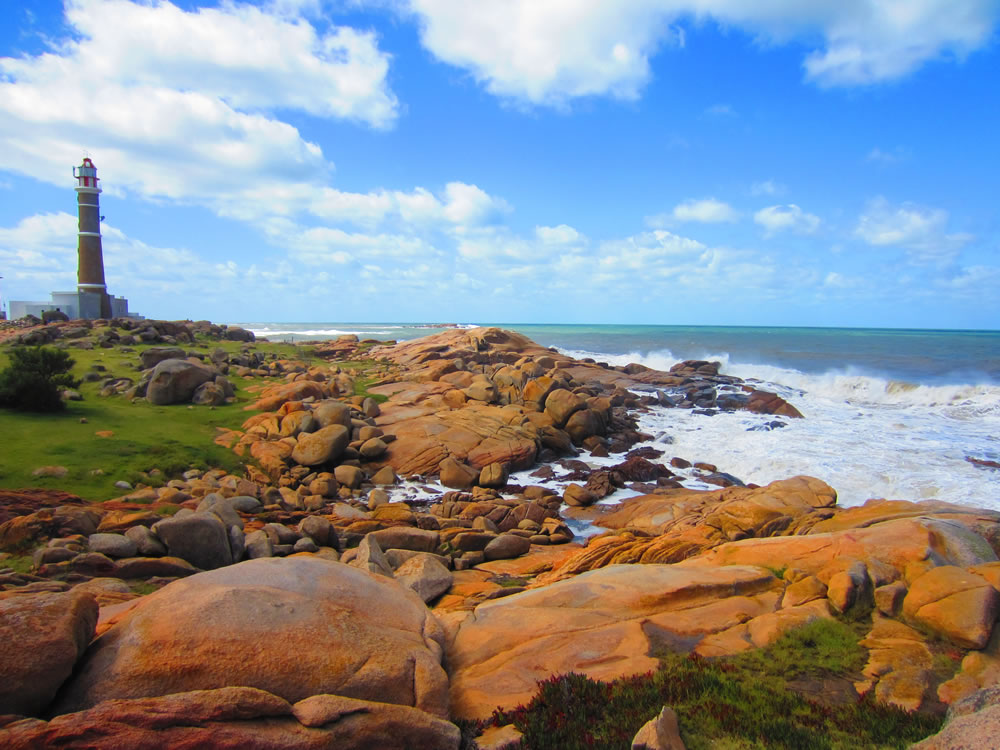
There were no clouds in the sky and there was a light from a lighthouse passing by every 12 seconds in the distance. When walking around at night, I would walk a few steps, then wait for the lighthouse to shine around so I could see where to walk, then walk further and wait. It definitely kept me from falling down a 10ft sand dune into a large puddle.

At night, sea lions often join together in groups on the rocks around the lighthouse and you can hear them in the distance. I’d like to think they are telling knock-knock jokes all night to each other.

Where the sea lions hang out at night and tell knock-knock jokes

The weekend-long trip was just long enough to enjoy getting away from it all. Here are some more pictures from the village.

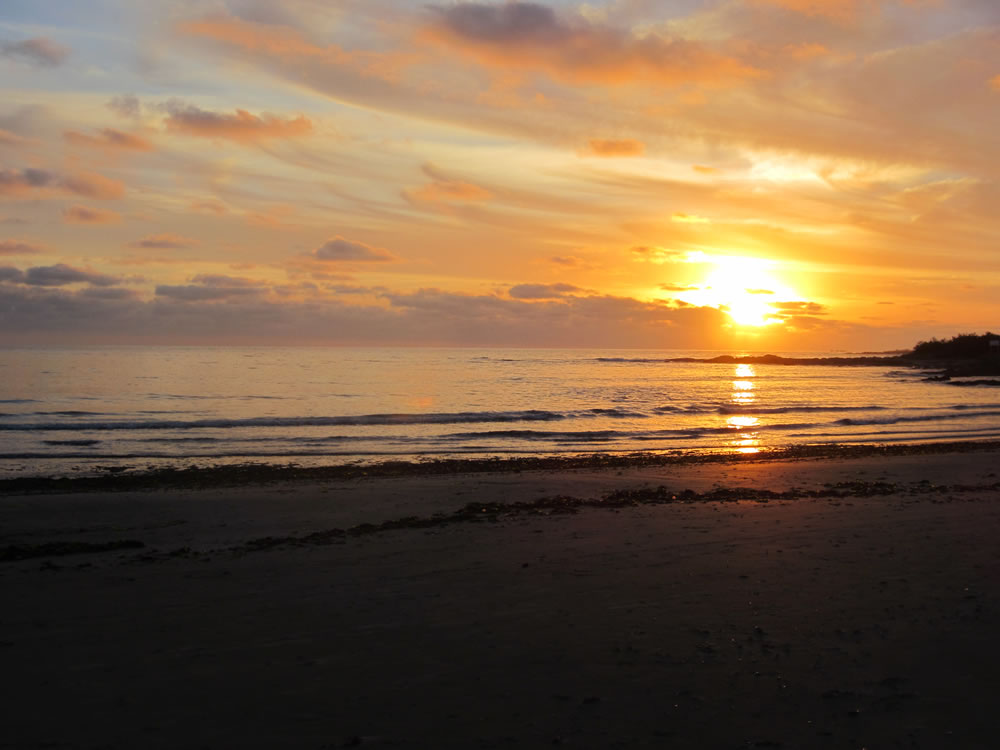
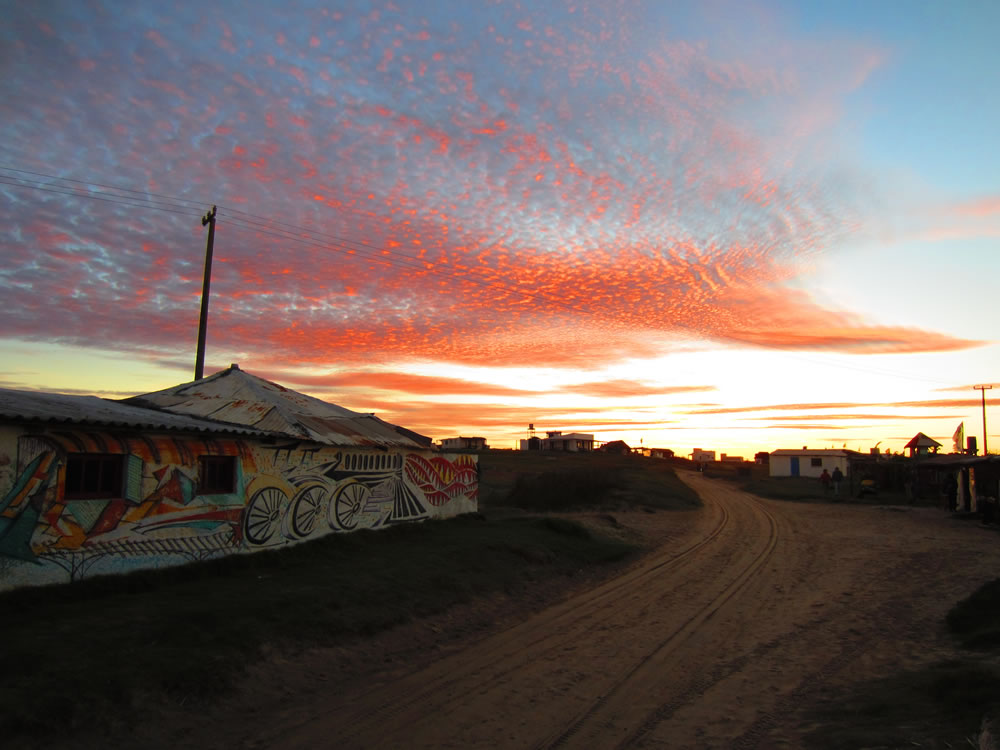
Sunset 1
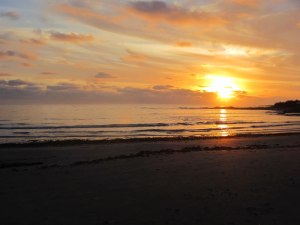
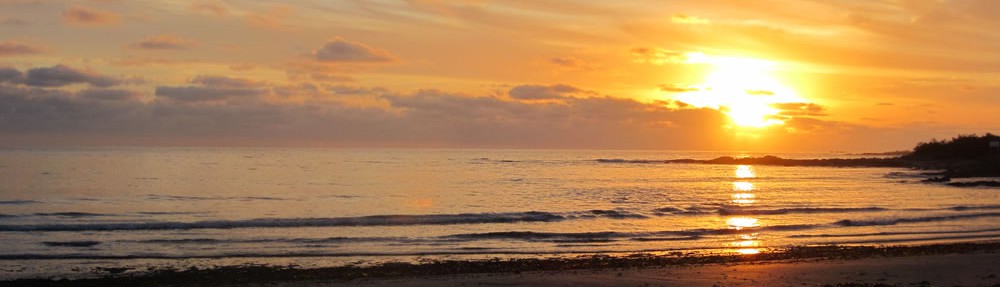
Sunset 2
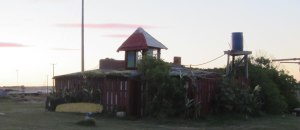
A lively house
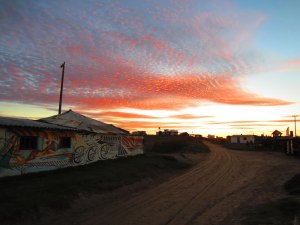
Beautiful night. Cool Graffiti

Local lawnmower

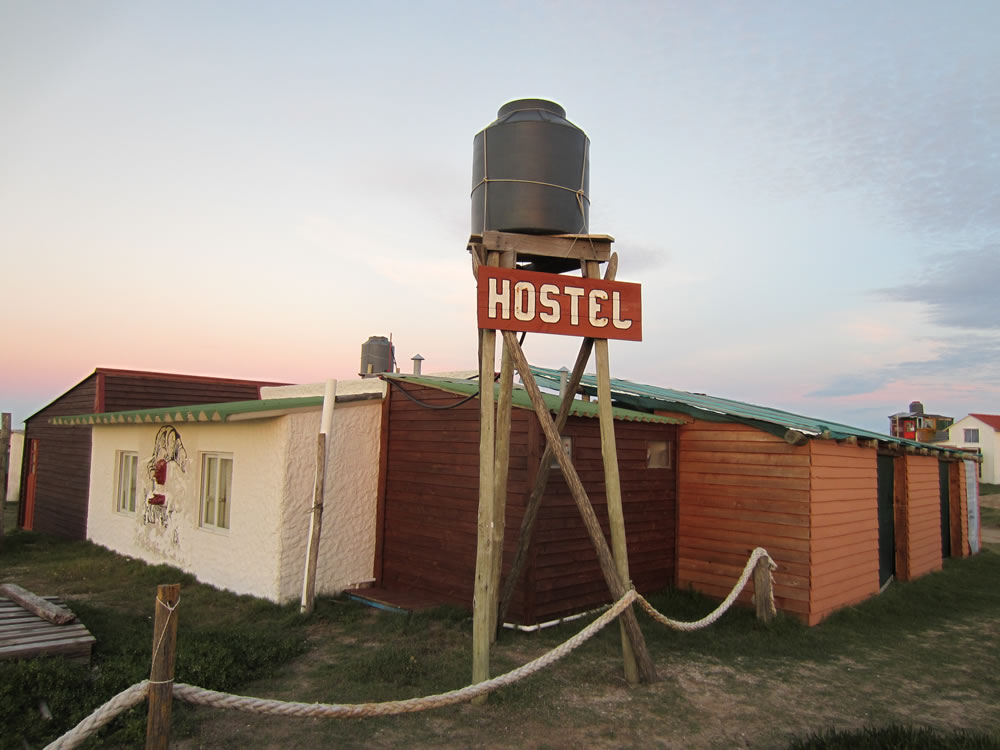
It’s easier than I thought to find a hostel
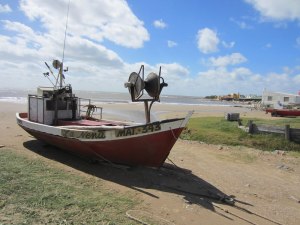
An old fishing boat enjoying the sun

Path to get to Cabo Polonio

A small windmill providing power for a house next to the power for the lighthouse
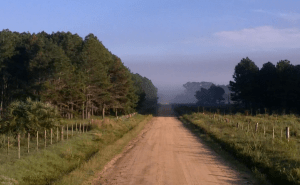
Flat dirt road just before I arrive to the bus stop to leave Cabo Polonio

Fun Fact about Cabo Polonio:

In 2011, there were 95 inhabitants but over 1,000 visitors in the summer months alone. There were so many people illegally camping in the National Forest area around Cabo Polonio this past summer, government officials would go around and kick people out an take tents. This led local hostel owners and house owners in Cabo to be able to charge up to $500 US Dollars per night to rent out a room/house (most houses are 1-2 rooms and a kitchen) because of the demand.
The Laundry Never Dries!

We have had some trouble of late with drying our laundry. We like the addition of the washing machine in our new apartment, but it doesn’t come with a dryer. Our only “dryers” are the air and sun, which is a bit unfortunate considering that the humidity is upwards of 80-90% most days and the sun doesn’t reach our balcony.

A laundry drying rack has been included in our “inventory” for us to lay our clothes on to dry. After the first couple of times doing laundry and using our rack, we realized that it shouldn’t really take 2 days for clothes to dry. Being the smart people that we are, we utilized a stand-up fan (also in the inventory) to help dry our clothes. Now, instead of two days, we get dry clothes in a couple hours.

Here is our lovely laundry rack with fan set-up. You may also notice that it’s pouring down rain outside. Go figure!

Another thing that adds to our humidity problem is that there is no fan in the bathroom. The moist air from a nice hot shower always permeates the house and condenses on all the windows. Again, this wouldn’t be a problem if it wasn’t so humid naturally. Inevitably the water from the windows drips onto the sills and then down the wall. This resulted in a small mildew problem that was quickly remedied by a wipe-down of the walls with a bit of bleach.

It’s very interesting the problems that arise when it’s humid all year long!

Farmer’s Market Perks

One of the perks about the farmer’s market near our house, other than being super close, is that there is the added benefit of lunch.

There is a pair of people that set up shop on the corner each week to sell fresh empanadas and torta fritas. What makes this even better is that they are fried to perfection.

We can’t figure out if the empanadas are made by them or picked up at a store prior to their farmer’s market appearance. Regardless, they usually have “carne” (beef with some hard boiled egg – yeah they put hard boiled eggs in a lot of things, especially empanadas) and “jamon y queso” (ham and cheese) empanadas.

Torta fritas are basically discs of fried bread with a hole in the middle. It is a traditional Uruguayan food to eat when the weather is nasty or rainy. If people don’t want to make them at home, there are plenty of these little stands that get set up to sell them. Usually there are at least one at most farmer’s markets.

At our little farmer’s market, this pair does great business. Regardless of the time we arrive to claim our snacks, there is always a line. It’s definitely worth the short wait!

One of the other great things about empanadas and torta fritas: the price. A single torta frita sells for 13 pesos (about 50 cents US) and an empanada costs a mere 23 pesos (about a dollar US). I can easily get a lunch for a buck fifty US!

Journey Along the Ramblas

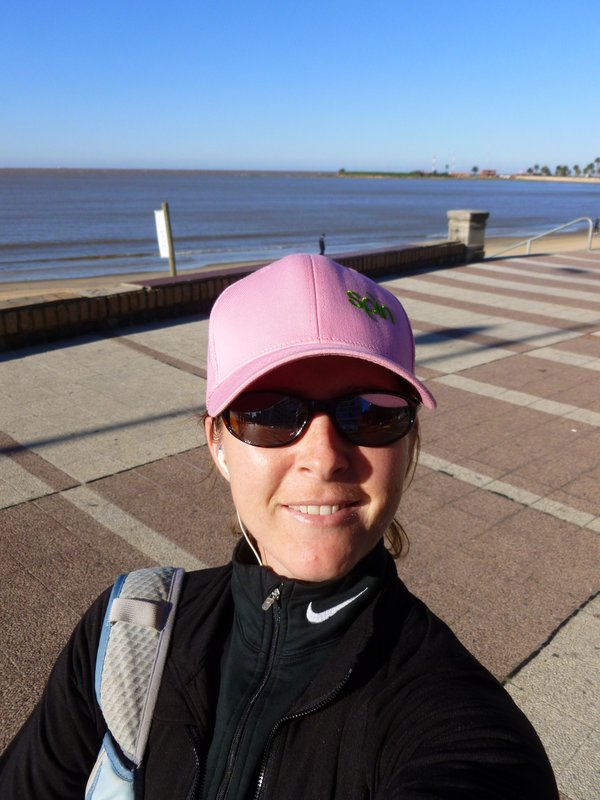
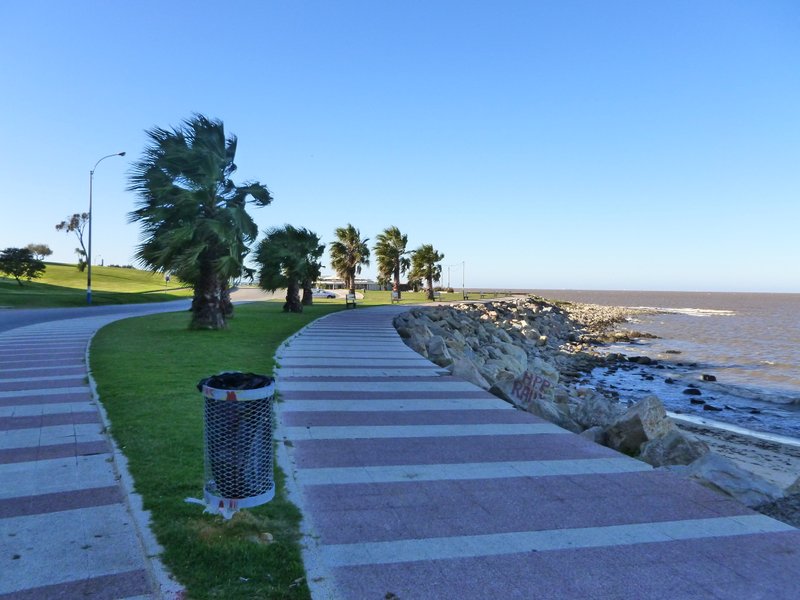
On Friday’s long run I decided to take photos to document my adventure and show you guys where I run every day. It was a bit chilly with a temp of about 48 to start with and the wind was blowing about 15-20 mph.

The “Before” Picture

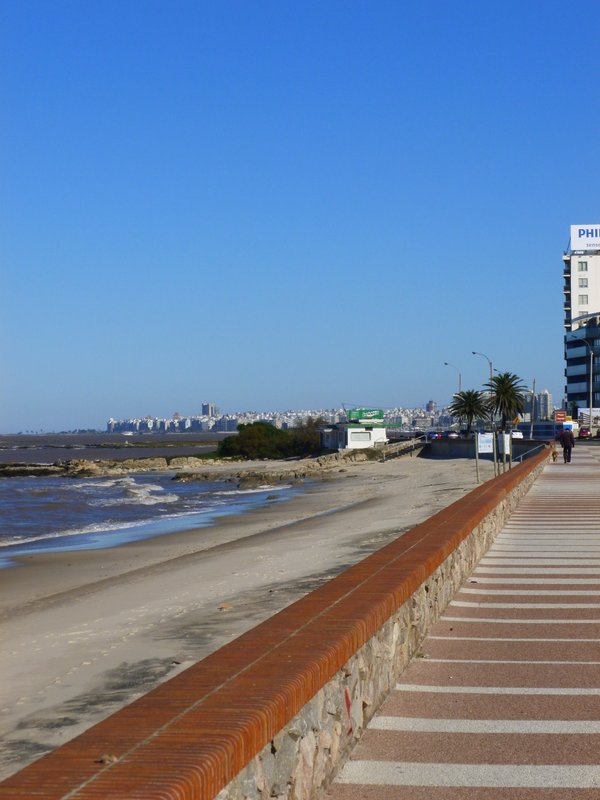
I decided to head towards the airport and away from the city on my long run. At the point is the end of Pocitos and there is a little park there.

Park at the point.

On the other side of the point is a bus depot. This is where buses go to rest and get cleaned. (mile 1)

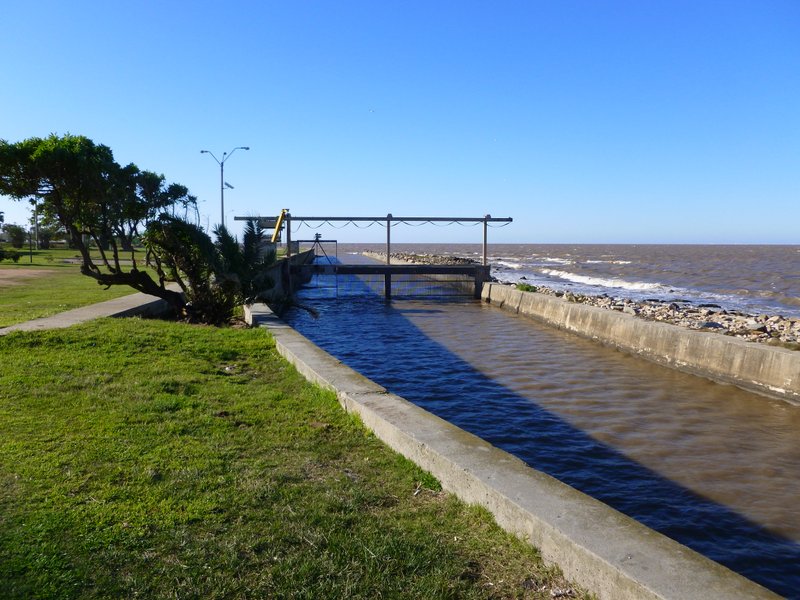
I’m not quite sure what this is, but my guess is some kind of waterway 🙂

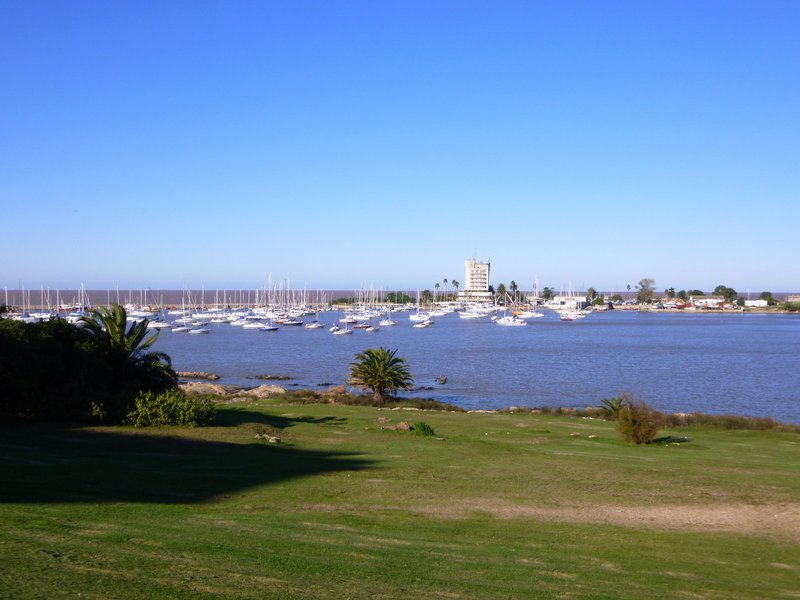
This is the Buceo yacht club and marina.

There is a nice grassy area to run on instead of the pavement. In the distance you can almost see one of the only “hills” on the route.

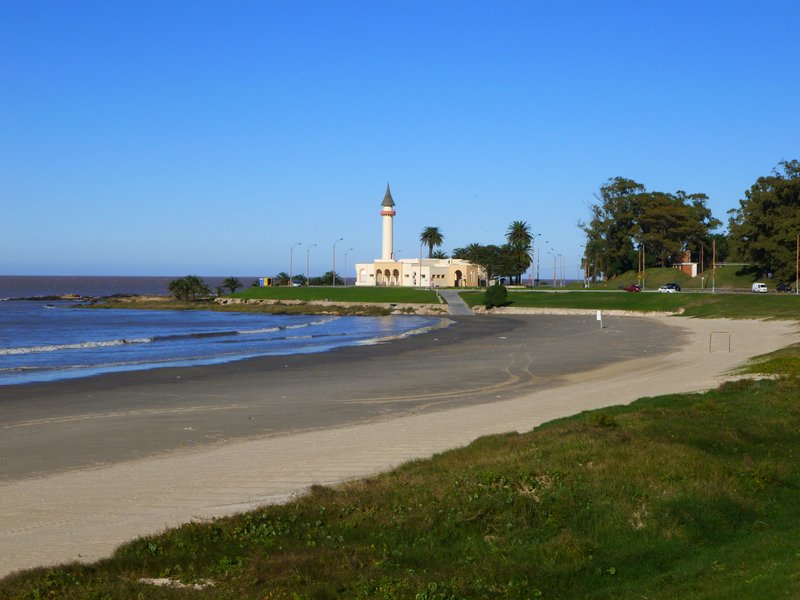
Yet another deserted little beach (gotta remember that it’s probably about 50 degrees and a little cold for beach going).

View of the Buceo marina from the top of the “hill”.

Looking the other way down the “hill”. I can’t decide whether these paths are made solely by people or also by mowers.

This is an oceanographic museum that I haven’t been to yet. (mile 2)

Around the corner from the museum is yet another beach (Buceo Beach) and more paths to run on.

Looking back at the museum.

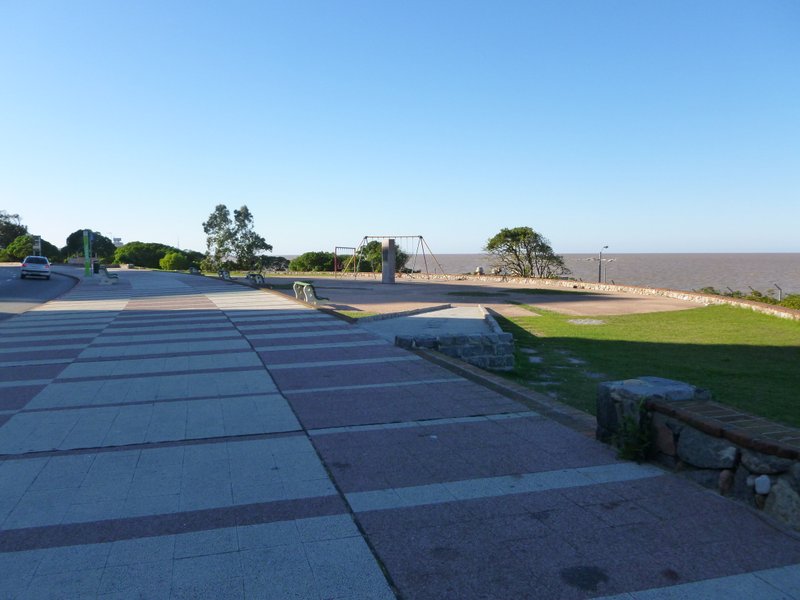
Top of the second “hill” on the route and there’s a little playground.

This is the “Nautical Club”, another small yacht club.

This is the view coming up on Malvin beach. Tons of high-rises lining the road. (mile 3)

Malvin beach. We played ultimate out at that point once. Yep, still windy!

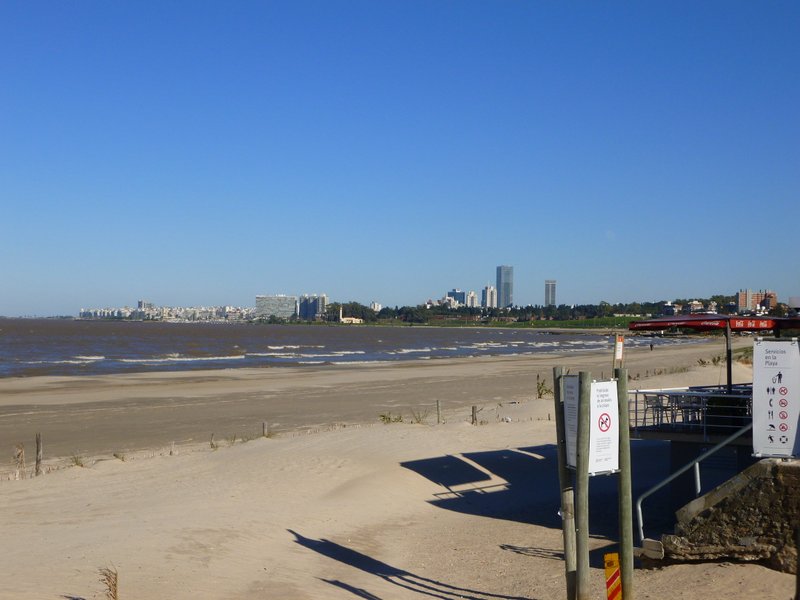
This is the view from Malvin Beach looking back at Pocitos. Just to the left of the museum is a wide building. To the left of that is Pocitos, or I should say, home.

The point at Malvin beach. There is some exercise equipment here that anyone strolling along the Ramblas can use.

Yet another beach awaited me as I rounded the corner. Honda Beach.

Turnaround point at Honda Beach. (mile 4)

This is zoomed in a little so that you can see the buildings in the background. That’s home. So far from home. I passed all the same landmarks on the way home. The only difference, I had the wind in my face. Yuck!

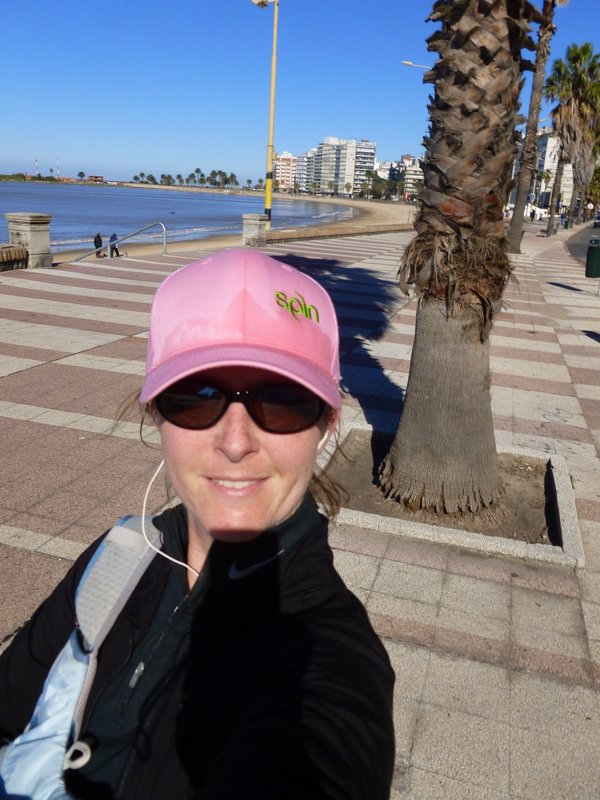
Yep, I made it back home and really the only evidence I have are the sweat stains on my very pink hat!

Here’s the google maps version of my run if you’re interested!

Trash Service in Montevideo

Some of you may be wondering about basic services in the city here. Well, the only one that we’ve found remarkably different is the trash service.

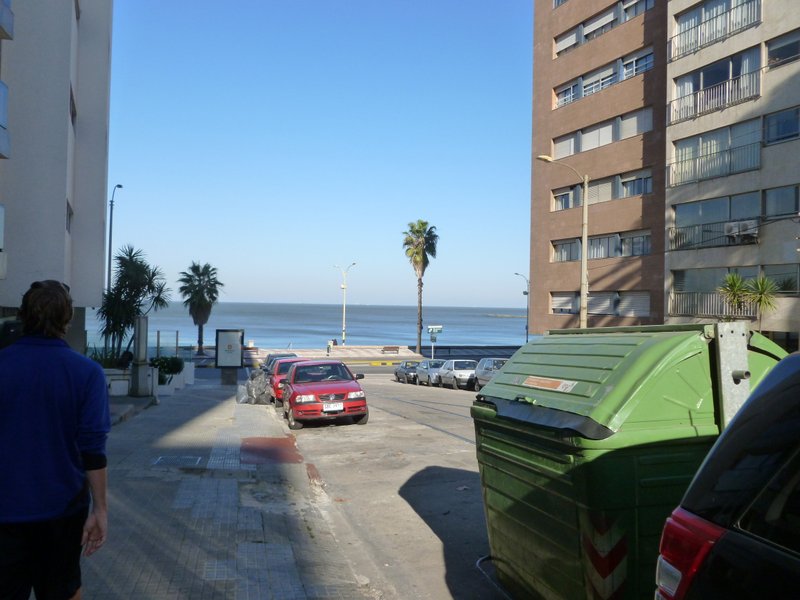
Individual households are not given trash bins, nor do apartment buildings have their own trash service. Instead there are large green dumpsters on the corner of every street. These dumpsters are covered and have a step pedal so that you don’t have to get dirty throwing your trash away. City trash men come around during the night and empty the big dumpsters into their garbage truck.

For those that don’t know, Buenos Aires trash service is similar except without the dumpsters. People throw all their trash (in bags) on the sidewalk on trash night and the garbage men come along to collect it. Makes walking around the city unpleasant on some nights and also makes for dirty streets.

Another interesting aspect of the trash service around here is that there are numerous people and families that make a living off of dumpster diving. They drive around horse-pulled carts in which they store their spoils. They collect anything of value out of the dumpsters including: clothes, plastic or glass bottles (see below), food, cardboard, or really anything that could be re-sold. Sometimes dumpster diving literally involves someone getting into the dumpster and propping open the lid, while other times it just means peering in and grabbing whatever is visible.

On a normal walk through the streets, even a short trip, you can seen these horse-drawn carts. The cars are polite and keep their distance. The horses all wear side blinders so that they don’t get startled by traffic. Most of the horses seem to be kept in pretty good condition, leading me to believe that people can actually make a decent living dumpster diving. Many of these horse-drawn teams likely live a bit out of the city center where there is more green space.

There is also no organized recycling service in Montevideo, but some plastic and glass bottles are returnable. When purchasing say a 2 liter bottle of Coke, it comes in a glass bottle and you pay a fee for the glass. The next time you go to the grocery store you can bring the empty bottle and get the fee back. There are machines in the back of large grocery stores where you can return bottles. Many of the 300 mL cokes that are purchased in restaurants are recycled in the same manner by the restaurant. It is not uncommon to purchase a coke in a restaurant and have the label be a bit worn from the process.

The Neighborhood

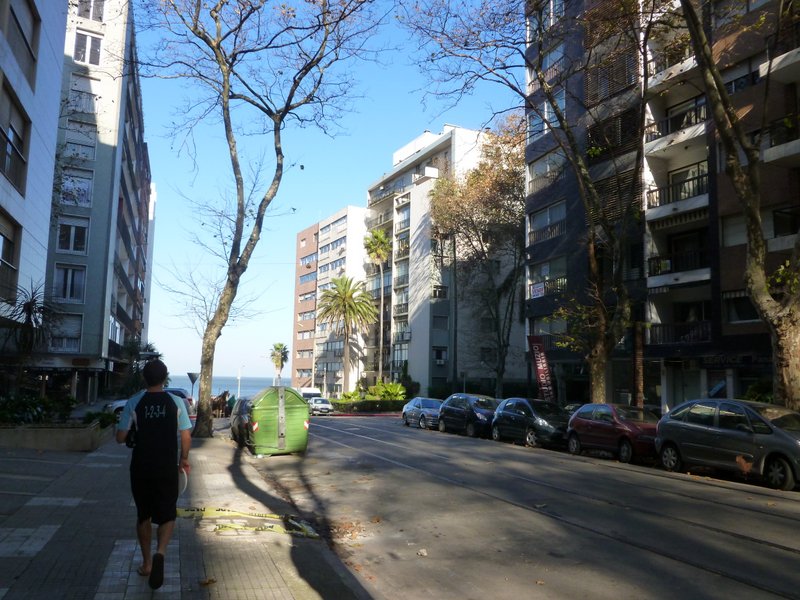
I thought I would take this opportunity to show everyone what the neighborhood is like around our apartment. At the first place we stayed I didn’t necessarily feel comfortable wandering around with my camera and acting like a tourist. The neighborhood we are in now seems much more friendly and affluent and I feel much more comfortable here.

Some stats on our apartment:

– We are two blocks from the beach

– We are 6 blocks from a Devoto (a large grocery store chain)

– We are 3 blocks from the nearest chivito restaurant

– We are within 2 blocks of, not one, but four bus stops

– We are within walking distance of Shopping Montevideo (a large shopping mall, about a 20 min walk)

– We are 1 block away from the farmer’s market on Fridays and 6 blocks from a farmer’s market on Wednesdays

– We are within 2 blocks of a bank

– We are 3 blocks from the nearest place to buy fresh empanadas

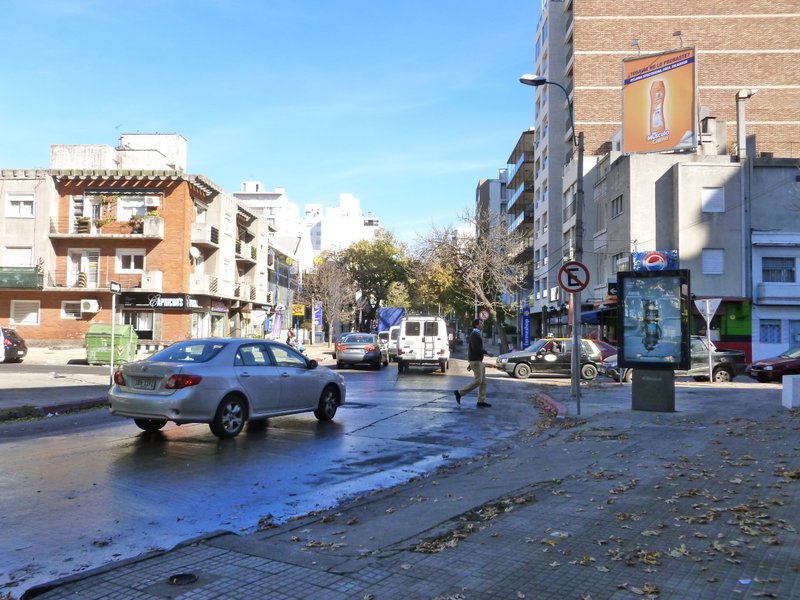
The neighborhood is mostly apartment buildings that have about 6-10 floors. Almost all the apartment buildings have lobbies with doormen. This means that no matter where you are going or at what time, you are being watched. This may sound a bit creepy, but it’s actually quite comforting to know that if something happened, someone would have seen it and be there to help.

There are a lot of people in the neighborhood which means that the sidewalks are sometimes busy and the streets are sometimes hard to cross (that is mostly because pedestrians don’t have the right of way) during rush hour. Many of the car garages have warning alarms so that pedestrians know to look out for a car coming in or out. These warning alarms always seem to go off late at night or early in the morning. Go figure!

Most of the apartments have balconies or at least large windows. When the weather is good, there is an abundance of laundry hanging out to dry on those balconies, or sometimes the rooftops.

The trees that line the streets are tall, reaching to the 9th floor in some places. At this point, most of the leaves have fallen or are on their way to the ground.

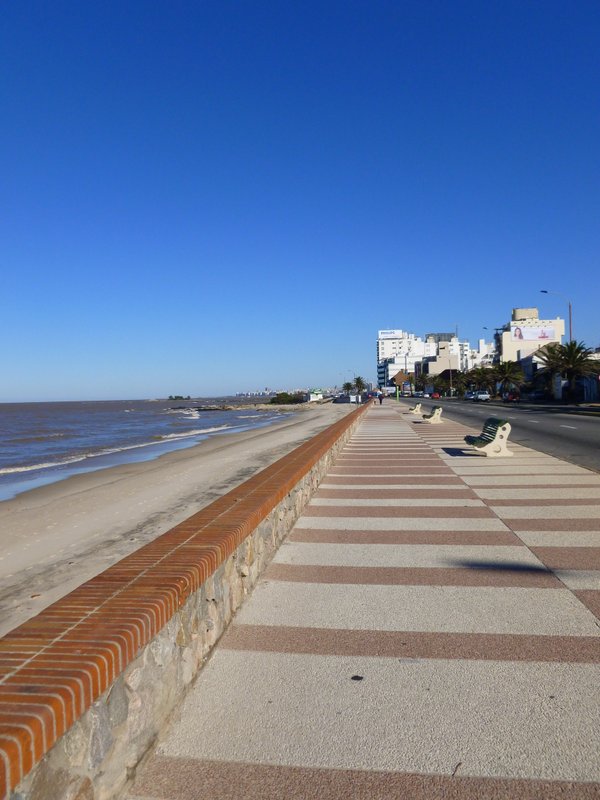
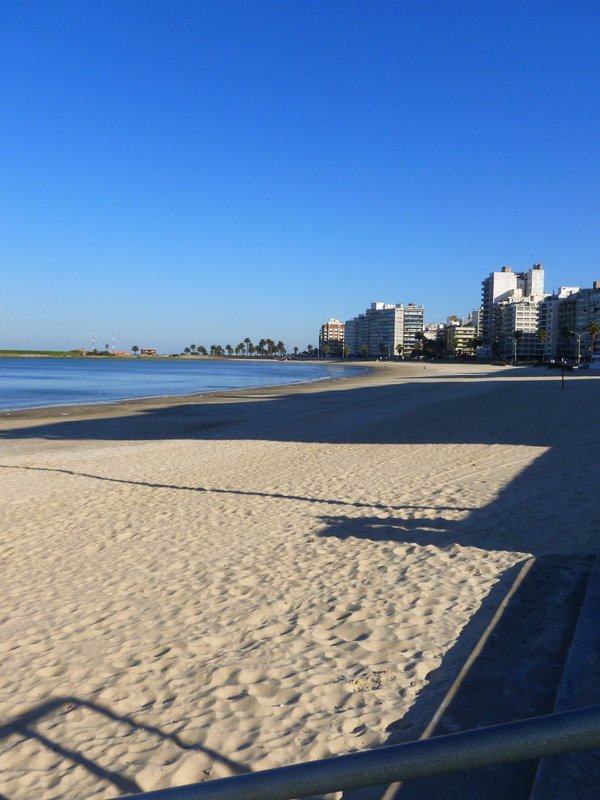
The beach is friendly. People walk and take their dogs to play there most days, weather permitting. It is a great place to throw a frisbee or have a little beach ultimate tournament. The city takes pretty good care of the beach. They rake the sand every once in a while and haul off garbage that the tide brings in. The Ramblas runs along the beach and makes a great place to walk, run, bike, or just enjoy the view while sitting in one of the many benches. I frequent the Ramblas most days for my morning run. There are always people using it!

The neighborhood also seems to have an abundance of construction going on. Fixing the sidewalks seems to be a common occurrence. There are also a couple large construction sites where whole apartment buildings have been demolished and new ones are being put up. Unfortunately one of these sites is catty-corner across the intersection from us. Despite the citizens of Montevideo being generally late risers, this apparently does not hold for construction workers. We wake up to the sounds of construction quite frequently, although it doesn’t seem to bother me much.